A couple of things we saw yesterday during our trip to the Vatican and back to our hotel that I thought were…ironic.
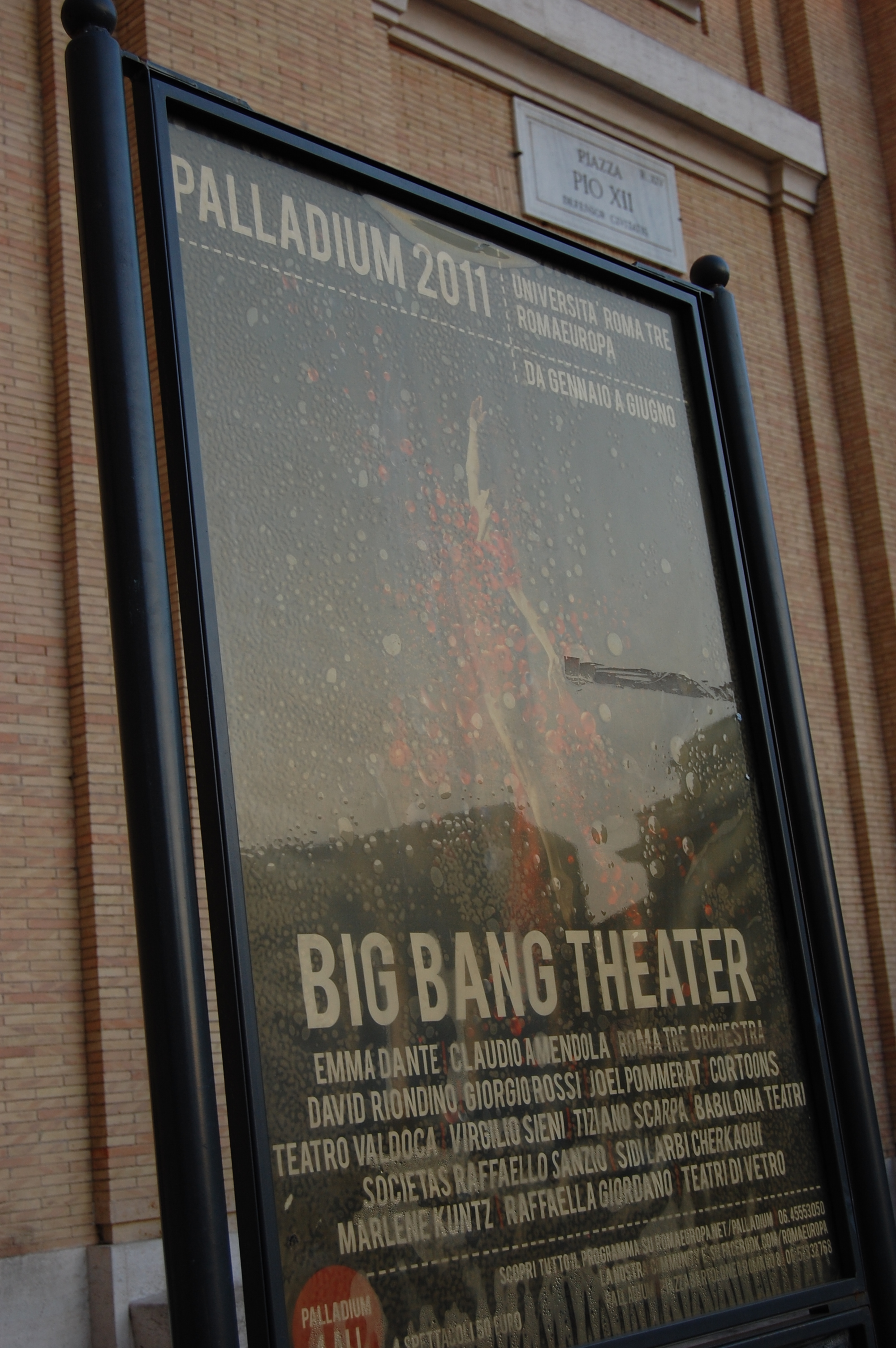
First up is a sign for some event that is taking place in Rome. The picture was taken inside Vatican City.
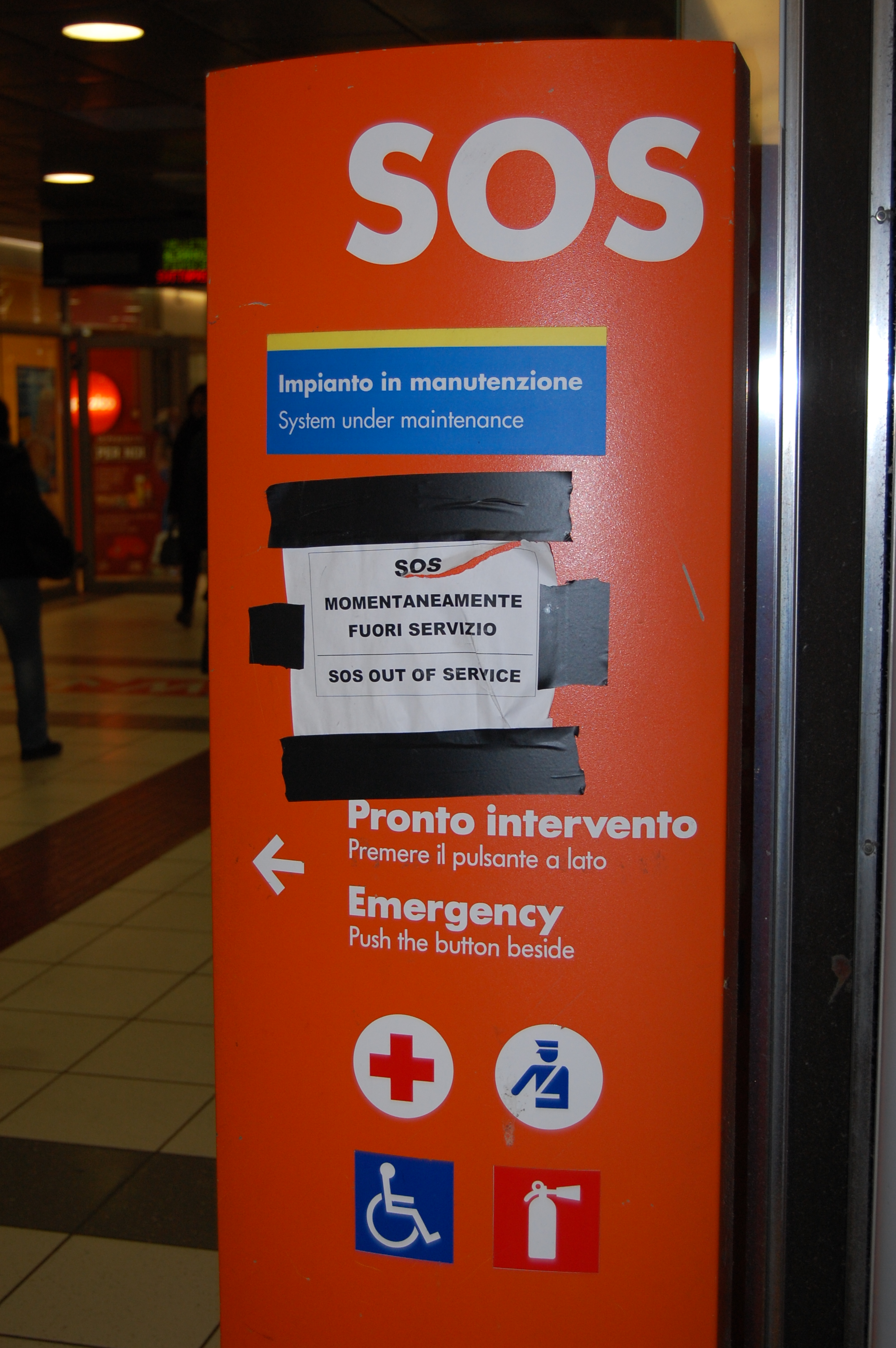
Rome has a simple subway system. The two lines cross at the Termini train station. Within the station area, there is a stand called an SOS stand that you can use to request assistance or report an emergency. We also saw these on the highway from the airport into the city center.
But this particular SOS stand has…issues.
No Egypt.
No Greece.
We left Heathrow this morning for Rome. Left the hotel in London at about 0710 for the airport. Left Heathrow at about noon after some delays due to high winds. Arrived at Fiumicino (Leonardo da Vinci) Airport about 1445 local. After a taxi ride from the airport directly to a hotel not very far from the Colosseum. It wasn’t quite Mr. Toad’s Wild Ride, but it appears that turn signals and staying between the lines are pretty much optional here.
Another expensive city, but a heck of a lot more hilly than London was.
At least our hotel is relatively close to the Colosseum. The walking is going to be interesting with all the hills.
Today was going to be a big day.
While doing research on Windsor Castle prior to the trip, I noticed a banner advertisement on the official Windsor Castle web site for what was described as an “exclusive” tour of Buckingham Palace so we bought tickets for the tour taking place today prior to leaving the US. This was scheduled for much later in the day – 4:00 PM was the time we needed to be at Buckingham Palace, so that gave us the rest of the morning and early afternoon to explore some more of London.
But Egypt is on our minds, also. It has become clear that the window is quickly closing, and we are going to have to come up with a plan to go elsewhere. Kathy is devastated by this, of course – the whole reason we are in the United Kingdom was my desire to see “Roman Britain”, but the primary focus of this trip was supposed to be Egypt. We had scheduled three weeks out of the five for sightseeing and touring Egypt. While we are resigned to the fact that we won’t be able to go to Egypt, we consider ourselves blessed to NOT have already been there when the unrest started, then have to evacuate the country.
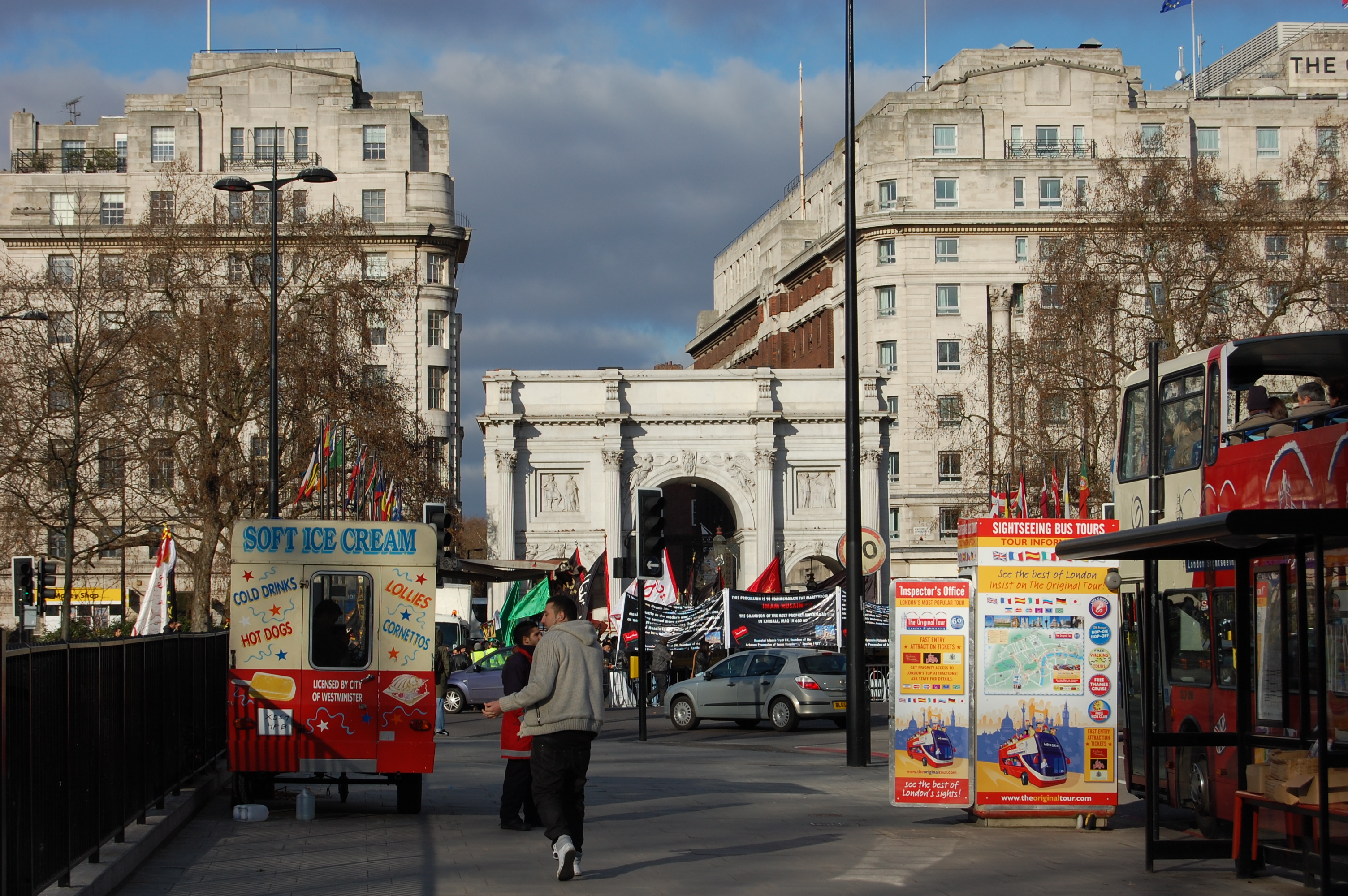
Eventually, we headed out from the hotel, made the 1/3 mile walk down to Paddington Station until we found the bus stop for the Big Bus Tours London sightseeing bus. This is a hop-on/hop-off affair, with a ticket good for 48 hours worth of travel on any of the three routes they have in London. We got on the bus at Paddington, then changed to a different line at Marble Arch. There was some kind of demonstration (or maybe just a rally of some type) taking place at Marble Arch, but we couldn’t understand what it was, since it was in an Arabic language.

Marble Arch is busy even without a demonstration. One of the banners reads "This procession is to commemorate the martydom of Imam Husain, the grandson of the holy prophet Mohammad in Karbala, Iraq 680 AD".
When we got on the second bus, instead of live commentary they had a recorded commentary that you listened to with ear buds they provided when you got on the bus. There were eight languages to choose from. We passed attractions such as Madame Tussaud’s Wax Museum, Oxford Circus, Trafalgar Square, Parliament Square, and the London Eye on the bus.

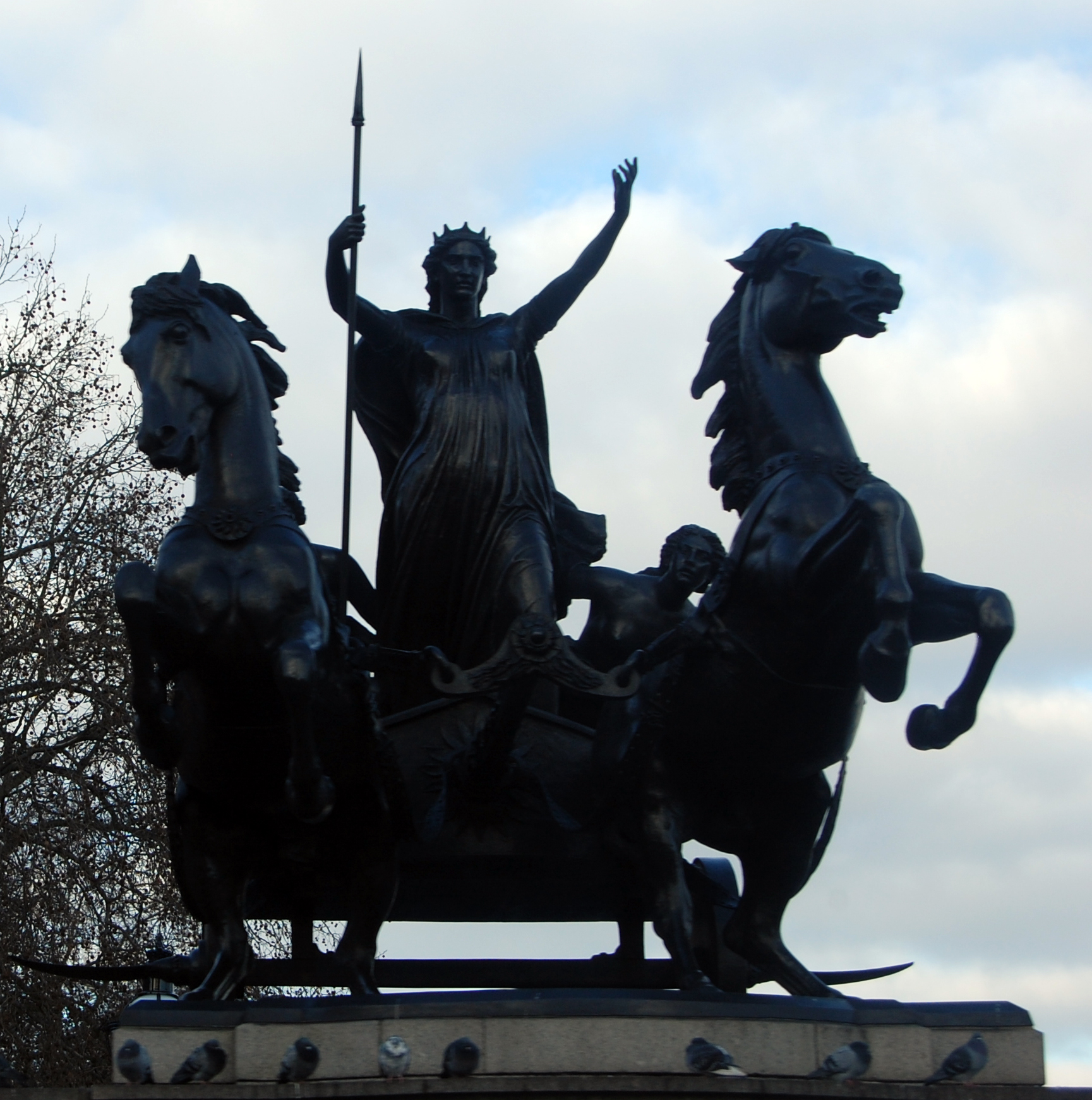
Boadicea, warrior queen of the Iceni tribe in Britain, led an uprising against the Romans in Britain around 60 AD. This statue, titled "Boadicea and Her Daughters", stands at the Embankment at Westminster Bridge. This picture was taken from the Big Bus as we passed it.
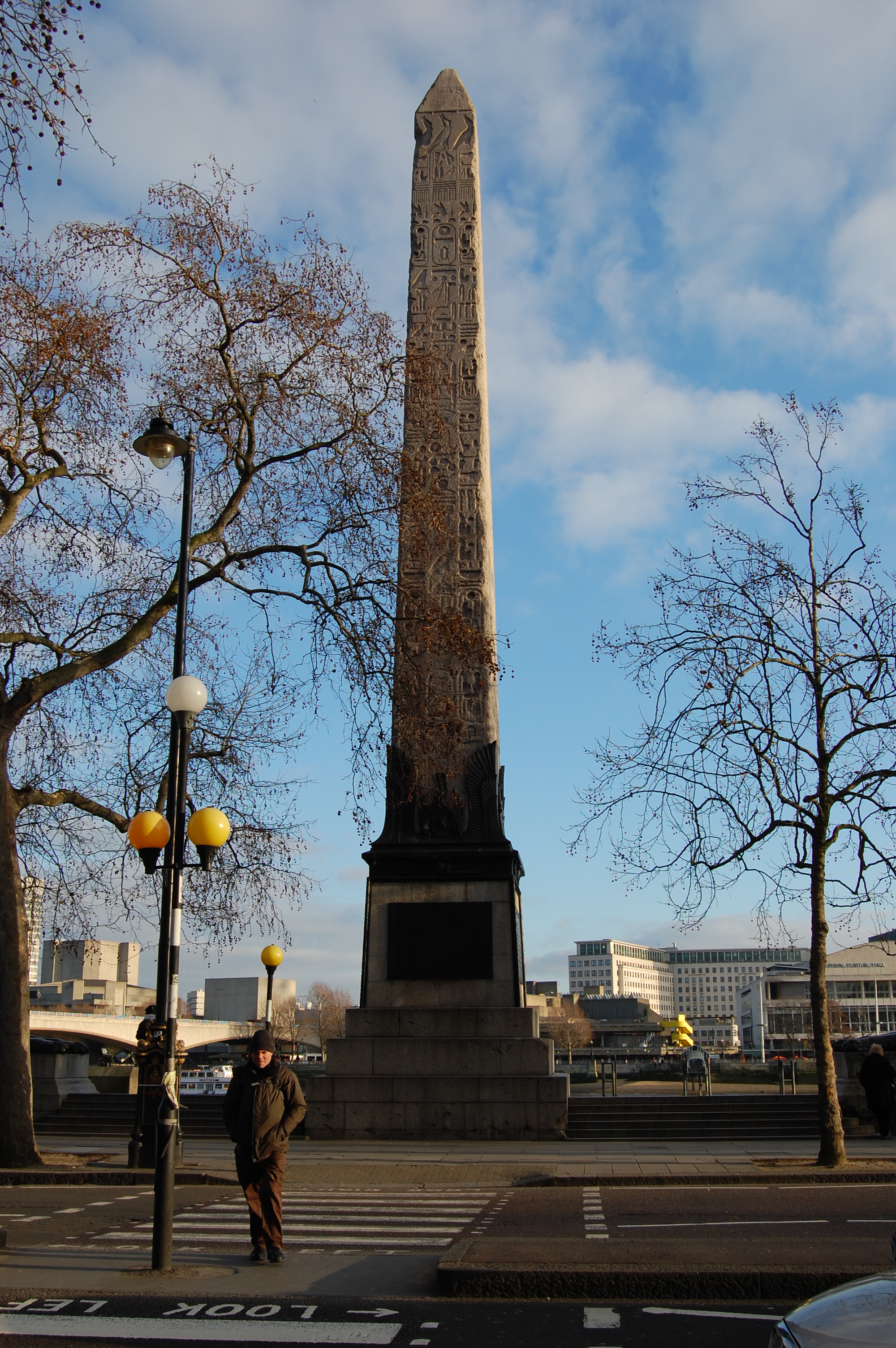
But the going on the Big Bus was not exactly the swiftest; London is very congested, and we needed to watch our time. So after about an hour and a half of being on the bus and doing some mental calculations, we decided to get off the bus in an area called “Strand” to grab a bite to eat. We had a delicious little lunch at a place called Crown Cafe-Bar, then we walked towards the River Thames so we could get down to Cleopatra’s Needle, a nearly 3500 year-old obelisk with an interesting history.
Originally created around 1450 BC in Heliopolis under orders of Thutmose III, the obelisk (and its twin, now located in New York City) were moved to Alexandria in 12 BC by the Romans, no small feat since they each are 68 feet tall and weigh over 220 tons. The London needle was presented to the United Kingdom by the ruler of Egypt and Sudan in 1819 in commemoration of the victories of Lord Nelson at the Battle of the Nile and Sir Ralph Abercromby at the Battle of Alexandria in 1801. However, the British government declined to fund the transportation of the needle. It wasn’t until 1877 that the needle was moved from Alexandria to London, finally arriving in January 1878.

A view of Cleopatra's Needle in London, looking towards the River Thames from across the street, Victoria Embankment.
After getting a few pictures of the obelisk and the sphinxes “guarding” it (the quotes are because the sphinxes are facing in the wrong direction to guard the obelisk), we took a taxi over to Buckingham Palace. We arrived at the gate we had been advised to via e-mail, 15 minutes ahead of the appointed time of 4:00 PM, and were the first to arrive. A few minutes after us, a couple from the the UK (Norfolk, to be specific) arrived. Behind them, a couple from Australia. We chatted a bit, then waited. And waited. The queue grew to about the expected 30 individuals. About 30 minutes after were we supposed to arrive, we finally were met by one of the wardens/docents. They reviewed our documents (two forms of picture ID were required), then led us to the front entrance to Buckingham Palace.
The tour of Buckingham Palace was definitely an exclusive tour – there were only the 30 or so of us on the tour (that is the limit for ticket sales), and were led by a warden by the name of Ann. We also had two other wardens with us during the tour. Ann dazzled us with her knowledge of the history of Buckingham Palace, delighted us with the anecdotes, and got all those Georges sorted out! The tour lasted for about an hour and half, but felt like it went too quickly. We toured the same state rooms that the summer tours take, except it wasn’t one long queue of people shuffling through in the summer heat and humidity. There were opportunities for questions throughout, and the chance to get up close to some of the artwork that adorned the walls and halls. Absolutely breathtaking!
Last year, our dear friend from Canada, Edie, had given us a DVD called Monarchy: The Royal Family at Work. We hadn’t gotten around to watching it in the months we had it, but two weeks before leaving for the UK, we sat down and watched the entire series of five shows in one evening. We were so glad we did, as we saw numerous locations from the DVD when we toured Buckingham Palace!
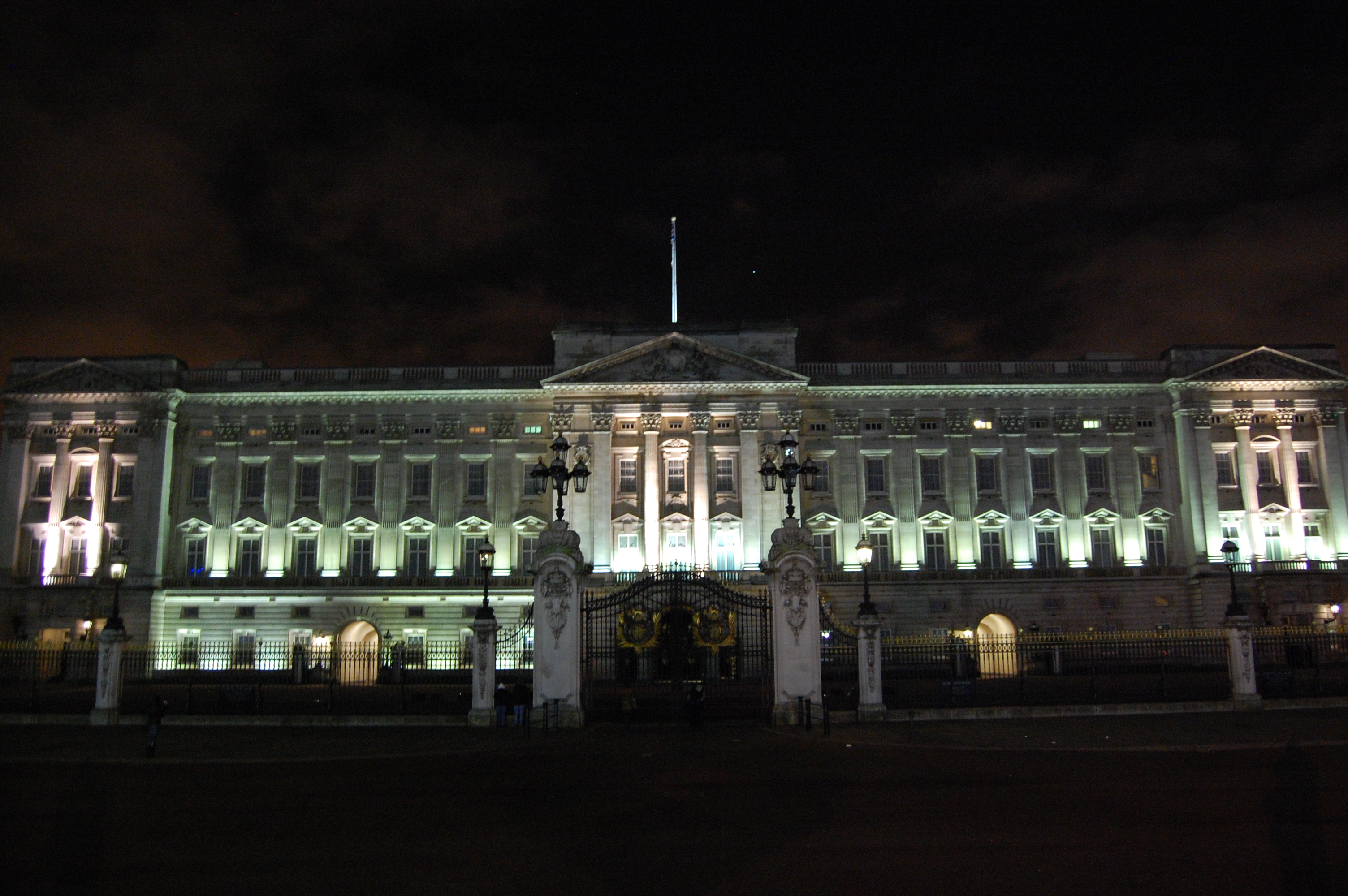
Unfortunately, no picture taking or recording was allowed during the tour, so all we could suffice with was a picture of Buckingham Palace from Victoria Memorial at the head (or end, based on your perspective) of The Mall.
Our hotel offered the standard English breakfast, buffet style, with pots of tea or coffee at your table at your request from the staff. And the coffee was definitely what most Americans would be used to for coffee, not some foamy blend of Nescafe.
Since our first full day in London happened to be a Saturday, that meant we had to go see the market at Portobello Road. The BIG day for visiting the Portobello Road Market is Saturday. And apparently a LOT of people feel the same way!
We got our first taste of using “The Tube“ (London Underground – the subway system) getting to Notting Hill Gate station, which is near the southern end of Portobello Road. But walking would certainly be the order of the day. There were two Underground stations close to our hotel, but each was about 1/3 of a mile away on foot, so we are also getting a taste of much more walking from place to place.
We made it to Portobello Road just fine – us and about 5000 or so of our closest friends. The south end of Portobello Road is primarily antique dealers, but stalls on the side of the road offered all manner of things you didn’t know you needed. We went through a few stores before stopping for some lunch in a small, upstairs cafe (without a toilet, mind you!)

Looking north on Portobello Road, London. Saturday is the big day, and is advertised as "The World's Largest Antiques Market".
We taxied back to our hotel to freshen up a bit, then took the Tube down to the Westminster station, which led us right outside of:

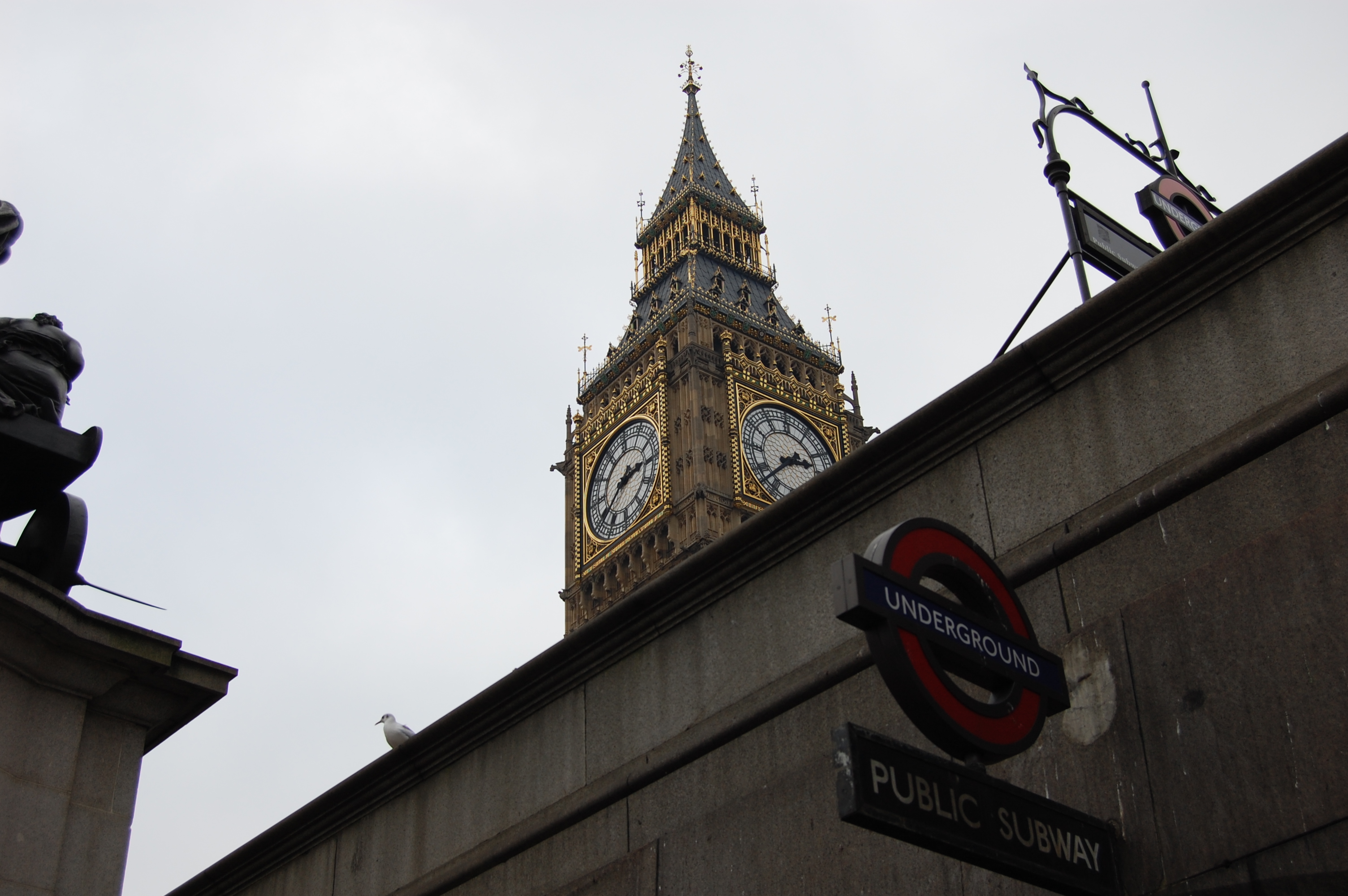
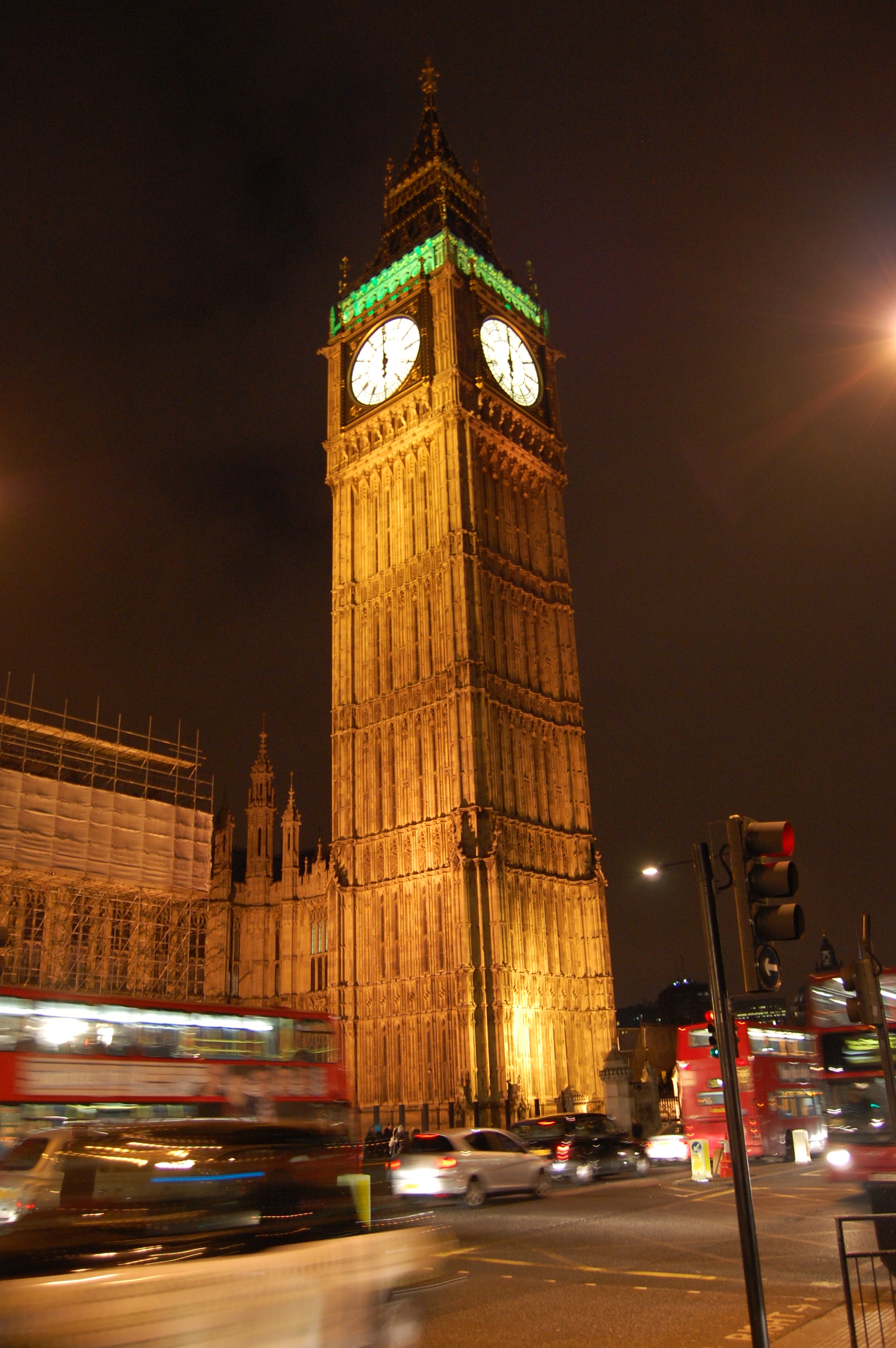
We were told numerous times during our visit to London that the clock tower you see in the picture is NOT Big Ben - the bell that chimes is Big Ben, and you aren't able to see it. The Westminster Clock Tower is the largest 4-faced chiming clock in the world.
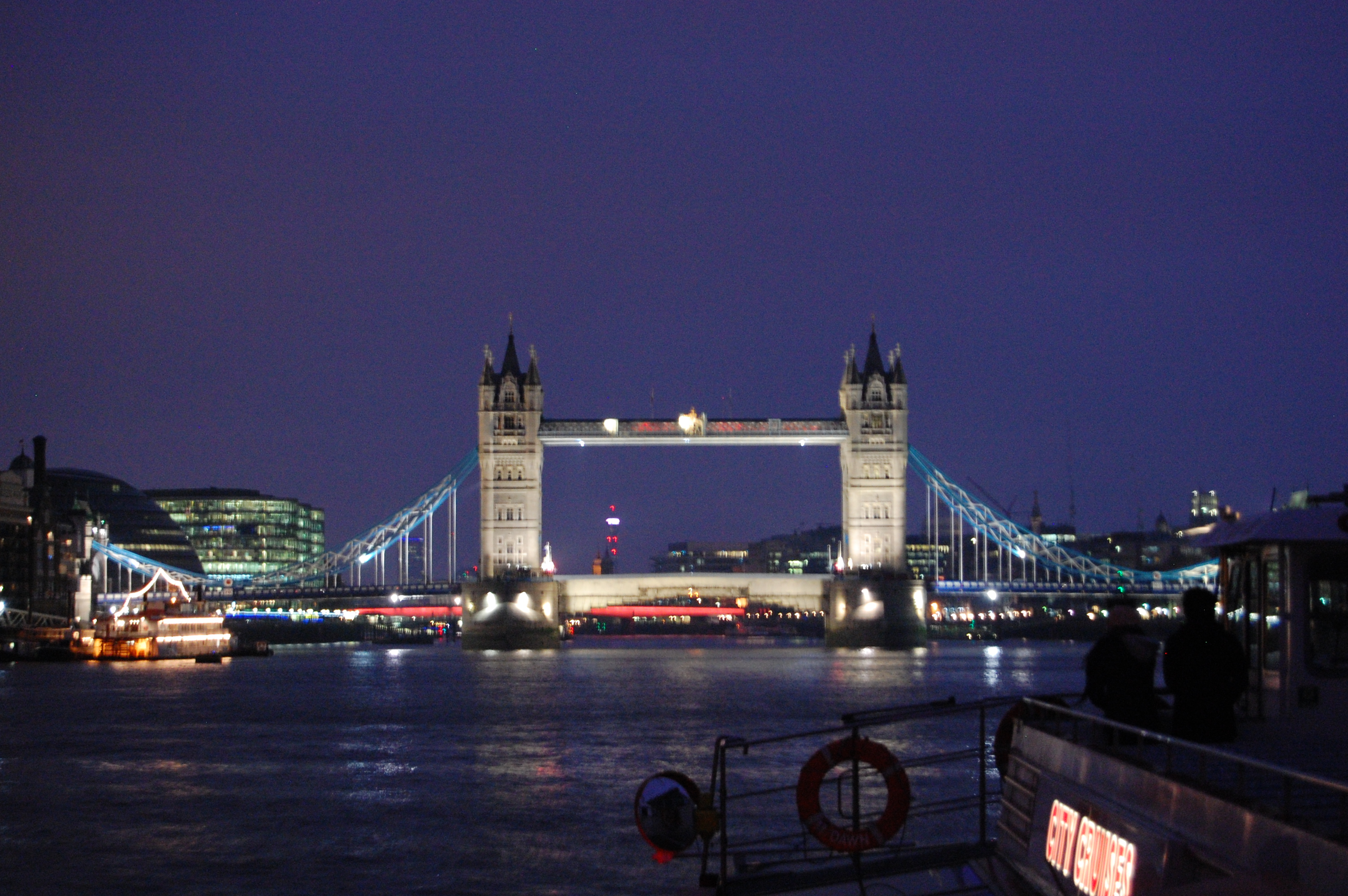
After a few pictures of the Palace of Westminster, we embarked on a sightseeing cruise down the Thames to Greenwich. It turned out to be another brisk day, especially once we got down by the pier. We were glad to stay inside the boat for the trip down to Greenwich. The trip took us past many landmarks along the way, such as the London Eye, Cleopatra’s Needle, St Paul’s Cathedral, Tower of London, Shakespeare’s Globe Theater, and HMS Belfast (another Imperial War Museum site). We had some delightful and interesting commentary from the pilot about the landmarks.  Once we got to Greenwich, we decided to just take the same boat back up to Westminster, since it was late in the day and there was only one more boat after the one we were on. It was starting to get dark as we left Greenwich, and as we got to the Tower Bridge, I was able to get one halfway decent shot:
The views were certainly more enlightening now that the sun had set, and everything was lit. The London Eye was especially pretty:
We took the boat back to the Westminster dock, then got a better look at the Palace of Westminster, and especially the clock tower:
Headed back to the hotel, found some dinner along the way, then started weighing the news about Egypt with our plans. This was Saturday, and we needed to make a decision certainly before we were scheduled to fly to Cairo on Tuesday, but the signs are becoming ominous – between the US State Department, the United Kingdom equivalent, and now the airlines advising that you can make changes to your itinerary without paying extra fees, we may end up having to cancel or reschedule that portion of the trip.
After another buffet-style English breakfast at the Holiday Inn Express (the closest thing to the land of the free refill, it seems), we loaded up and drove to the Imperial War Museum (Air), Duxford.
The airfield at Duxford was originally began during World War One as one of the earliest Royal Air Force stations. Over the years, it evolved until in the 1960’s it became obsolete. The Ministry of Defence declared its intention to dispose of the airfield in 1969. In 1977, various organizations came together along with the Imperial War Museum to purchase the airfield.
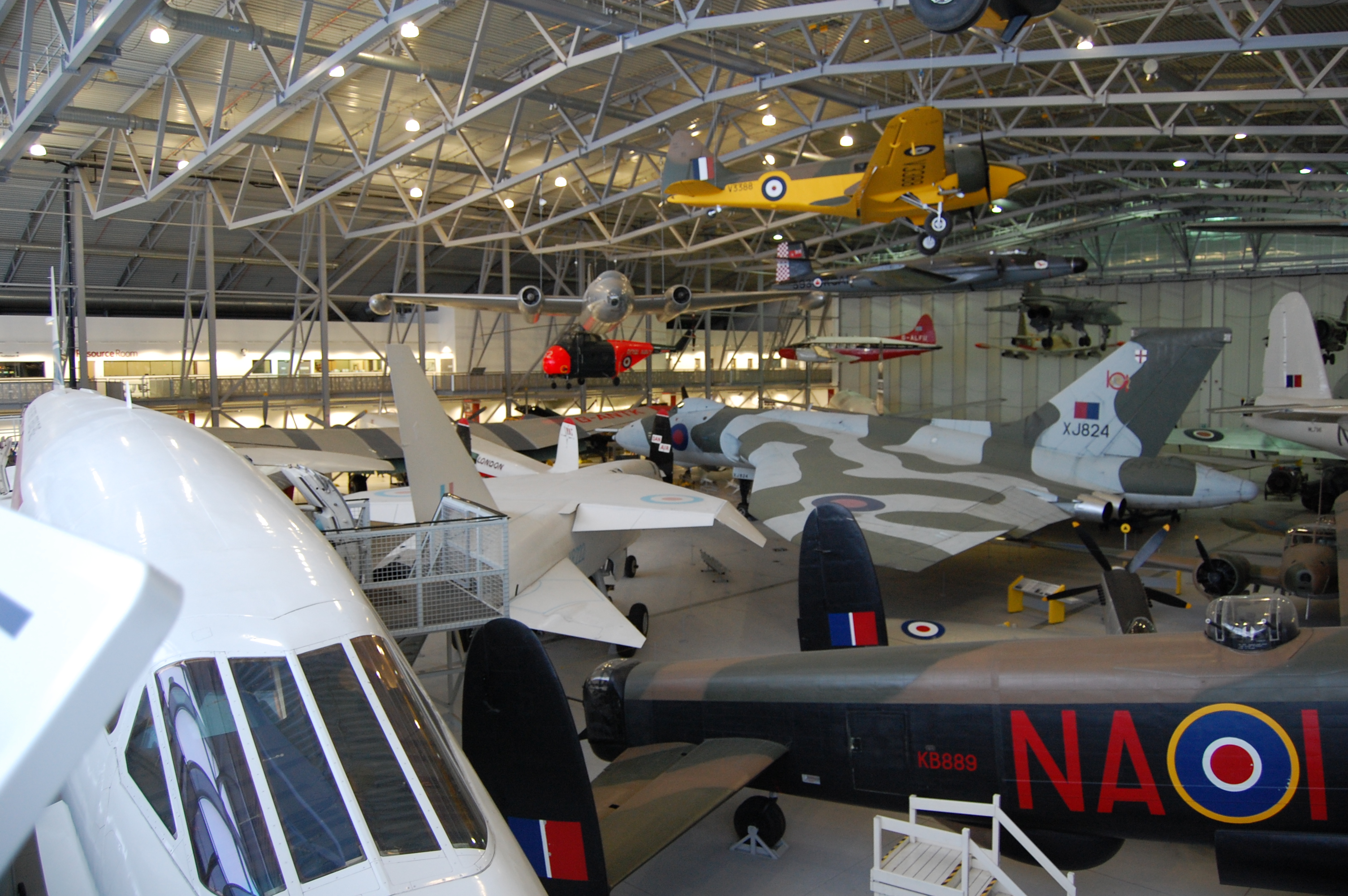
Our visit began in the building designated as #1 on all the maps and diagrams of the site, called AirSpace. This building houses aircraft which tell the story of British and Commonwealth aviation. From a Royal Aircraft Factory R.E.8 (WWI) to an Avro Lancaster (WWII) to a BAC/Aerospatiale Concorde, AirSpace has any aircraft affectionato covered. There were other panels and displays, including aircraft engines and interactive displays.

A view of the Aircraft Hall at the AirSpace Hanger of the Imperial War Museum, Duxford. The aircraft on the far left, with cockpit window closest to the camera, is the BAC/Aerospatiale Concorde.
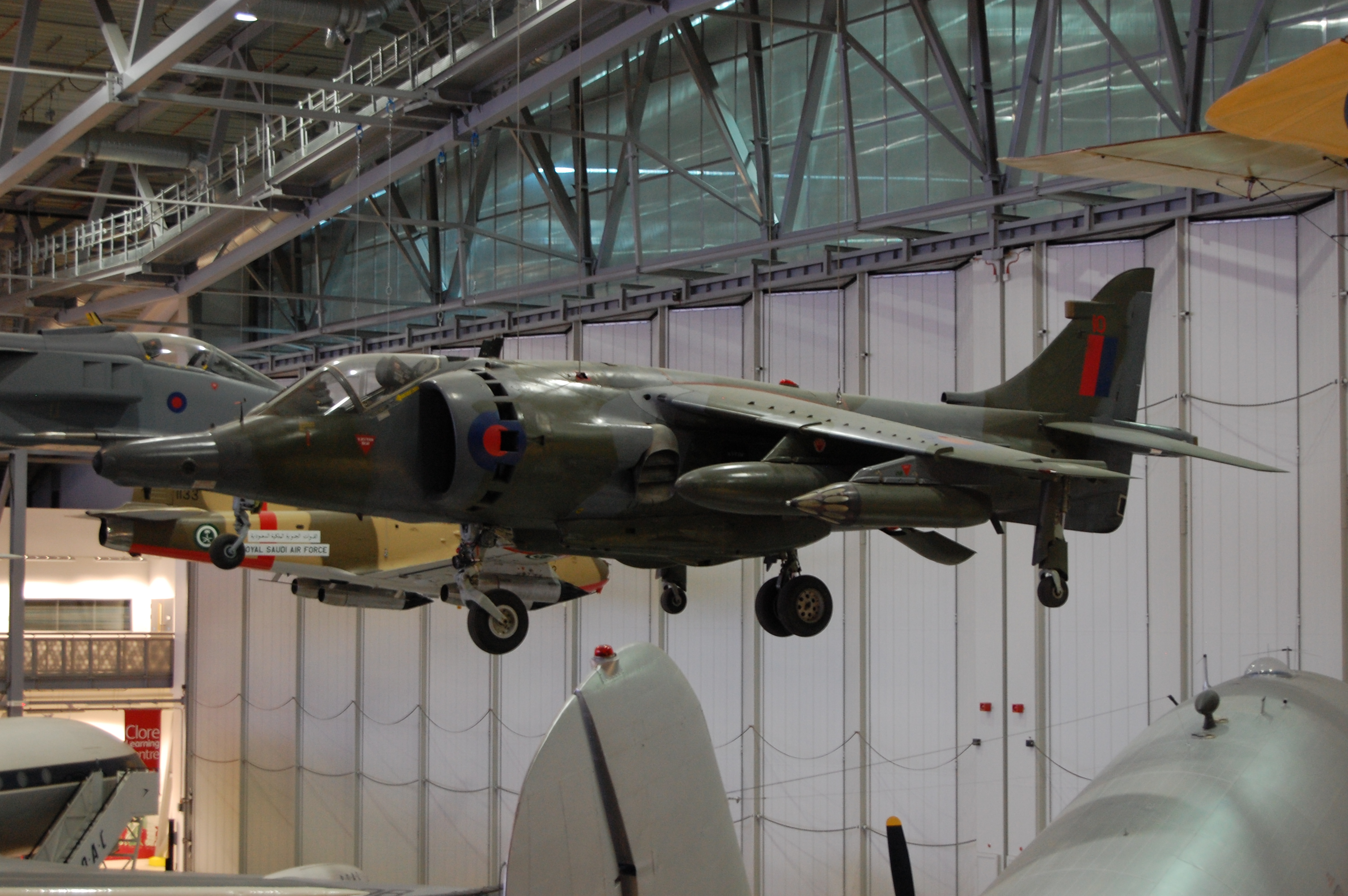
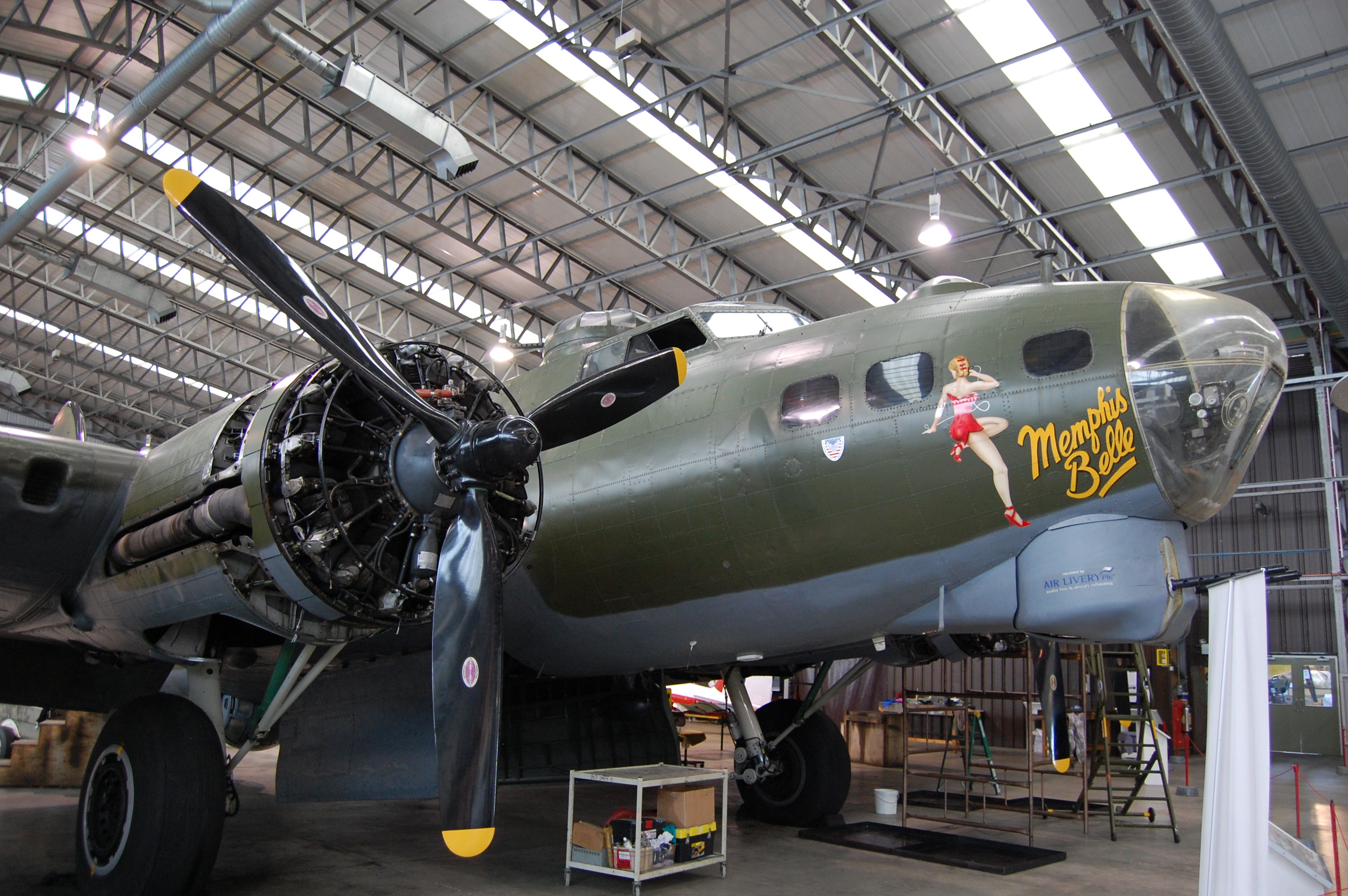
Of course, I can’t resist the opportunity to show my personal favorite aircraft:
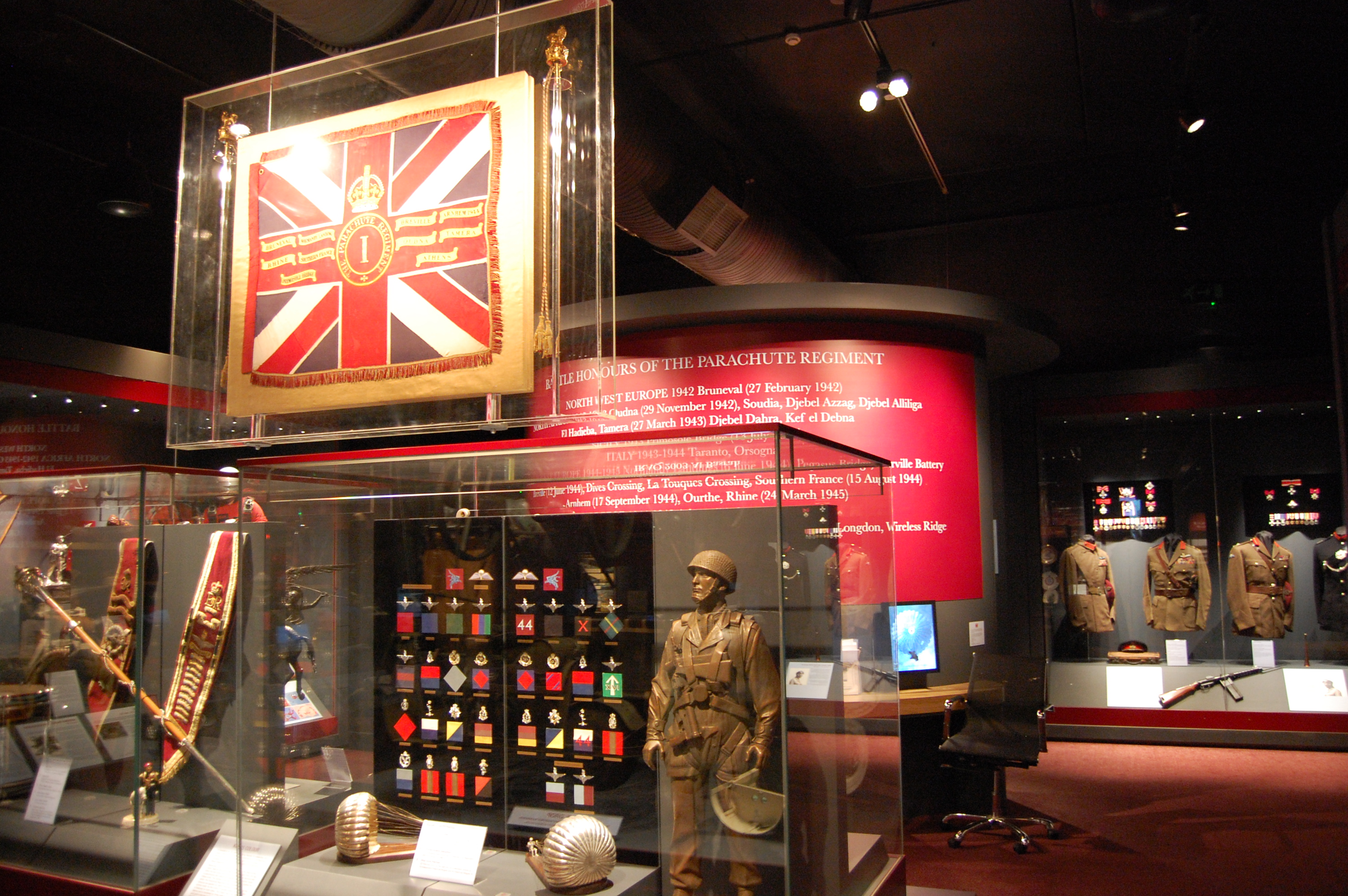
In addition to the aircraft on display in the Aircraft Hall, there is also a smaller section of aircraft undergoing preparations for display, and a museum for the Parachute Regiment and Airborne Forces.

A view inside the Airbone Assault museum of The Parachute Regiment and Airborne Forces at IWM Duxford.
While Kathy looked about the gift shop, I headed down to the next building with the intent to make it down to the American Air Museum, about a half a mile down the flightline. After a run through building #2 (called Flying Aircraft, where privately owned aircraft are stored and maintained, including the last airworthy Boeing B-17 in Europe ) and building #3 (called Air and Sea, where there are more aircraft and also boats, submarines and maritime aircraft), a look at my watch told me that there was no way I was going to make it down to the American Air Museum with time to spare that we were going to need when turning in the rental car, so I headed back to the main entrance and gift shop.

A Boeing B-17G, "Sally B", on display at IWM Duxford. This B-17 is the last airworthy B-17 in Europe. Although the picture shows this as "Memphis Belle", the other side shows a less clothed "Sally B". The nose art on this side is because this aircraft was used in the movie "Memphis Belle".
From Duxford, we headed to London so we could check in to our hotel in the Bayswater/Paddington area, drop off our luggage, then return the rental car to the airport. We found the hotel fairly easily, but the reason everyone advises against driving in London was fairly evident when trying to check in to the hotel – there is no place to park. The street had signs for residents only, and you had to have a special sticker on your car to park there. As it was, I dropped Kathy off at the entrance to the hotel, then drove around the streets nearby for a few minutes, and when I saw her come out of the hotel, I found a place to park – but I couldn’t leave the car. Kathy and a doorman from the hotel got all of the Clampetts luggage, bags, and belongings out of the car and in the room. While this was going on, a police-type person even gave a walk-by, but didn’t say anything to me, and as far as I know, did not record the license from the car.
Once the car was clear of everything we didn’t want to have to carry back from the airport, we headed for Heathrow. We got to the rental center (after one wrong turn, anyway), and asked to speak with the manager on duty about our rental. We explained about what had happened with the tires, what the AA man had told us, etc. The manager listened, but he seemed very defensive about the people who prepare the cars for rental – their job would be on the line if they let a car go out with bald tires, etc. Of course, I had already deleted the tire pictures from the camera, but told him that we could put them on line when we got back to the hotel that evening. In discussing the situation with him, he said that they would waive all charges for the rental due to putting us in a dangerous situation. He still didn’t seem to believe that they could be THAT bad.
We took the rental center shuttle back to the airport, where we bought tickets for the Heathrow Express, which would wisk us back to Paddington Station (about a 1/2 walk to our hotel) in 15 or 20 minutes. Well worth the £32.50 or so that it cost. There are other less expensive ways to get from Heathrow to London, but from a time-saving standpoint, this one couldn’t be beat.
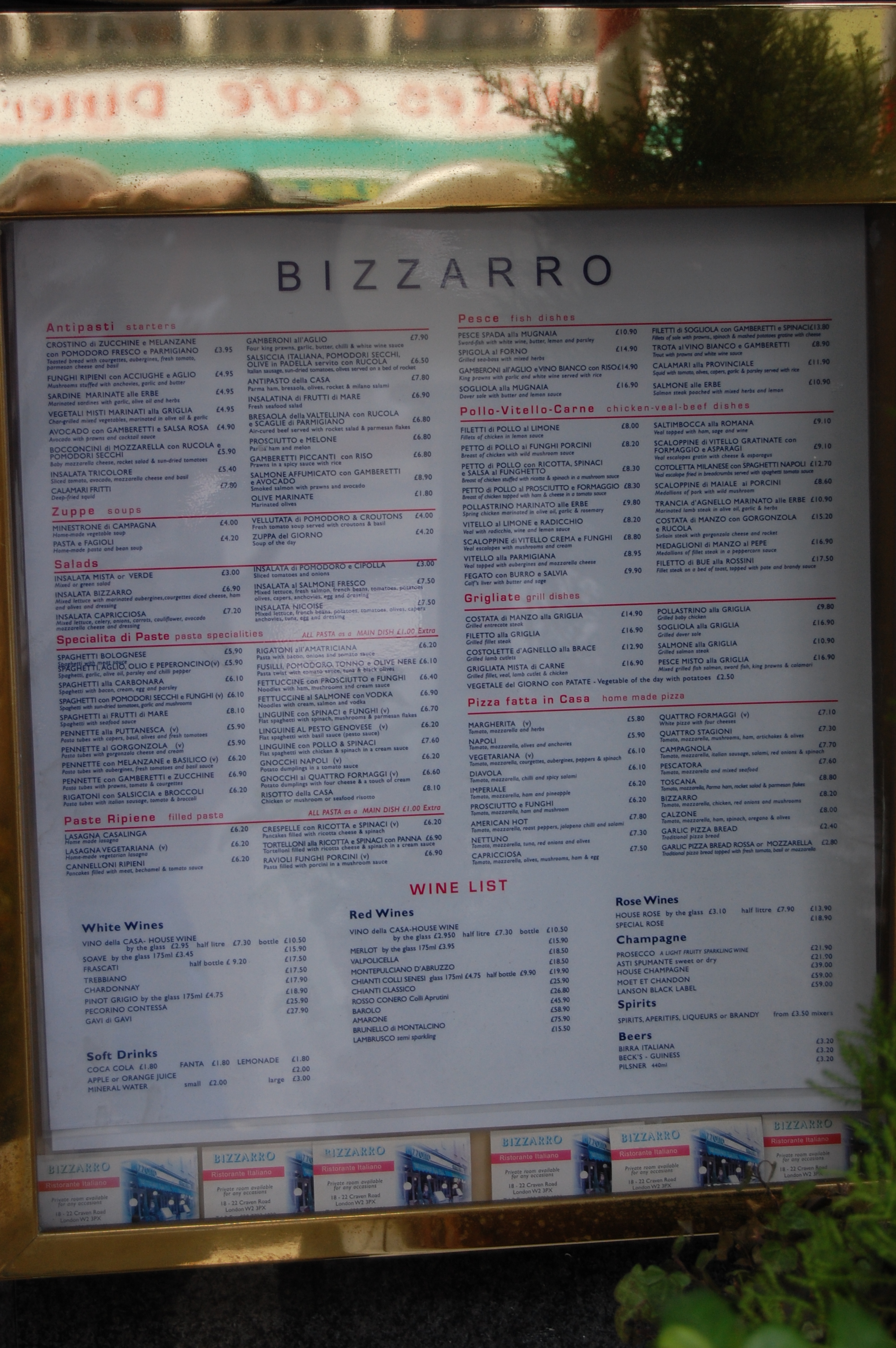
Dinner at an oddly named restaurant, then back to the hotel.
Got settled in, then posted the pictures of the tires as we said we would. The next day we received an e-mail from the manager indicating his shock at the state of the tires.
But the credit card still got charged anyway. Meh.
After getting some pictures of the wonderful hotel we stayed in, much of our view for the day looked like this:
We thought we might be able to get to Duxford and the Imperial War Museum early enough in the afternoon so that we could visit it, but that was not going to be how the day turned out.
We got to Duxford in the late afternoon, found our Holiday Inn Express, got a hearty hot dinner at the pub next door, then retired for the night.
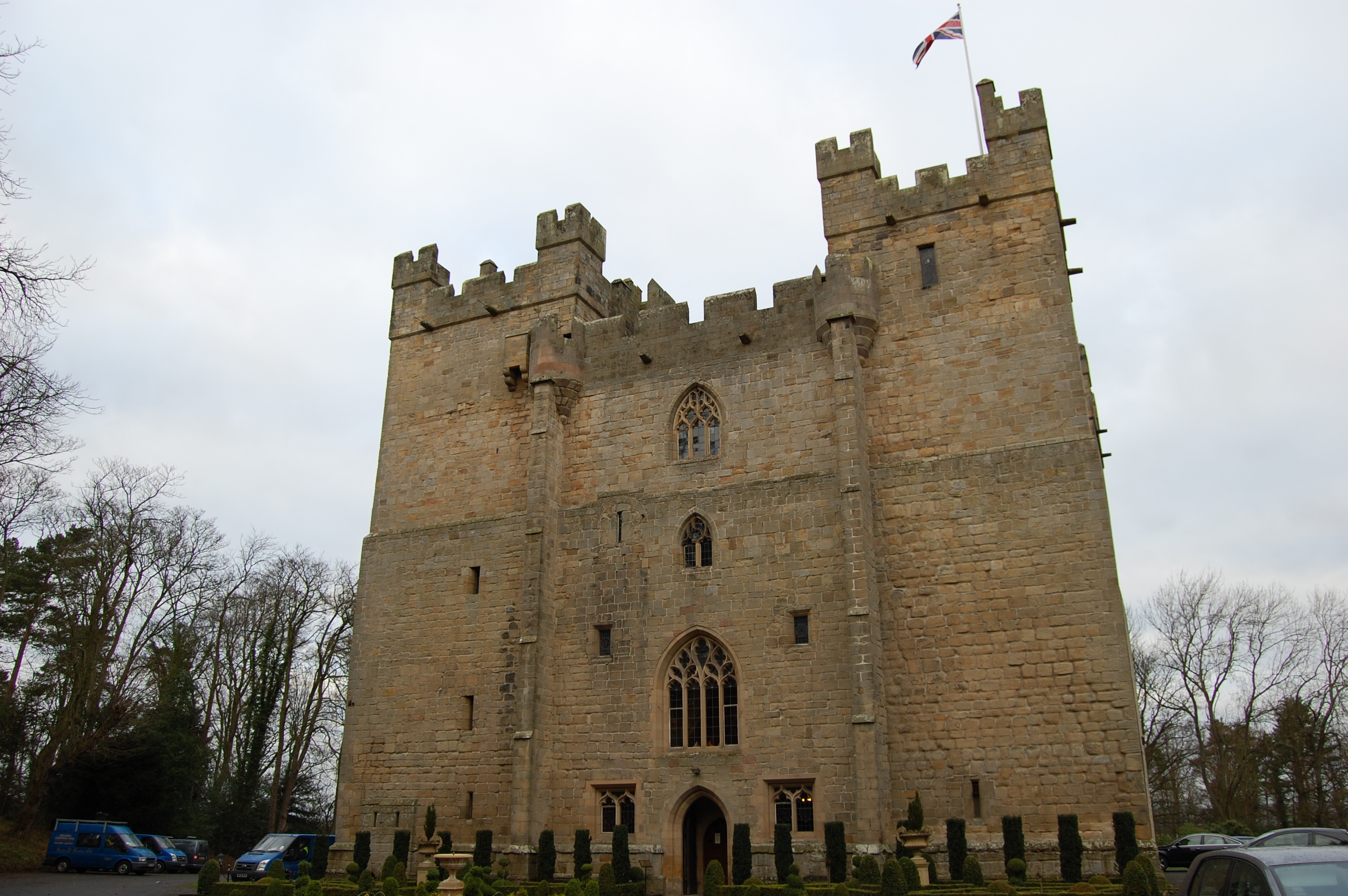
A separate post about an individual hotel is a bit out of ordinary for this trip, but the Langley Castle Hotel is an extraordinary hotel.

View of the Langley Castle Hotel. Our room had the window directly above the larger cathedral-style window directly above the door. Americans would call it the 3rd floor.
Construction of Langley Castle began in the year AD 1350, and over the years it fell into ruin while changing hands of ownership. In the late 19th century, restoration was begun. In the 20th century, the castle was used as a barracks during the Second World War and as a girls’ school before being turned into a hotel.
We arrived in the late afternoon after spending the day traveling part of Hardian’s Wall from Carlisle to Hexham. The original plan had us go all the way to Newcastle and Wallsend at the far eastern end of the wall, but by the time we finished seeing Housesteads Roman Fort, it was obvious we were not going to be going any more further east than we absolutely needed to due to time constraints.
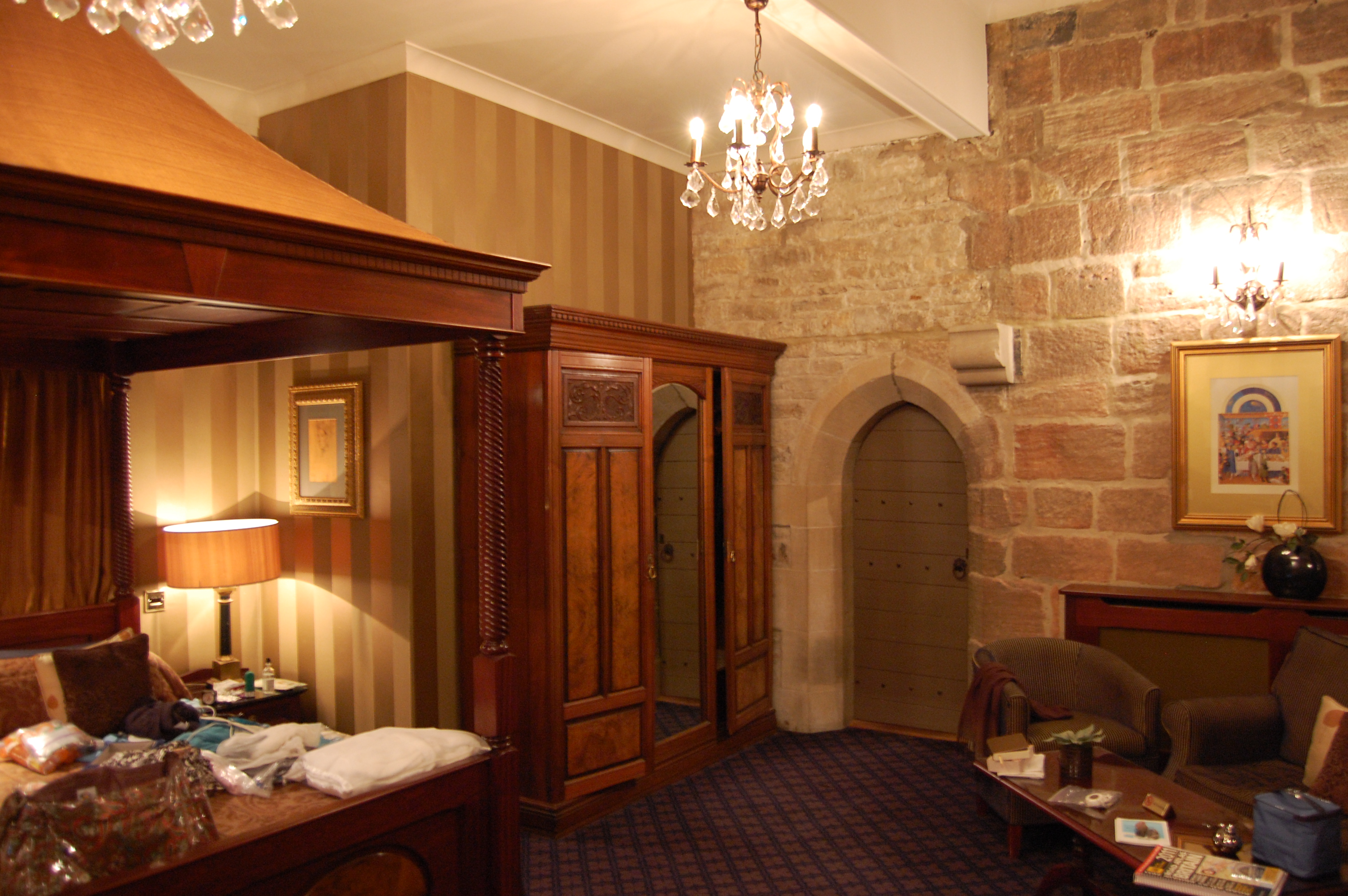
Upon arrival at the hotel, we found that the room Kathy had requested had been changed to another, due to the need to use the elevator, but we got that “sorted out” and were shown to our room, the Radcliffe Room, the room that was originally requested.
You might think that a castle, especially in the month of January in the north of England might be a cold and drafty affair but Langley Castle was anything but. Our room was warm and sumptuous. The bathroom was incredible – a walk-in “rain” shower, a sunken bath, and a small sauna. The double sinks would be handy later for a long needed round of clothes washing!
After settling in a bit, we made for a room where we could be served “Afternoon Tea“. It was a welcomed relief from the travel of the day.
Back to our room to do some rearranging of items in the suitcases, and then a bit of relaxing before we went down to dinner in the dining room.

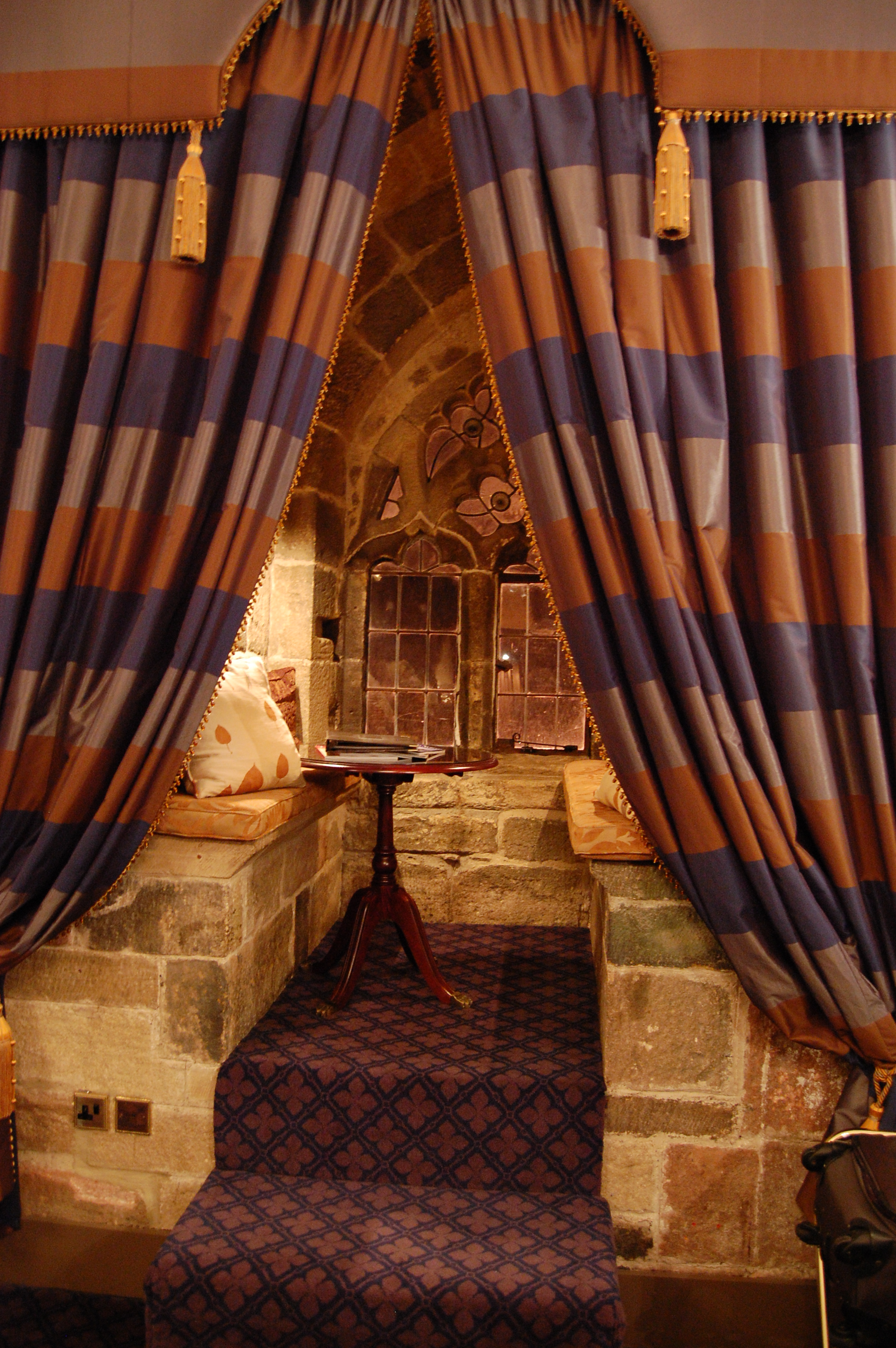
The window seat of the Radcliffe Room, set into the 7-foot walls of Langley Castle, overlooks the entrance to the castle.
Dinner was exceptional, even if we can’t remember what we had at this point! I remember having something fish – scallops, I want to say – that were deliciously soft yet firm at the same time.
After dinner, we had a marathon session of clothes washing, and used the sauna to help get most of them dry by morning.
Breakfast, of course, did not disappoint. The full English breakfast was to be had before leaving the castle for the drive to Duxford.
Another morning, another English breakfast! The only thing that has been missing from these great breakfasts has been pancakes, but that would make them too large. And sleepy. After chatting with our hosts, we loaded up and headed towards Hadrian’s Wall.
The building of Hadrian’s Wall began in the year AD 122, and was completed about AD 128. It stretched from the River Tyne in the east to near the Solway Firth in the west of England, stretching for 80 Roman miles (73 miles by today’s measure). It would be abandoned after the death of emperor Hadrian in AD 138 in favor of an earthen wall 100 miles to the north built at the direction of the new emperor, Antoninus Pius (the Antonine Wall in the Central Belt of Scotland). By AD 164, the Antonine Wall was abandoned, and Hadrian’s Wall became the main defensive barrier in Britannia under emperor Marcus Aurelius.
What remains today are phenomenal pieces of Roman history – stretches of original wall, foundations for forts, milecastles and turrets.
Following signage for Hardian’s Wall, our first stop was the Banks East Turret 52A. Turrets were small outposts along the track of the wall, typically two turrets between each milecastle (which were larger than turrets).
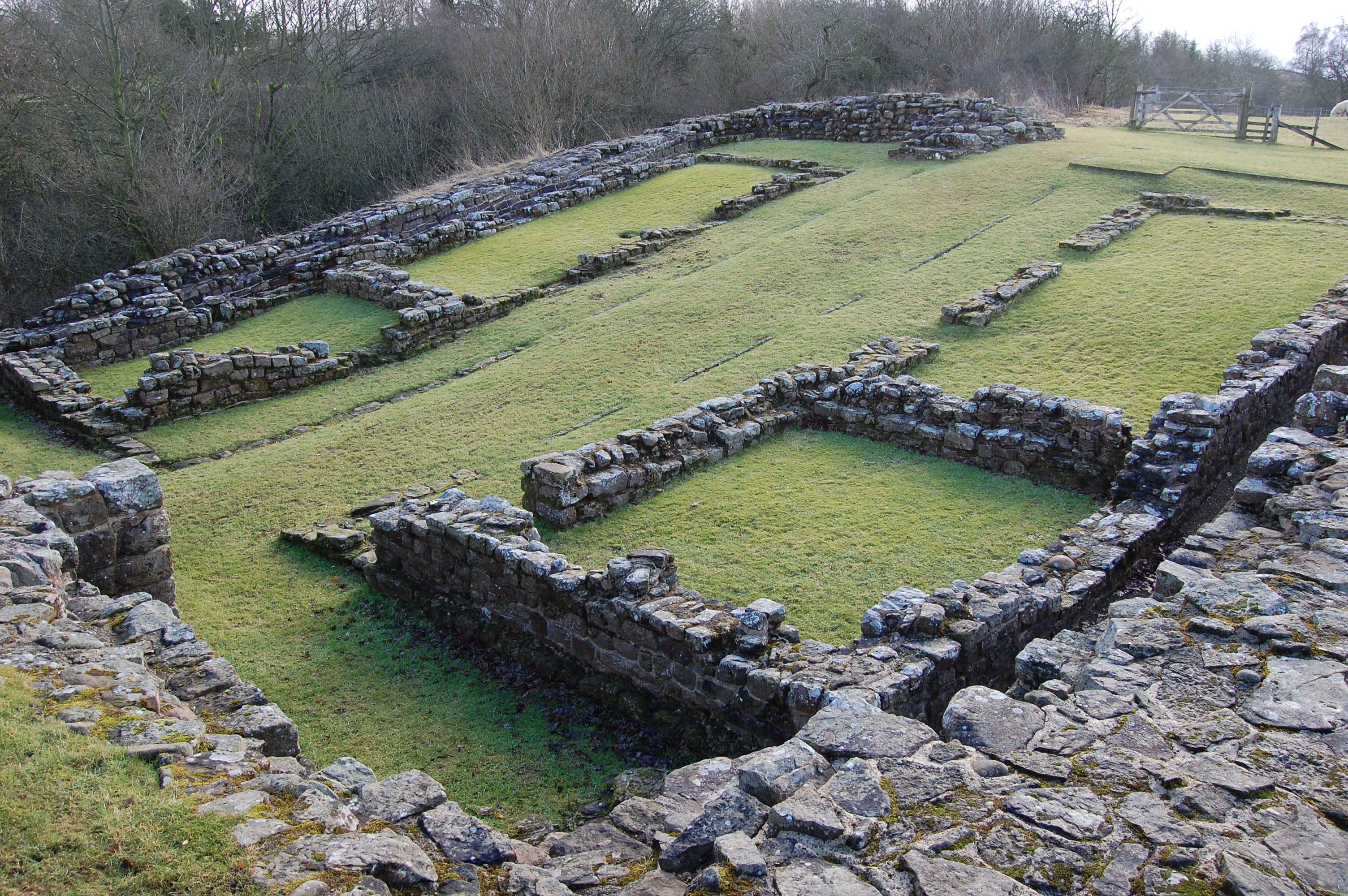
View of the interior of the remains of Banks East Turret 52A along Hadrian's Wall. These turrets were two-story buildings, with a ladder going up to the second level. A small squad of men, typically no more than 8, would man the turret.
The next stop was Birdoswald Roman Fort, called “Banna” by the Romans. Although the Visitors Centre was was not open, we were able to walk the site. Birdoswald is the only site along Hadrian’s Wall where post-Roman occupation has been proven, and the display panels on the site explained this.
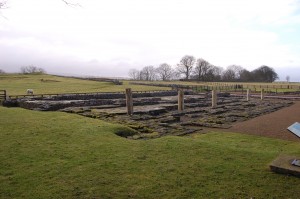
Continuing to travel east, we stopped at a parking lot to get on the trail for a milecastle, Poltross Burn Milecastle 48. About 1/4 mile away, through a sheep pasture, over a railroad, and down another sheep pasture, the remains of the milecastle could be seen. The milecastle would have accommodated up to 64 men in Roman times.
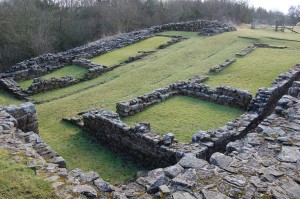
A view of the Poltross Burn Milecastle 48, looking towards the south. Up to 64 men would have been garrisoned here.
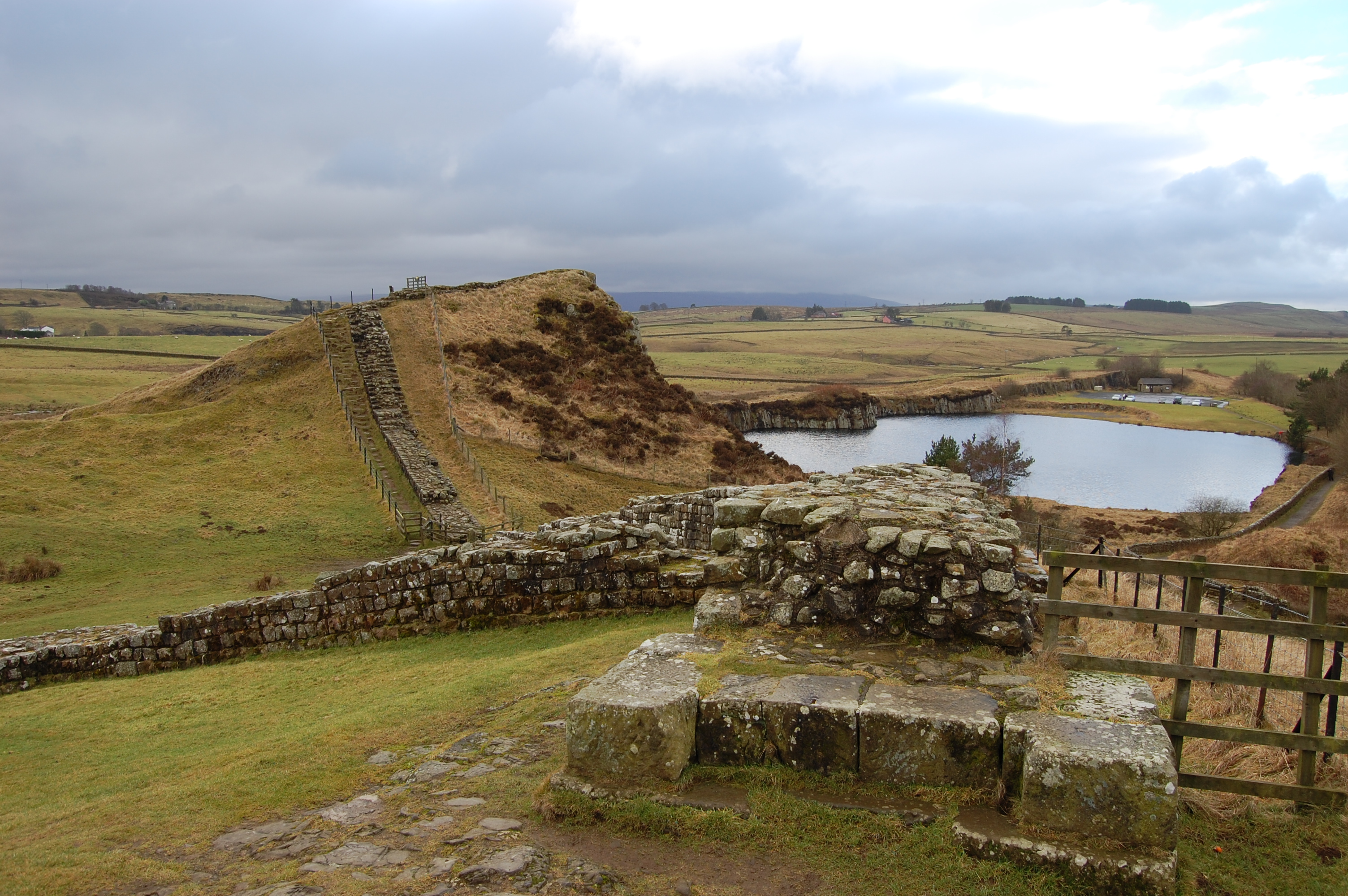
Traveling further east, we arrived at Cawfields Quarry near Milecastle 42. Here, the wall is integrated with outcroppings of rock called the “Whin Sill“. The quarry was worked until 1944, and removed portions of the wall with its development. Milecastle 42 is just east of the quarry.
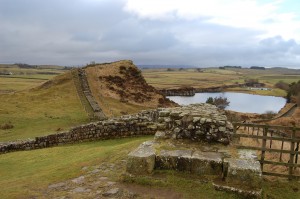
The pond formed in the abandoned Cawfield's Quarry, as viewed from Milecastle 42 on Hadrian's Wall. Even the small parking area you see in the picture is a "Pay and Display" parking area!
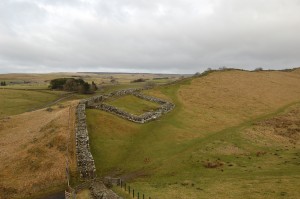
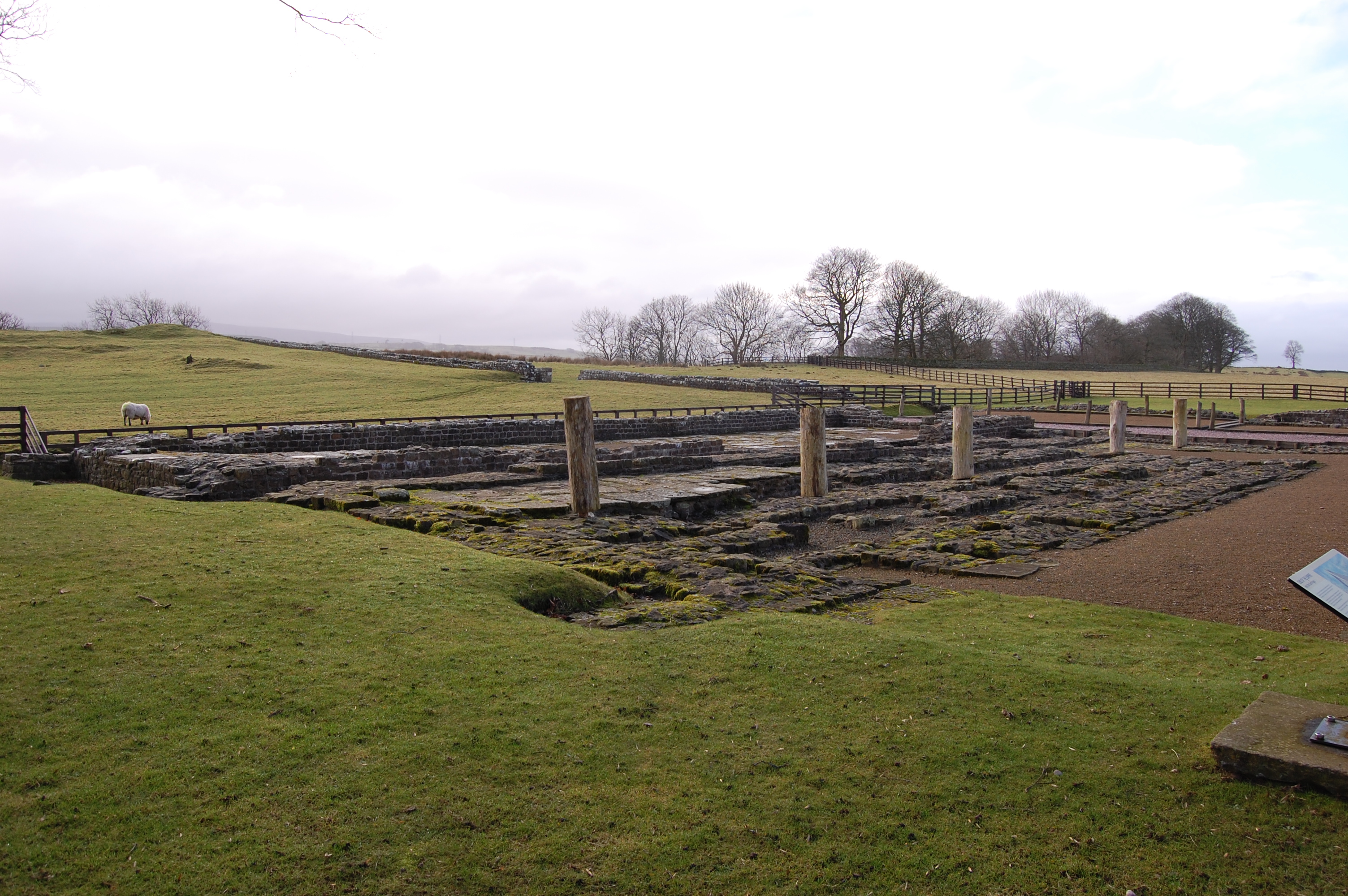
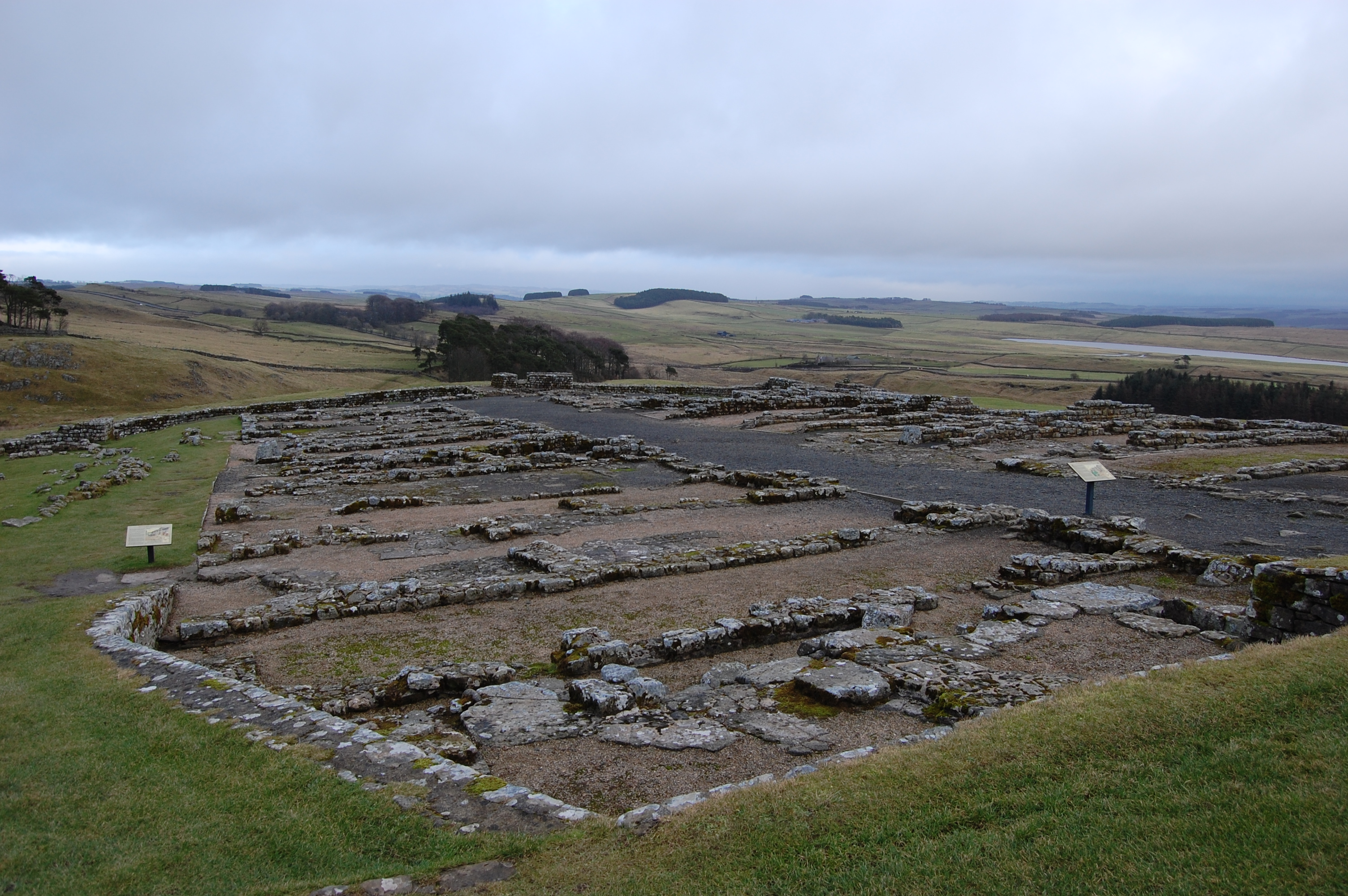
Our next stop was the fort at Housesteads, known to the Romans as “Vercovicium”.
The parking area at Housesteads is located right on the B6318 road. There is a small gift shop and snack bar there, along with public toilets. This location is run by either English Heritage or the National Trust – but the actual fort has a small museum that is run by the other organization, with a separate gift shop.
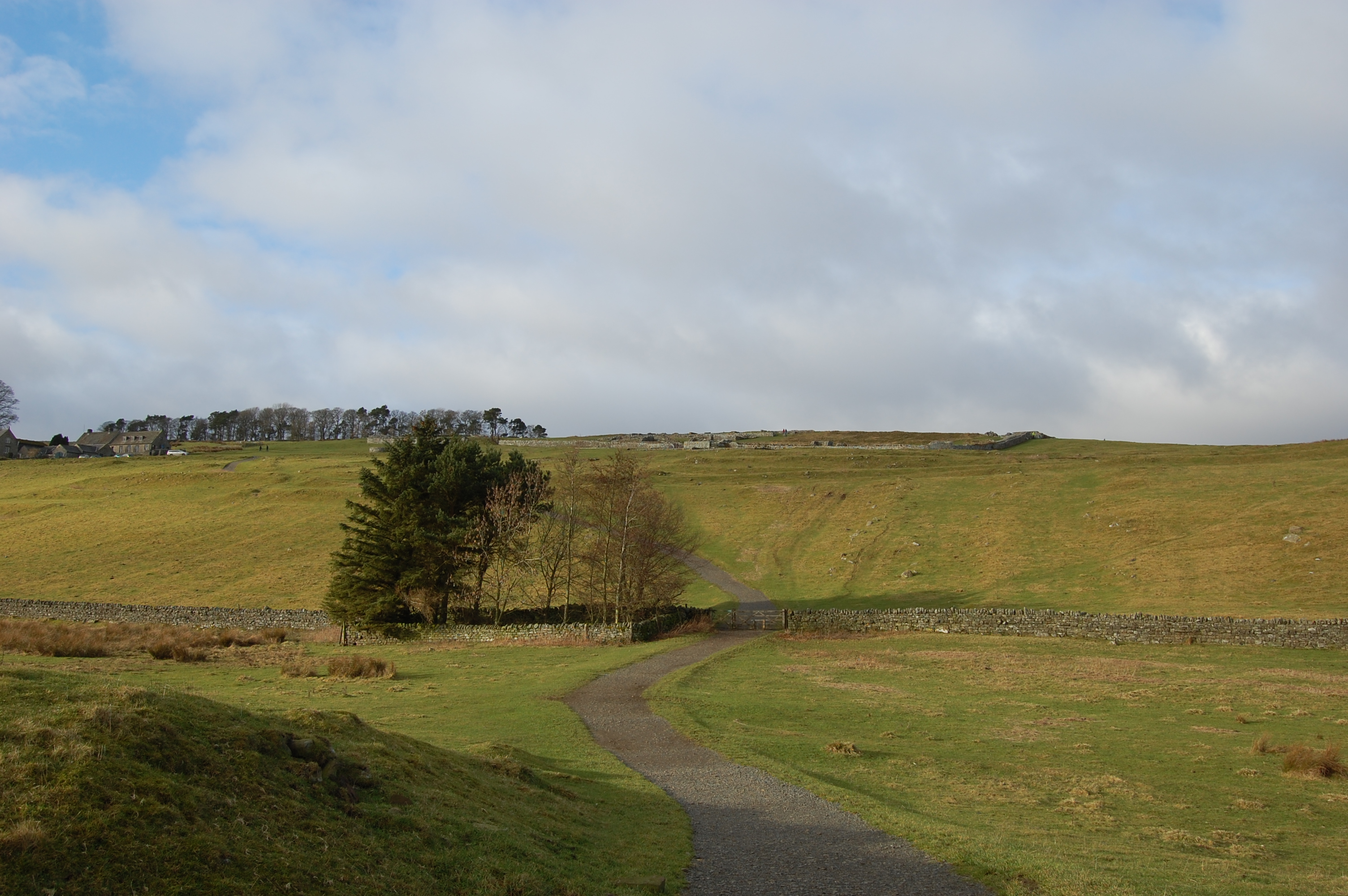
The walk from the parking area to the fort was no small feat. Both English Heritage and National Trust state “steep slope from parking to museum”, but that it is only a 10 minute walk. Perhaps for the fit and hardy English, but that was a 20 minute walk for any ‘merican who is used to going everywhere in a car.
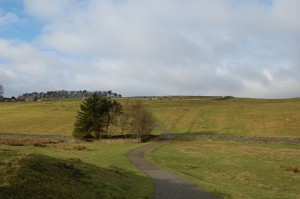
The path up to Housesteads Roman Fort and the museum (to the left of the fort). Much more steep than it looks here.
When we first got there, Kathy was going to stay down at the snack and souvenir shop at the parking lot, but as she put it “Suddenly, I found myself on the path to the fort.” Twenty minutes or so later, we were at the museum up the hill – where we found out we could have driven to since Kathy has a Blue Badge. We spent a few minutes in the one-room museum, then I headed out to the wall and the fort, while Kathy viewed and purchased souvenirs.
While it was partly sunny when we came up from the parking area, the day began to become much more brisk while I roamed the grounds of the fort, the wall and a gateway that was just east of the fort. By brisk, I mean it was getting fairly breezy, it was cold, and a bit of wet, cold stuff was falling out of the sky sporadically. I actually found myself huddling behind a wall of an old granary to try to get out of the wind for a bit. The fort is situated on a fairly high point, giving it a commanding view of the countryside, but just imagining how a poor auxiliary infantryman from someplace in the south of the Roman Empire (Housesteads only housed auxiliary units, not legions) might feel with the wind and the cold made me long for someplace warmer!
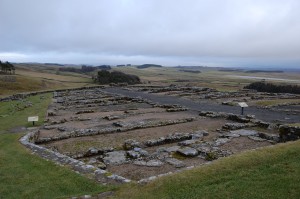
After the brisk walk back to the parking lot (Kathy had gone on down before me after making her purchases at the museum souvenir shop), I had a nice hot cup of something – cafe americano? cappuccino? hot chocolate? – at the snack shop, and a cake of some type to tide me over until later.
We tried stopping at a Temple to Mithras that was supposed to be along the B6318, but when we got to the parking area, the spotty drops from the sky had become much more frequent, and we just didn’t feel like venturing out into that, even with the £6 umbrella we had purchased in Windsor. So, from the parking area at Brocolitia, we headed to our lodging for the evening, a hotel in a 14th century castle!
Because of the unique nature of our lodging for the night, a separate post has been created about it.
The day started with a fine English breakfast at the Balcony House Bed and Breakfast, then moved on to trying to get help from the car rental company (good luck, that!), then The Generosity of Strangers prevailed.
With two new tires on the back of the rental car, we were back on the road by about 11:00 AM. Unfortunately, the weather was not going to cooperate with us – low clouds, some rain, and a bit of a chill caused us to heed the advice of our host and NOT try to drive up to the Hardknott Fort, the old Roman fort of Megiobogdum. While the Hardknott Pass is only about 1300 feet in elevation, the road is only wide enough for about a car and a half, is very slick in places – even without rain or ice, and has about a 33% grade. Considering everything that had happened in the last 15 hours or so, we choose not to go up to the fort. Instead, we went directly to Ravenglass (where we were going to have to go to get to Hardknott anyway).
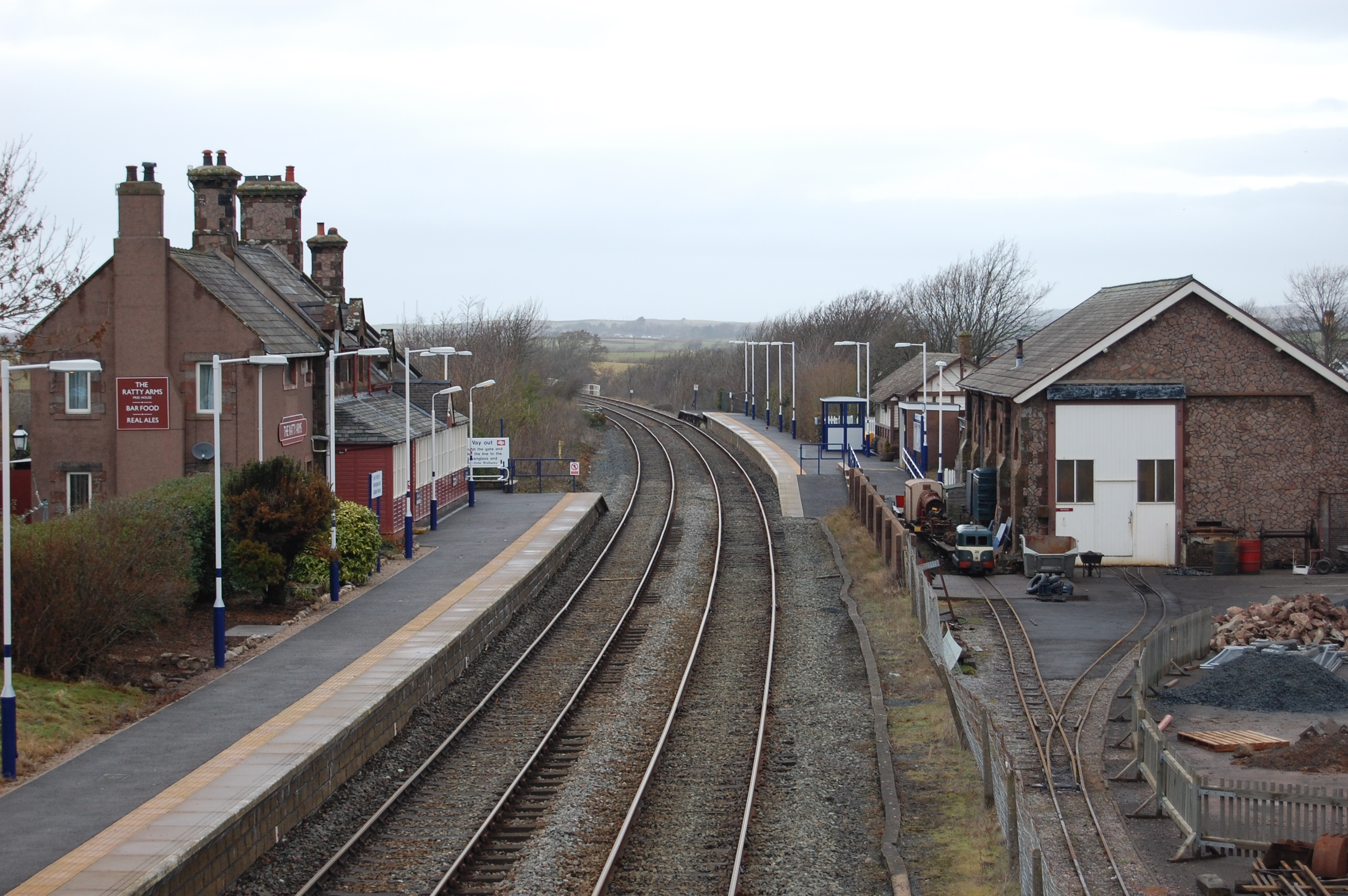
In Ravenglass, we had lunch at a pub called “The Ratty Arms” which used to be the old train station. A warm fire, a delicious meal and fun conversation with the two ladies serving up food and drink made this a memorable experience.

The Ratty Arms Pub in Ravenglass was previously the train station. While the station is still there, the building doesn't serve that function any longer. Automation once again takes its toll.
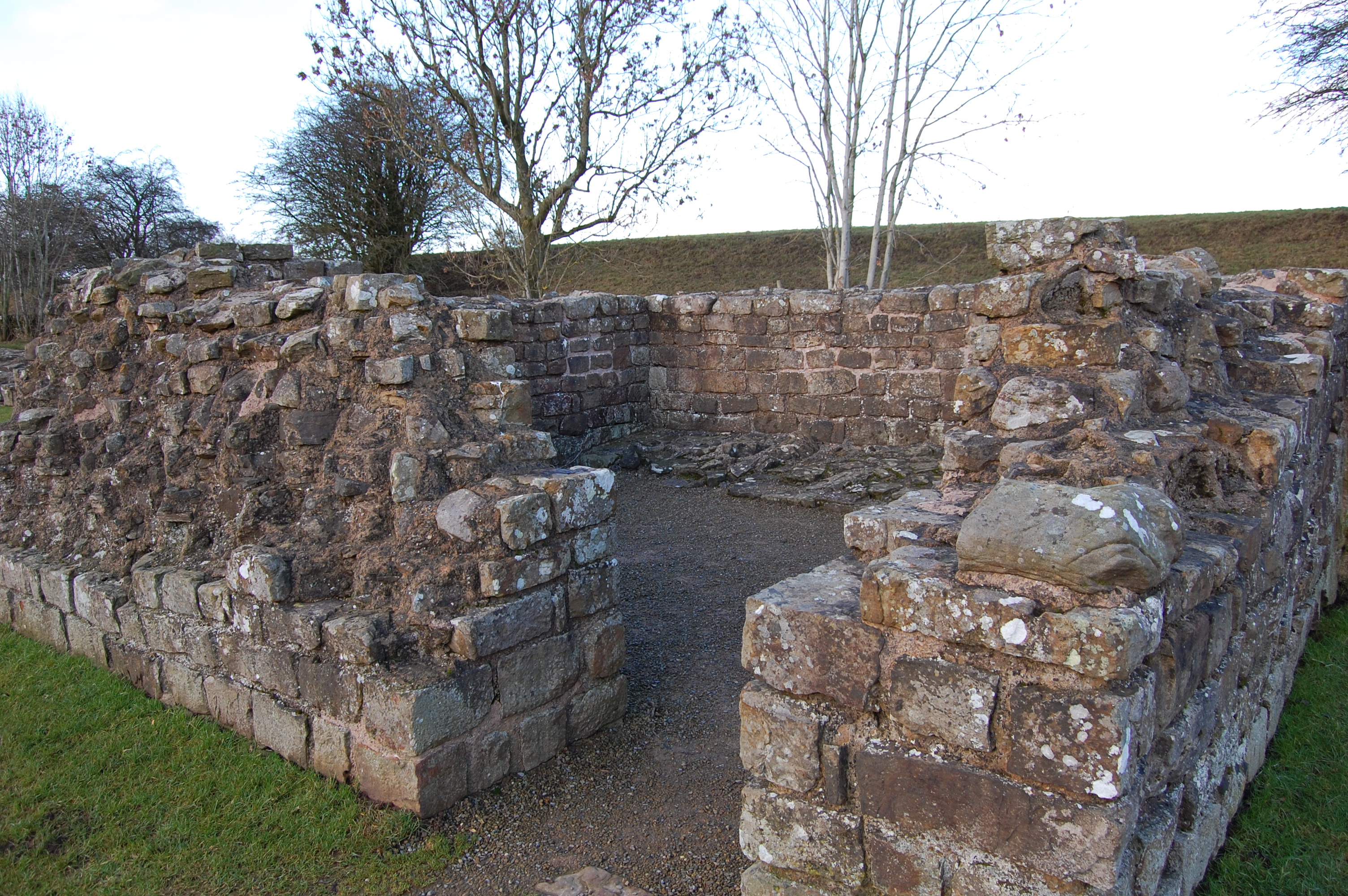
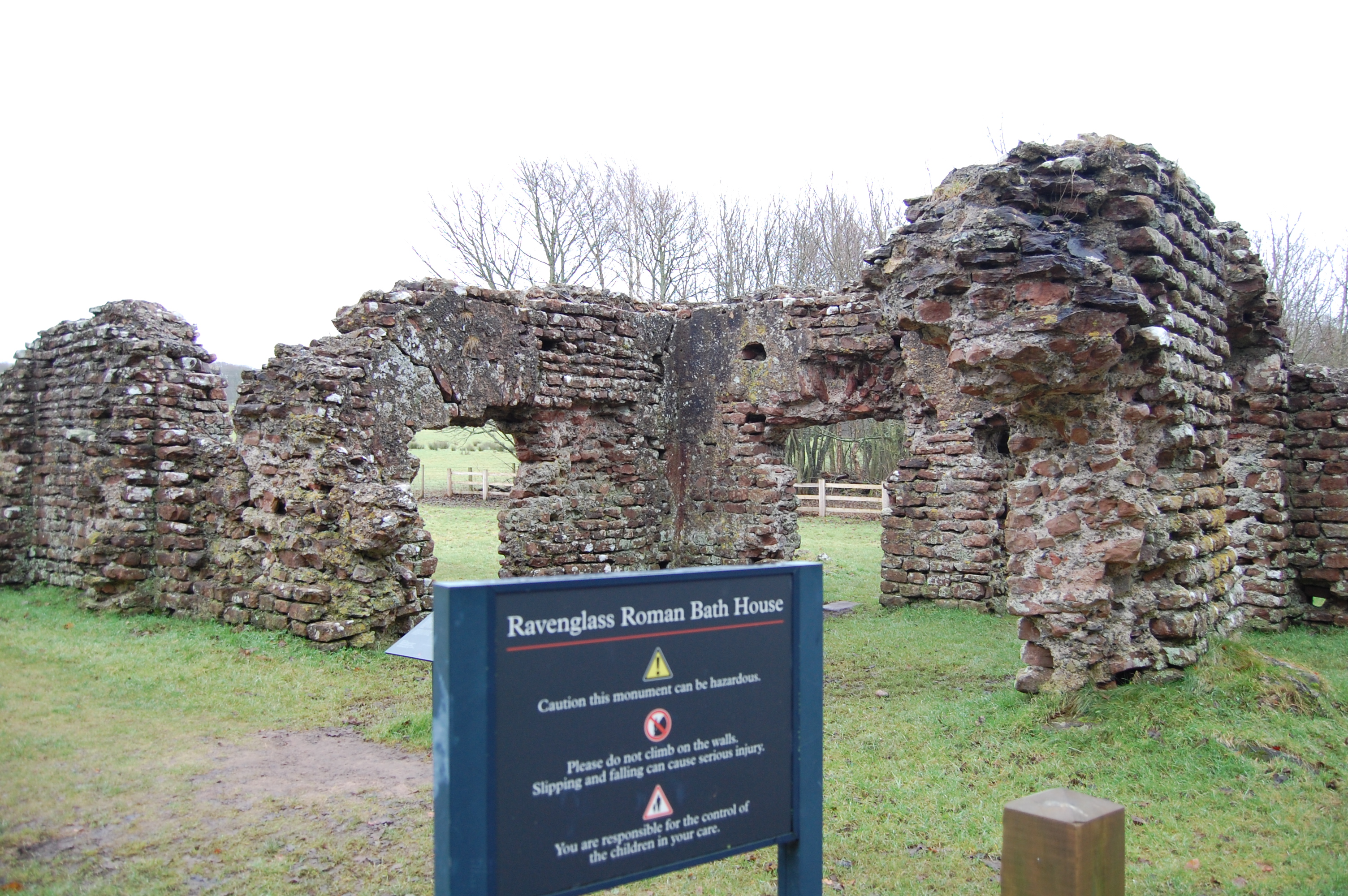
After lunch, we walked a little over a half a mile to the Roman Bath House which was down a well maintained gravel road. The bath house actually was outside the fort called Glannaventa by the Romans. The ruins of the bath house are the only thing that remain above ground, although the ground contours of the fort ramparts appear to still be visible.

Remains of the Roman Bath House at Ravenglass. In the land of superlatives, this ruin is among the tallest Roman structures remaining in northern Britain. The walls are nearly 13 feet tall.
The walk back to the car park didn’t seem nearly as long as the walk out to the Bath House. Back into the car, and on to Carlisle for our evening lodging at the Warren Guest House. The navigator did a tremendous job getting us through downtown Carlisle during the evening rush hour!


Start discussion »