
Another morning, another English breakfast! The only thing that has been missing from these great breakfasts has been pancakes, but that would make them too large. And sleepy. After chatting with our hosts, we loaded up and headed towards Hadrian’s Wall.
The building of Hadrian’s Wall began in the year AD 122, and was completed about AD 128. It stretched from the River Tyne in the east to near the Solway Firth in the west of England, stretching for 80 Roman miles (73 miles by today’s measure). It would be abandoned after the death of emperor Hadrian in AD 138 in favor of an earthen wall 100 miles to the north built at the direction of the new emperor, Antoninus Pius (the Antonine Wall in the Central Belt of Scotland). By AD 164, the Antonine Wall was abandoned, and Hadrian’s Wall became the main defensive barrier in Britannia under emperor Marcus Aurelius.
What remains today are phenomenal pieces of Roman history – stretches of original wall, foundations for forts, milecastles and turrets.
Following signage for Hardian’s Wall, our first stop was the Banks East Turret 52A. Turrets were small outposts along the track of the wall, typically two turrets between each milecastle (which were larger than turrets).
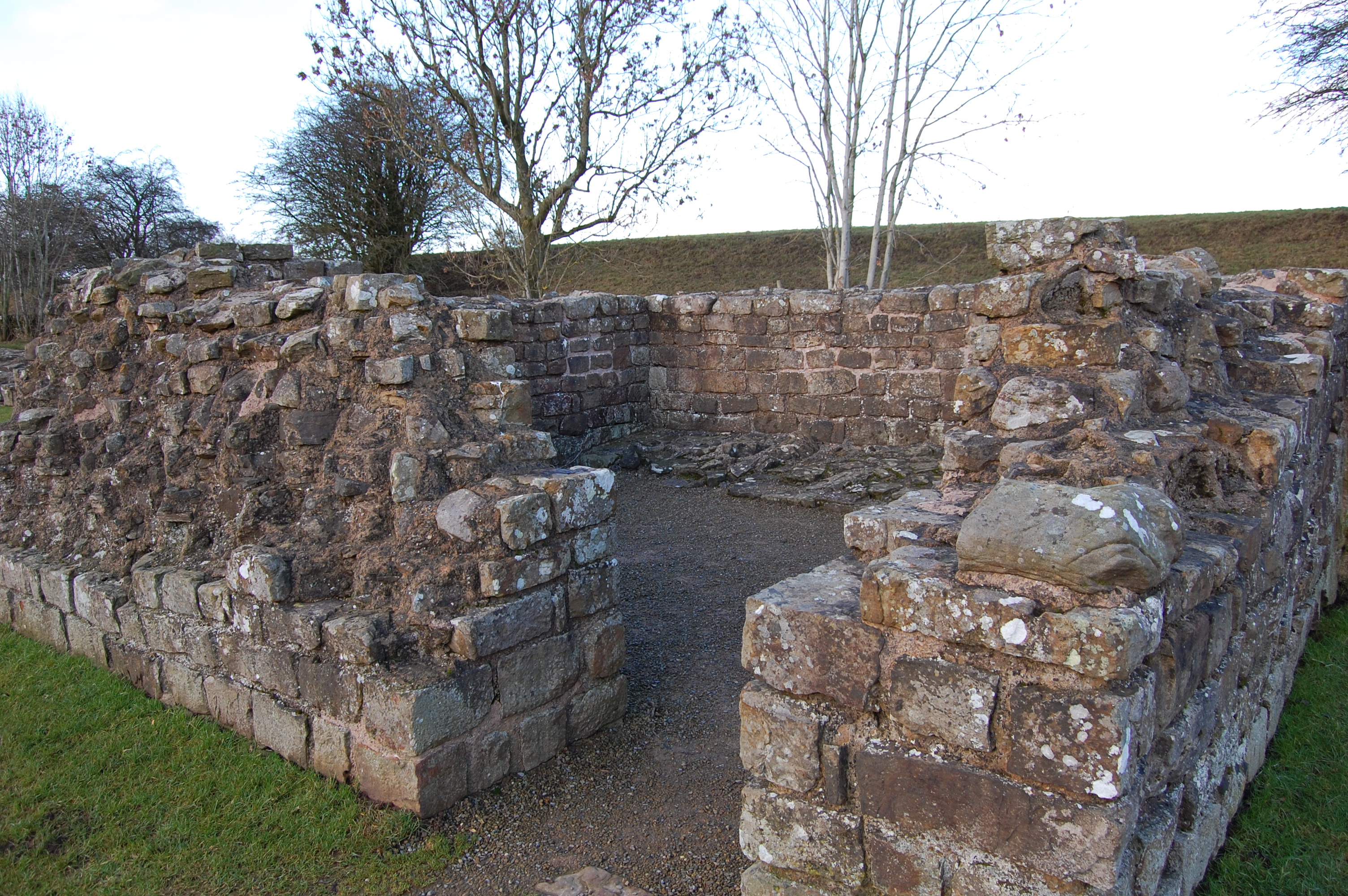
View of the interior of the remains of Banks East Turret 52A along Hadrian's Wall. These turrets were two-story buildings, with a ladder going up to the second level. A small squad of men, typically no more than 8, would man the turret.
The next stop was Birdoswald Roman Fort, called “Banna” by the Romans. Although the Visitors Centre was was not open, we were able to walk the site. Birdoswald is the only site along Hadrian’s Wall where post-Roman occupation has been proven, and the display panels on the site explained this.
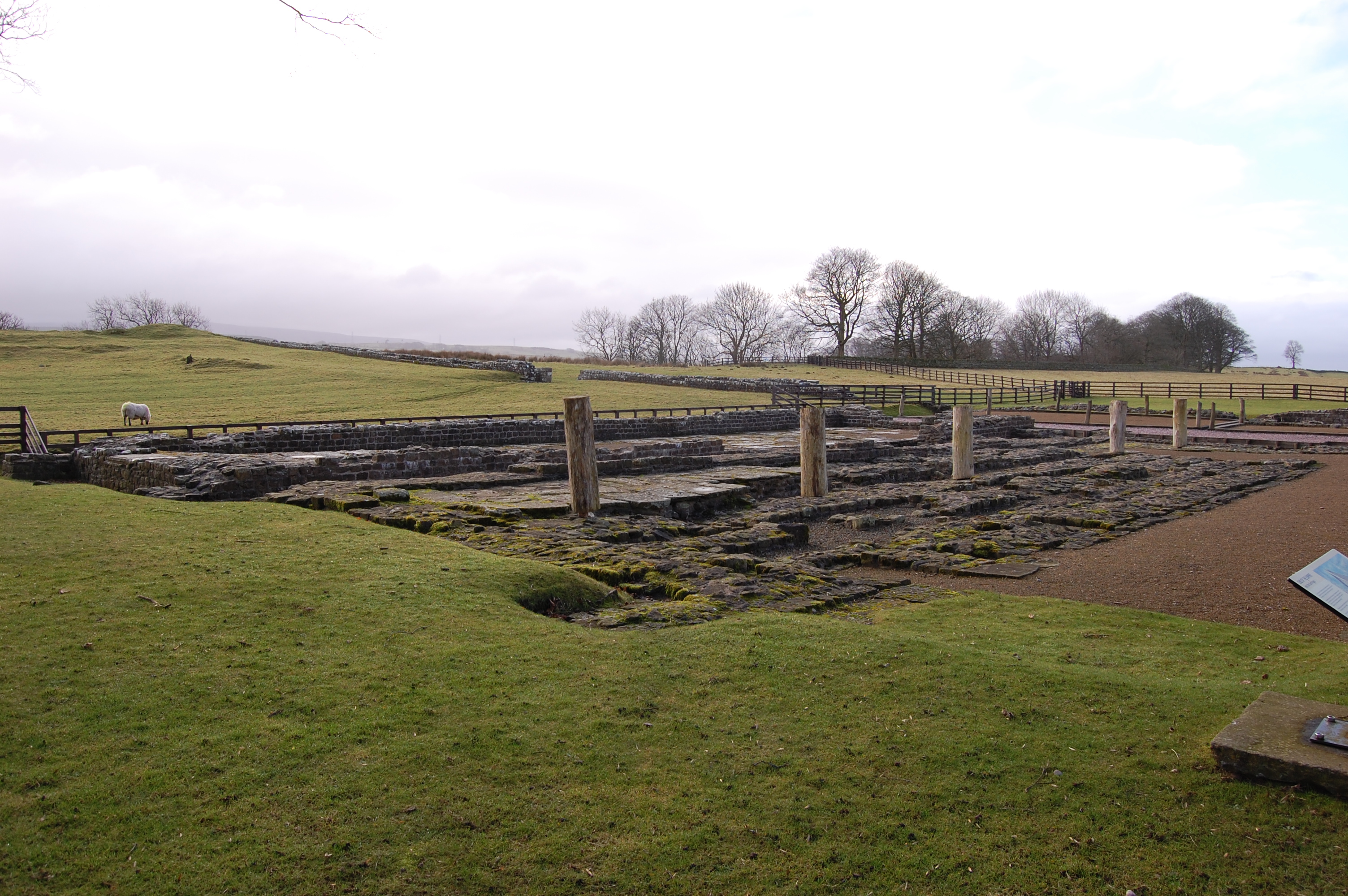
A view of the Birdoswald Roman Fort, facing south west.
Continuing to travel east, we stopped at a parking lot to get on the trail for a milecastle, Poltross Burn Milecastle 48. About 1/4 mile away, through a sheep pasture, over a railroad, and down another sheep pasture, the remains of the milecastle could be seen. The milecastle would have accommodated up to 64 men in Roman times.
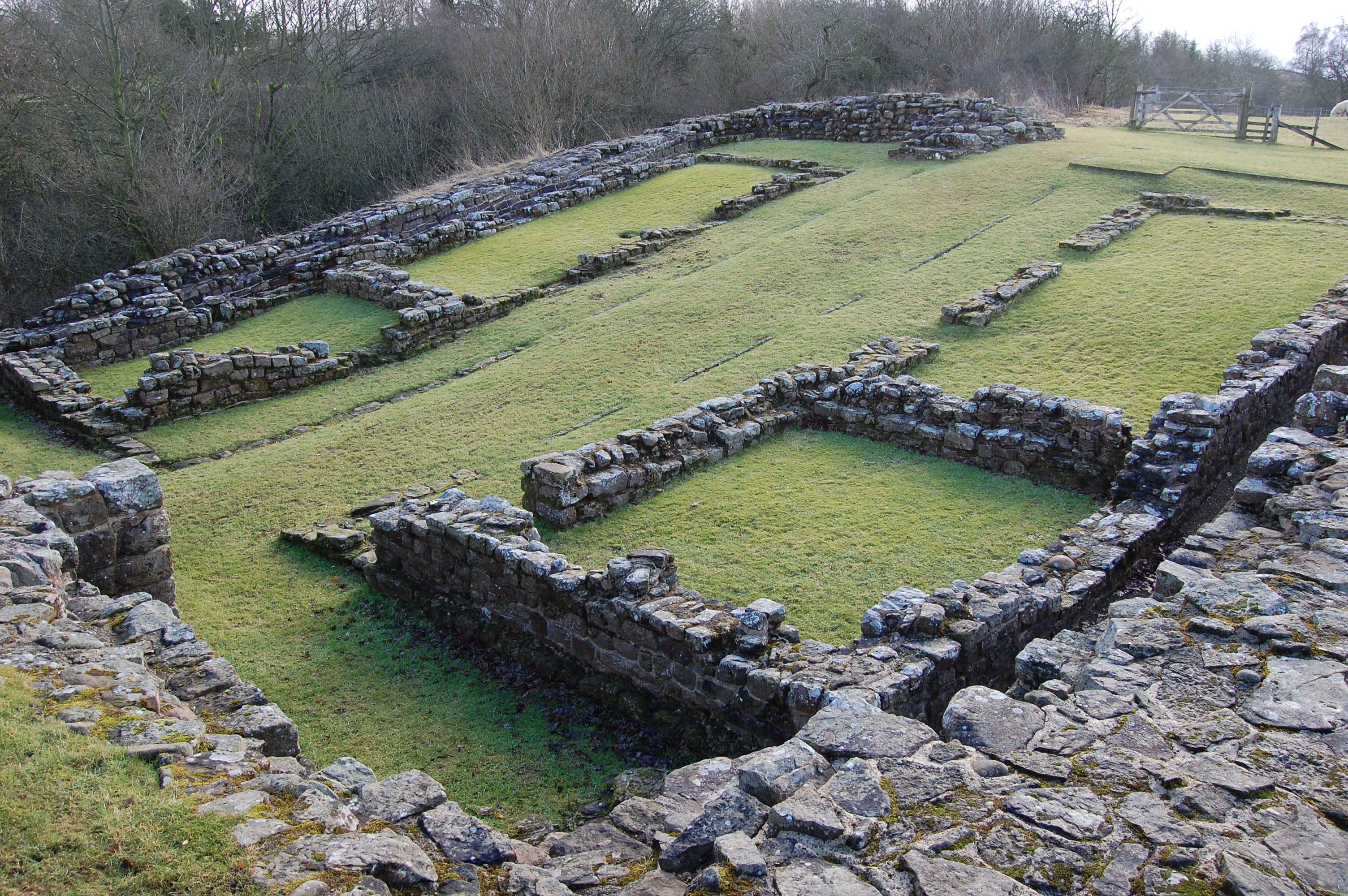
A view of the Poltross Burn Milecastle 48, looking towards the south. Up to 64 men would have been garrisoned here.
Traveling further east, we arrived at Cawfields Quarry near Milecastle 42. Here, the wall is integrated with outcroppings of rock called the “Whin Sill“. The quarry was worked until 1944, and removed portions of the wall with its development. Milecastle 42 is just east of the quarry.
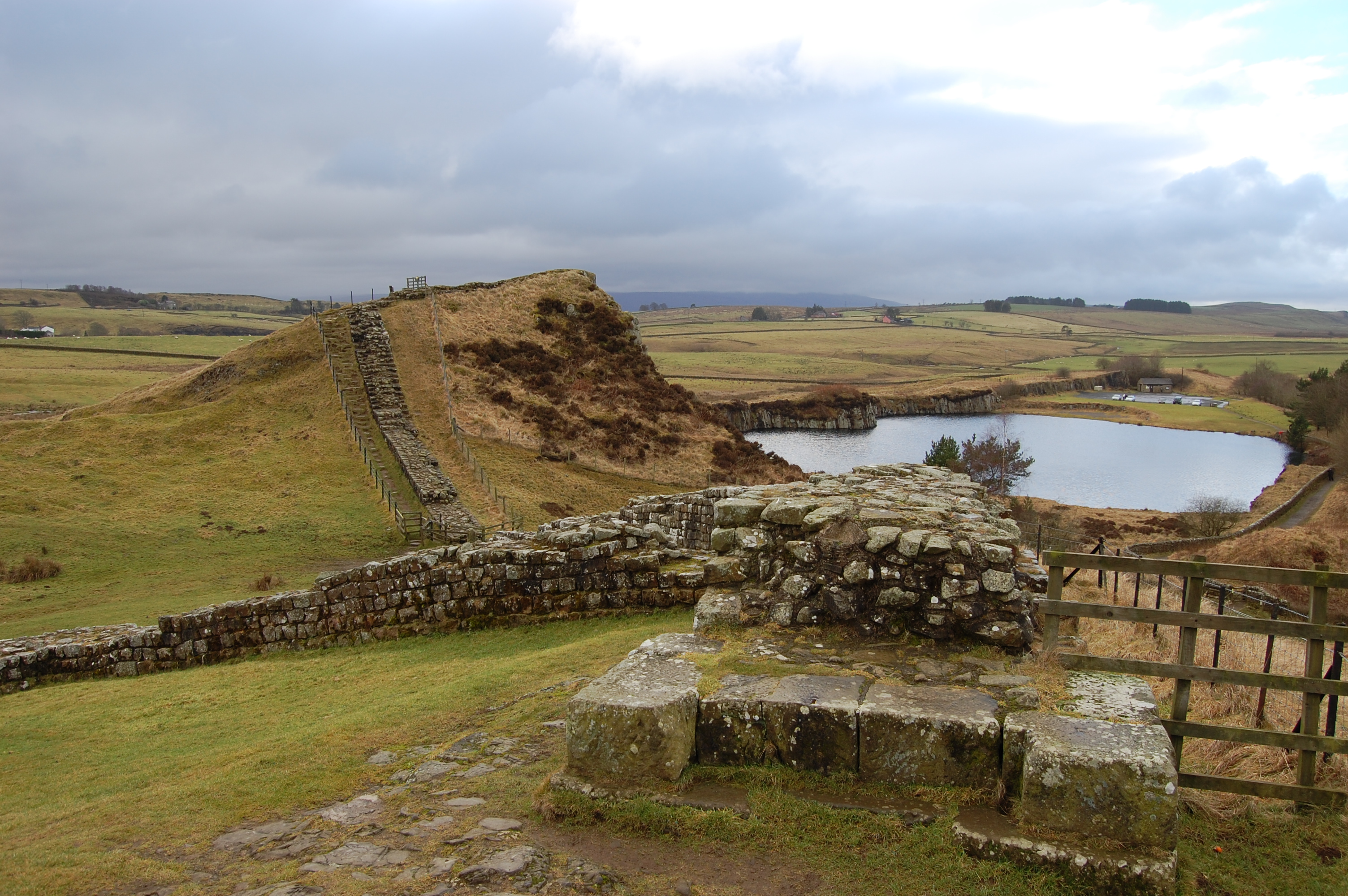
The pond formed in the abandoned Cawfield's Quarry, as viewed from Milecastle 42 on Hadrian's Wall. Even the small parking area you see in the picture is a "Pay and Display" parking area!

Milecastle 42 as viewed from the wall as it approaches the cliff formed by Cawfield's Quarry.
Our next stop was the fort at Housesteads, known to the Romans as “Vercovicium”.
The parking area at Housesteads is located right on the B6318 road. There is a small gift shop and snack bar there, along with public toilets. This location is run by either English Heritage or the National Trust – but the actual fort has a small museum that is run by the other organization, with a separate gift shop.
The walk from the parking area to the fort was no small feat. Both English Heritage and National Trust state “steep slope from parking to museum”, but that it is only a 10 minute walk. Perhaps for the fit and hardy English, but that was a 20 minute walk for any ‘merican who is used to going everywhere in a car.
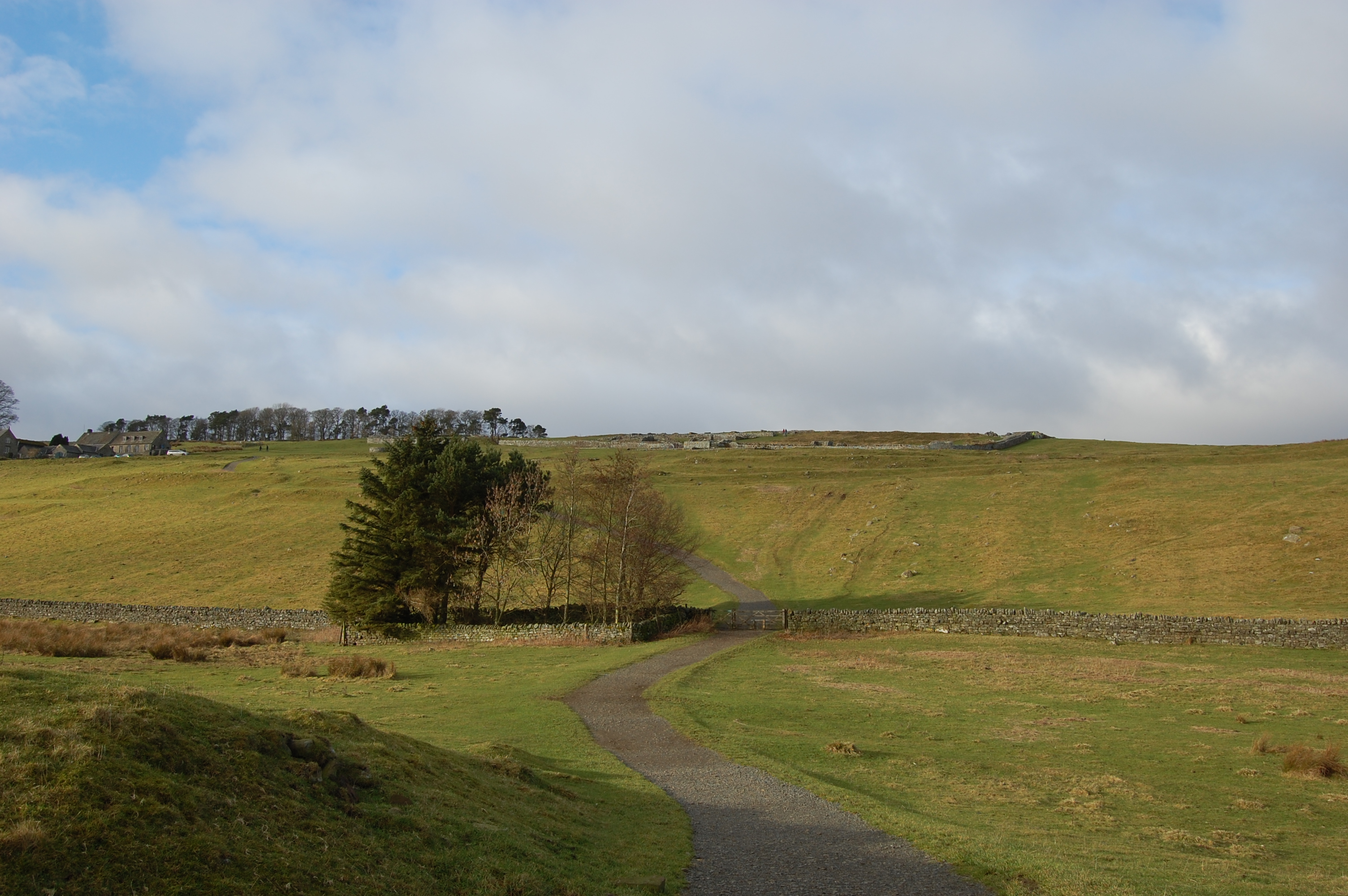
The path up to Housesteads Roman Fort and the museum (to the left of the fort). Much more steep than it looks here.
When we first got there, Kathy was going to stay down at the snack and souvenir shop at the parking lot, but as she put it “Suddenly, I found myself on the path to the fort.” Twenty minutes or so later, we were at the museum up the hill – where we found out we could have driven to since Kathy has a Blue Badge. We spent a few minutes in the one-room museum, then I headed out to the wall and the fort, while Kathy viewed and purchased souvenirs.
While it was partly sunny when we came up from the parking area, the day began to become much more brisk while I roamed the grounds of the fort, the wall and a gateway that was just east of the fort. By brisk, I mean it was getting fairly breezy, it was cold, and a bit of wet, cold stuff was falling out of the sky sporadically. I actually found myself huddling behind a wall of an old granary to try to get out of the wind for a bit. The fort is situated on a fairly high point, giving it a commanding view of the countryside, but just imagining how a poor auxiliary infantryman from someplace in the south of the Roman Empire (Housesteads only housed auxiliary units, not legions) might feel with the wind and the cold made me long for someplace warmer!
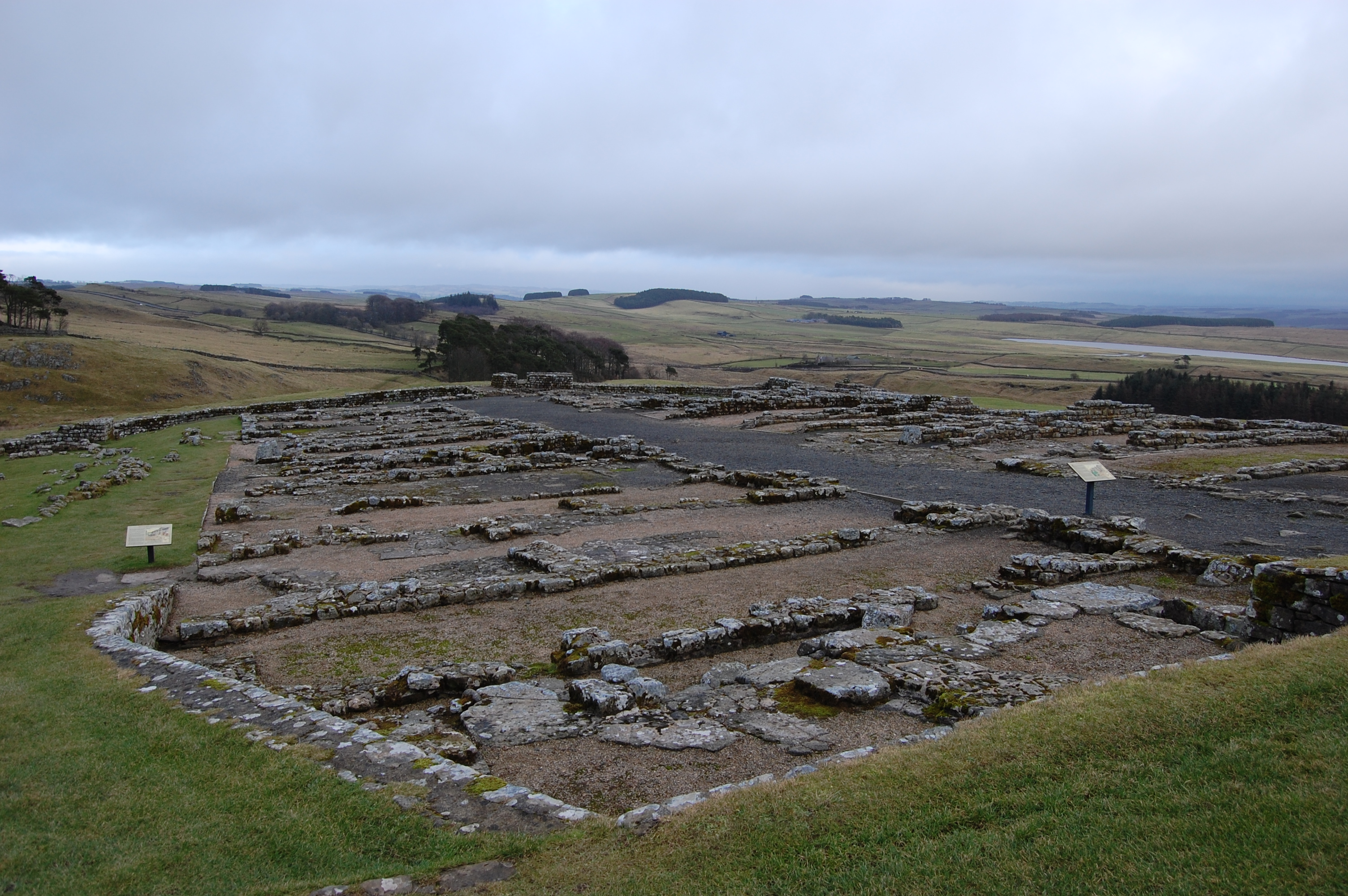
This is a view of two rows of barrack building foundations at Housesteads Roman Fort, looking east.
After the brisk walk back to the parking lot (Kathy had gone on down before me after making her purchases at the museum souvenir shop), I had a nice hot cup of something – cafe americano? cappuccino? hot chocolate? – at the snack shop, and a cake of some type to tide me over until later.
We tried stopping at a Temple to Mithras that was supposed to be along the B6318, but when we got to the parking area, the spotty drops from the sky had become much more frequent, and we just didn’t feel like venturing out into that, even with the £6 umbrella we had purchased in Windsor. So, from the parking area at Brocolitia, we headed to our lodging for the evening, a hotel in a 14th century castle!
Because of the unique nature of our lodging for the night, a separate post has been created about it.
Start discussion »
Leave a Reply