
Tue
25
Jan '11
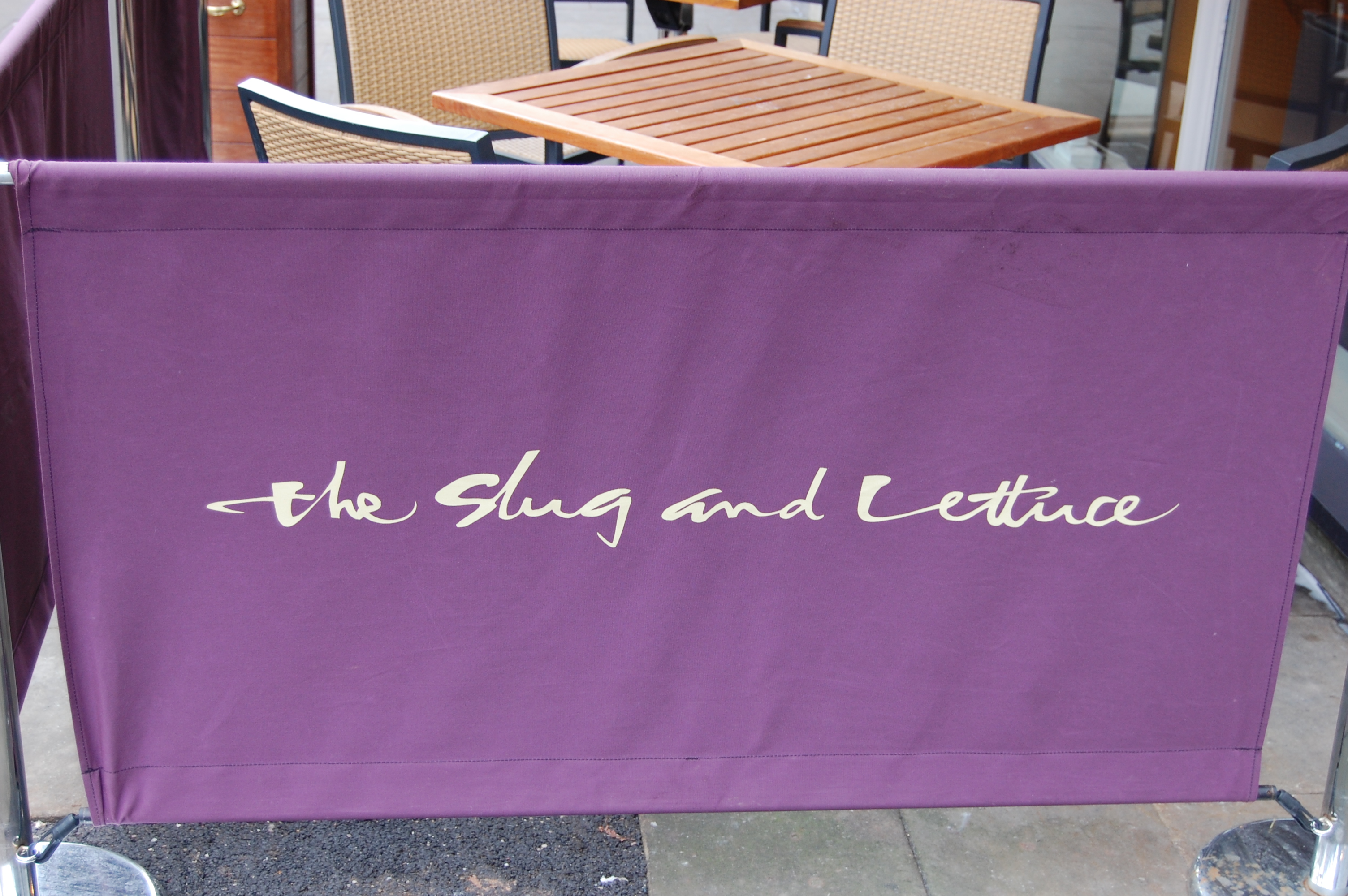
Restaurant we saw in Chester. Yes, the name is "The Slug and Lettuce". Turns out that this is one of a chain of over 70 throughout the UK.
Want to find your closest Slug and Lettuce? Click here.
Restaurant we saw in Chester. Yes, the name is "The Slug and Lettuce". Turns out that this is one of a chain of over 70 throughout the UK.
Want to find your closest Slug and Lettuce? Click here.
Or maybe just friends you haven’t met yet.
I realize I’ve missed a couple of days…ok, beyond a week now at this point (Bath to Tintern took place over a week ago), but a few nights of no internet access along with just being dog tired at the end of each day hasn’t helped with keeping up.
We were getting off an “A” road about 6:00 PM or so and onto a different “A” road leading to Kendal in the Lake District on Monday night, January 24, when we heard an unusual noise from the rear of the car. About a half a mile up the road, I realized that we had a flat tire on the right rear of the car. We found a place to park the car away from the road (even if it WAS a no parking zone – it was a college parking lot) but well lighted. The rental agreement had a phone number for roadside assistance, so we broke out the global phone we purchased for this trip and plugged the number in. It turns out the number was actually for the AA (the equivalent to the US AAA) but the rental company has some kind of scheme worked out with the AA. After about 10 minutes of trying to explain to the gentleman where we were (I swear I said Kendal 10 times, but it wasn’t until I spelled it phonetically that he said back to me “Oh, Kendal, I know where that is…)
After the call to the AA, we called the B&B we were headed towards to let them know we had a flat and would be a bit late. At the news of that, the gentleman from the B&B asked where we were, and he would come down to take us to the B&B, along with our bags! Brian arrived a short time later, and the Clampetts got their luggage in his car. Kathy went with him back to the B&B while I waited for the AA to arrive.
About 20 minutes after Kathy and Brian left, the AA truck arrived. A young man by the name of Tom took a look at the flat tire, asked me how long we’d had the car (a week to the day) and how many miles we’d put on it (about 1300 at that point) and stated that the reason the tire went flat was because the tire was not fit to be on the road! It was bald, had a fairly large gouge on the inside, and had bare wire showing through the rubber that was left on that inside gouge. He changed the tire with the spare in the trunk, then took a look at the other tires – the other tire on the back of the car was nearly as bad as the flat, while there didn’t seem to be a problem with the front tires. He also told me that if we had been stopped by the police that each tire would have been worth “3 points on your license”. Not sure what that would translate into for a foreign visitor, but I am sure it would not have been pleasant. Tom was adamant that the car was not fit to be on the road, but he understood that we were on holiday, so he wanted me to take the car either to a tire store (where I could park the car off the road) or to the dealer (where I would need to leave the car on the street) and deal with it in the morning. Apparently there is nothing like Manny, Moe and Jack in the UK – most stores that provide services are only open from 8:30 in the morning until about 5:00 in the evening. Having seen how people drive, and what a lot of cars that have been parked on the roadside look like, I opted for the tire store so I could leave the car off the street. I followed Tom through town and parked the car in front of a tire store in the Mintsfeet Industrial Estate (think business park, but this one seemed to deal primarily with automobile, truck and motorcycle products). Tom then dropped me off at the B&B.
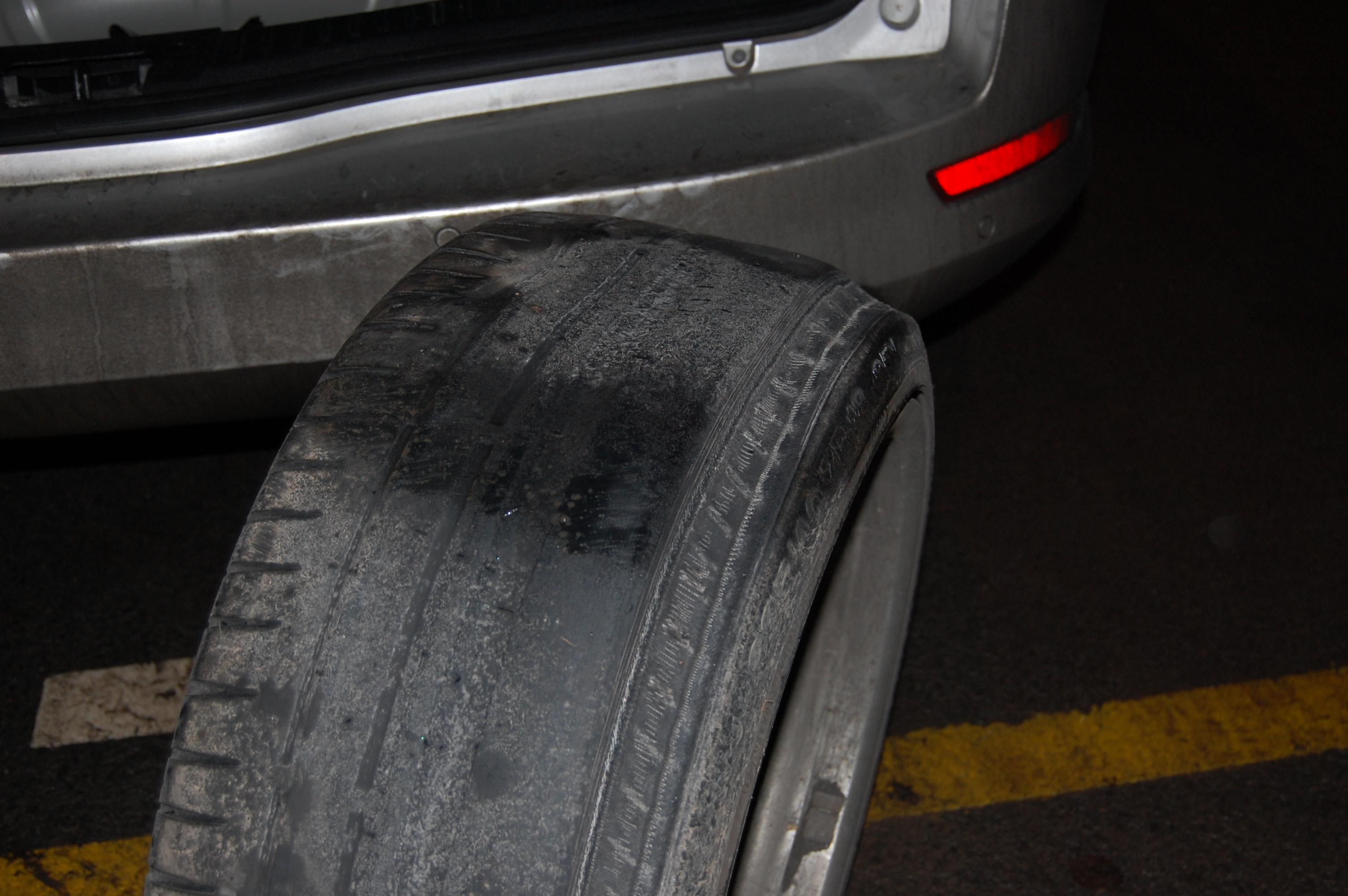
Right rear tire, flat, after the AA man had removed it from the car.
Now, while the AA isn’t an official government agency, apparently they are fairly well respected. When I related the story to Brian, one of our hosts, he told us that if the AA says the tires are bad, then most people and companies in the UK will accept that as a fact.
I attempted to call the rental company customer relations line, but ended up in a phone tree from hell, with options that did not apply (no, I didn’t need to make a reservation or discuss a bill from a previous registration…) Eventually, I was able to get a representative to make a reservation, and explained the situation to her. Her only advice was to try to call one of the local offices to Kendal (one was 40 miles away, the other 60 miles away) IN THE MORNING! She gave me the phone numbers she had listed for Barrow-in-Furness and Carlisle, but advised me that they wouldn’t open until 8:30 the next morning.
So it was with much consternation, worry and concern that we went to bed, realizing there was nothing we could do about the situation until the morning.
In the morning, the fun began anew.
Attempts to call the rental office in Barrow-in-Furness went unanswered. A call back to the main Customer Relations number, once again with no option for “you have a current rental and need help”, a reservation clerk once again offered the number for a local office, this time the Carlisle office with a different number than the night before. A call to that number also went unanswered.
While I was dealing with the rental company, our host called over to the tire store where the car had been left overnight to let them know why there was a car in their “forecourt” this morning. Our host explained that we were on vacation, the car was a rental, and we were trying to get repairs sorted out with the rental company.
A few minutes later, the man from the tire store, named Martin, called our host back to let him know that he had contacted our rental company and had arranged to replace both of the rear tires on the car, and that they should be able to have it done within an hour and a half, with no cost to us!
Our host drove me back over to the tire store because I had the key to the car and they couldn’t do anything with the car as long as I had it, then we went back to the B&B. A short time after getting back to the B&B, Martin called to say they had already received the tires and the car would be ready to go in a few minutes. Another lift back over to the tire store, and about 20 minutes later, I was driving the Ford back over to the B&B so we could load up and continue our trip.
Between Brian and Mandy (our hosts at the Balcony House Bed and Breakfast) and Martin at the ATS Euromaster store in Kendal, we couldn’t have gotten assistance from better people. They all went well out of their way to make sure we were able to continue our vacation with as little disruption as possible.
The story when we returned the car to the rental company looks like it may have had a happy ending also – but time will tell.
There is something about the familiarity/blandness/commonality of something like a Holiday Inn Express that can be soothing and relaxing after a couple of days of unknown lodging. Not that any of the places we had stayed caused major consternation, a cold room or a tiny shower notwithstanding. I guess it is more along the lines of a “known quantity” – even if it is in a foreign country, and flushing the toilet is always an adventure!
Breakfast at the Holiday Inn was the standard “full English” breakfast, served buffet style. That meant instead of fried eggs, you had scrambled. But the standard items were available – (English style) bacon, sausage, potato cakes, baked beans, grilled tomatoes, mushrooms, toast, juice, coffee, tea – the whole shebang.
After loading up the Mondeo, we headed into Chester to visit the Dewa Roman Experience. After a bit of consternation with parking we found the venue (we had parked in a Blue Badge spot, then when we talked to some local “officers” – not police, more like community support officers – they told us the street would be closed off to motor vehicles in about 15 minutes, and if the car was still there, it would get towed so I had to go find a real parking lot). The entrance was off the street somewhat, but still easy to find.
Roman Chester was known to the Romans as “Deva” or “Deva Victrix – pronounced Dewa – and was the home to a fortress that housed an entire legion. Begun in the AD 70s by Legio II Adiutrix, it was eventually the home to Legio XX Valeria Victrix.
The Dewa Roman Experience is really geared more to school groups than visiting adults, but it was still an interesting visit. There are actual digs going on within the building, and a time line of history from Roman, Saxon, Medieval and Post-Medieval times displayed throughout.
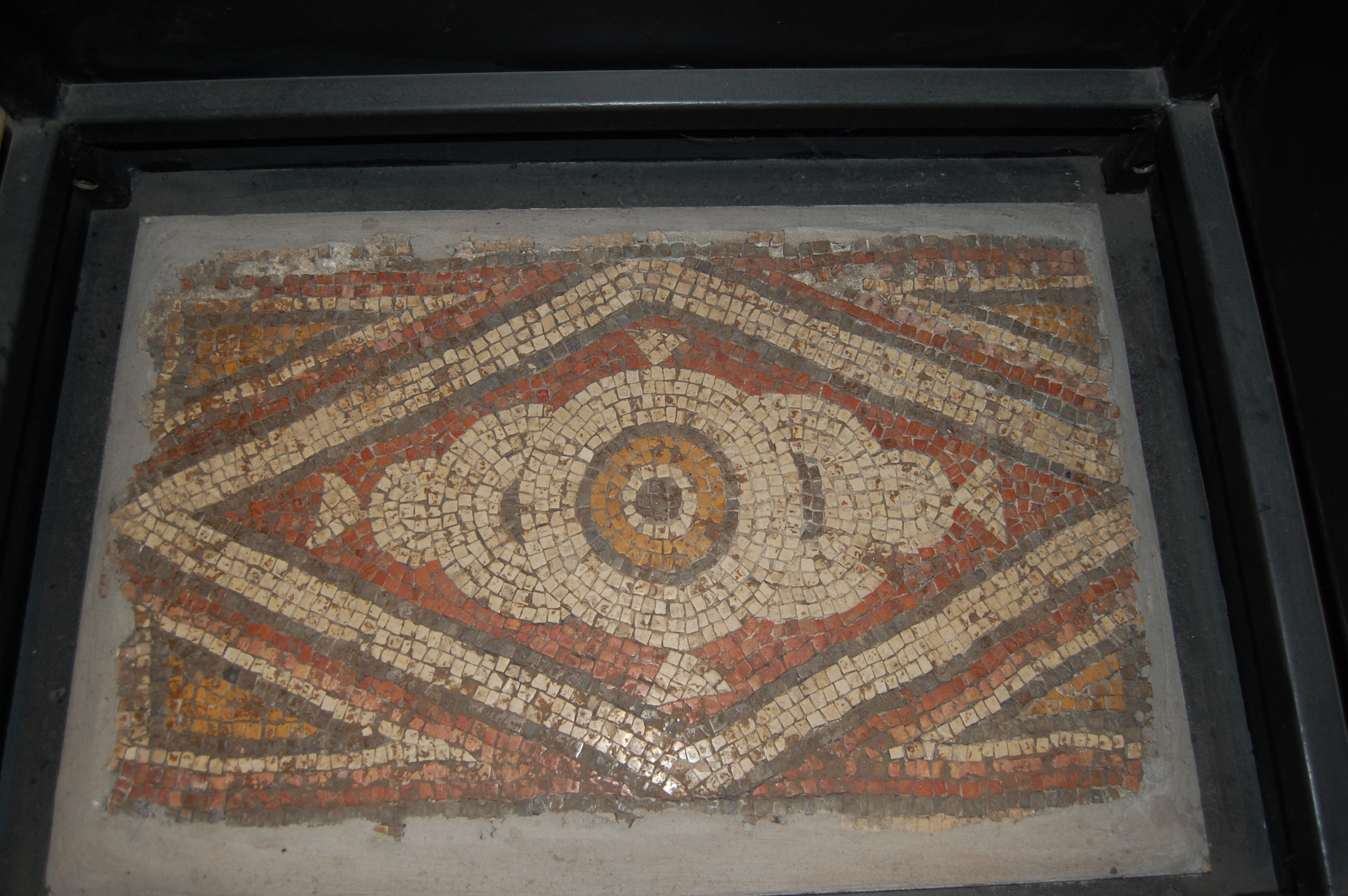
An example of a floor mosaic on display at the Dewa Roman Experience.
From Chester, we headed to Manchester, to view the Egyptian Collection at the Manchester Museum at the University of Manchester.
The Egyptian Collection at the Manchester Museum is one of the largest in the United Kingdom. Only a small portion of the collection is on display to the public. The first room you enter deals with daily-life type items found in two digs. Unfortunately, the lighting was poor, and the items seemed to be forced into the place – it looked like they were trying to do too much with limited space.
Once you passed through the first room, the space opened up and you saw quite a few mummies and their associated coffins, in addition to other statuary, jewelry, and other finds.
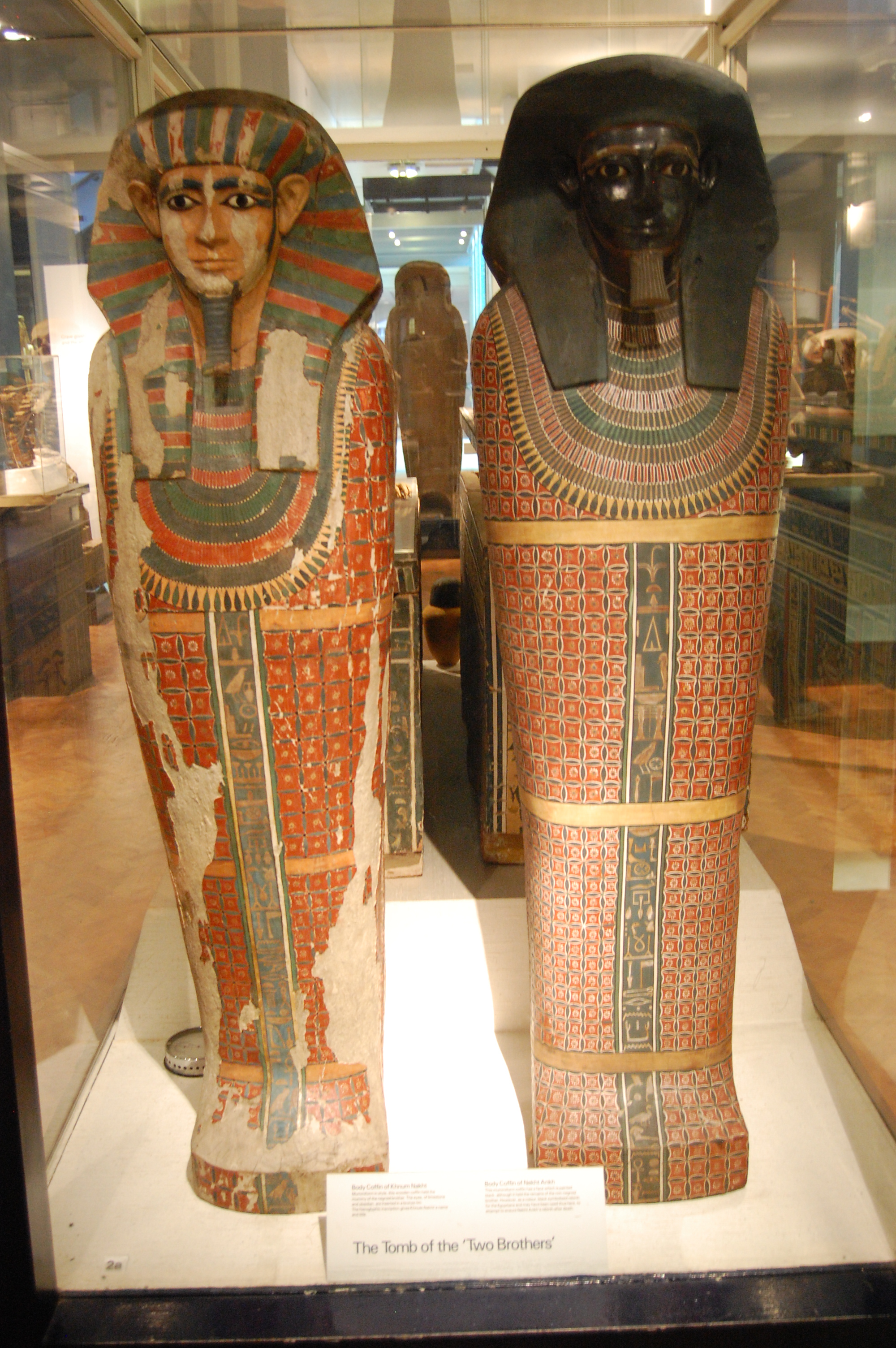
Coffins found in the "Tomb of the Two Brothers", on display at the Manchester Museum.
There were signs alerting the visitor to the fact that the Ancient Egyptian and Mediterranean Collections were going to be closing later this year to prepare for a new exhibit called “Ancient Worlds”, due to open in late 2012.
In case you didn’t know…
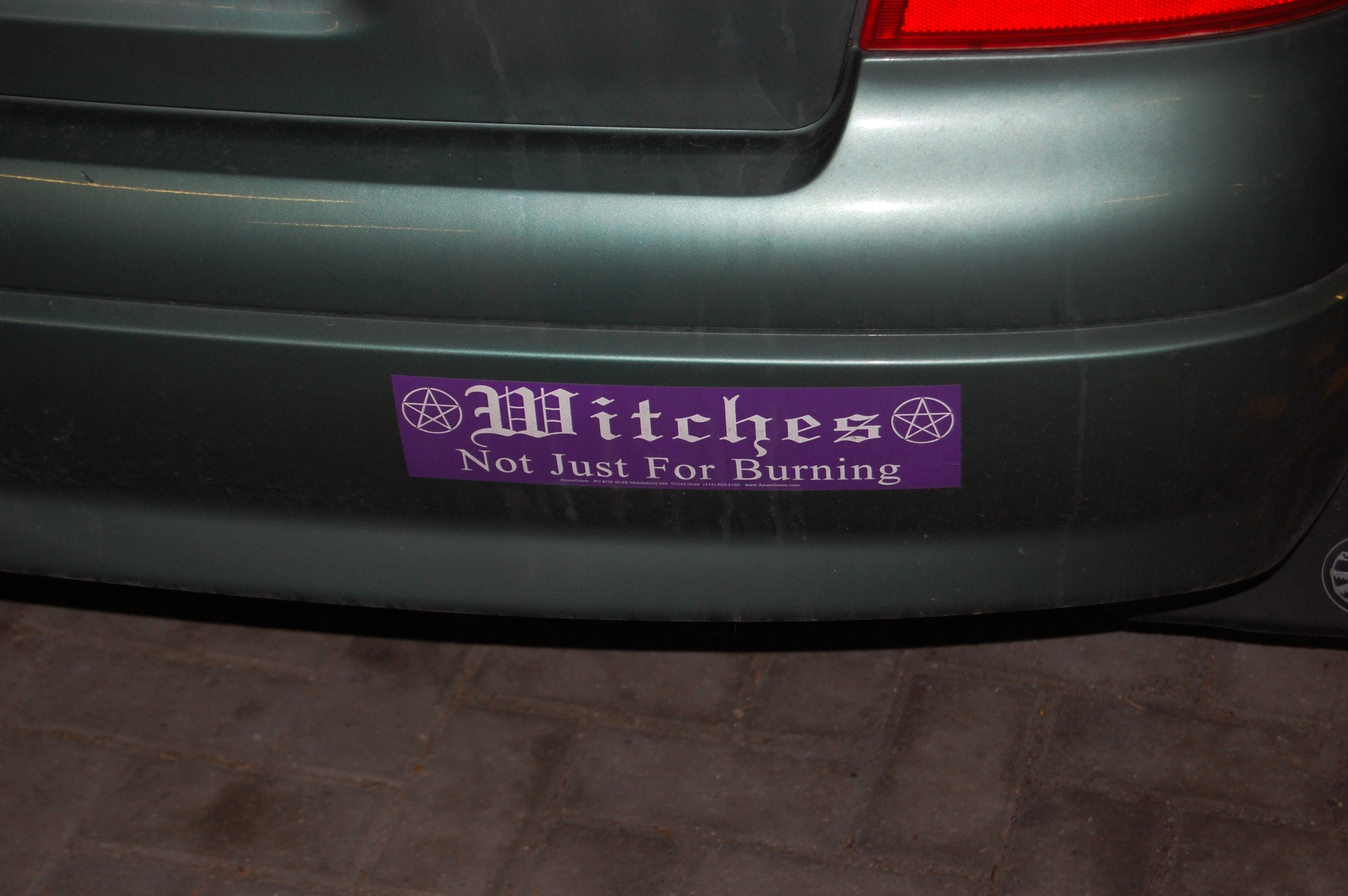
Bumper sticker on a car parked next to us when we visited the Manchester Museum. It says "Witches - Not Just For Burning".
Ever onward, we made our way back to the motorway and headed north to the Lake District, where our lodging for the evening was in the town of Kendal. As we approached Kendal, we got a flat on the rental car – and much fun would consume the next 15 hours.
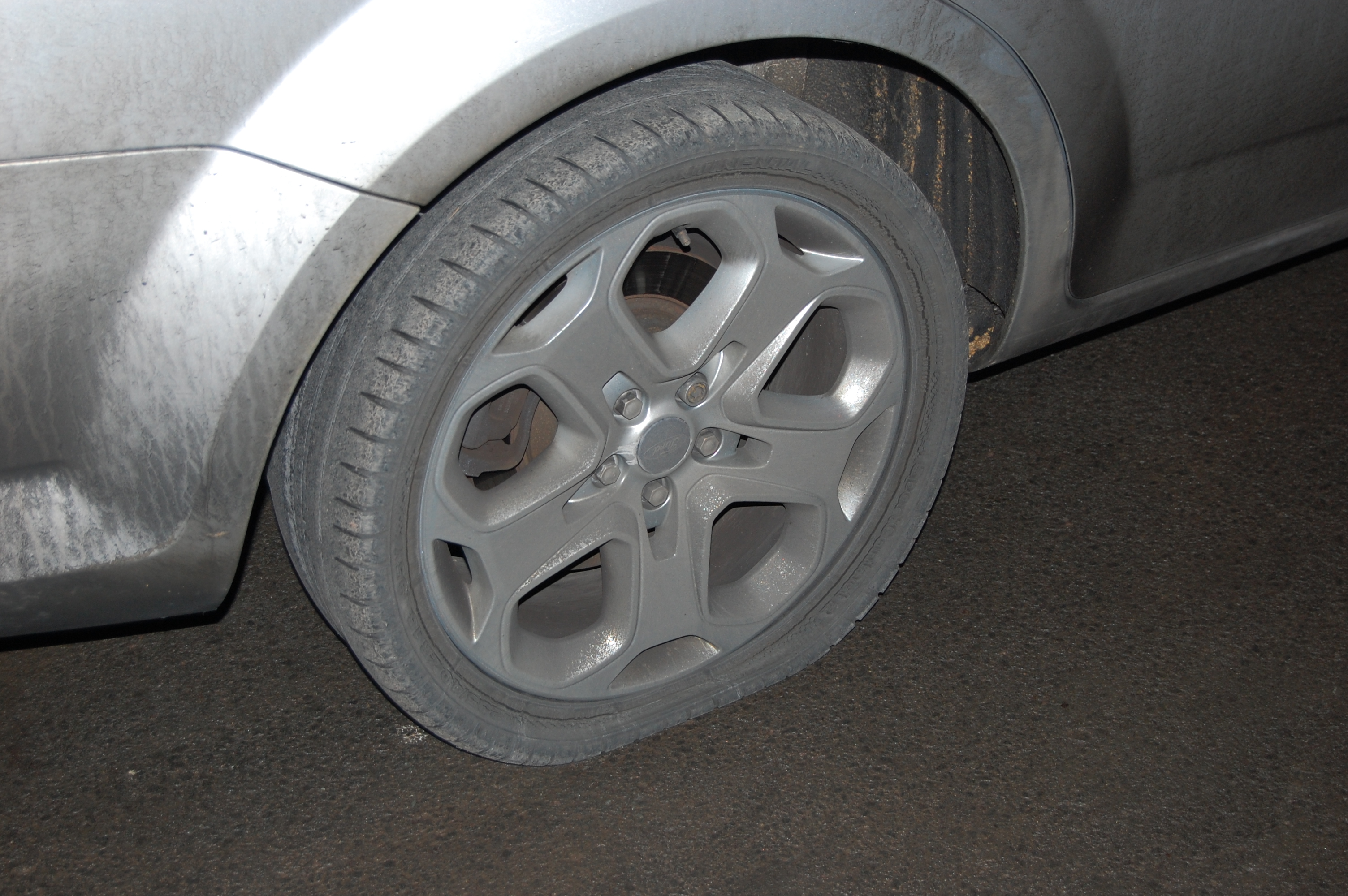
Flat tire on the Ford Mondeo in Kendal. It gets worse. The two rear tires were both bald, unsafe and illegal to be on the road.
With the help of our hosts at the Balcony House Bed & Breakfast and a man at the local ATS Euromaster store, we were able to be on the road by 11:00 the next morning.
If you look at a map of the United Kingdom, the route from Worcester to Chester seems fairly straightforward. A careful route of “A” roads (A449 to A442 to A458 to…you get the idea) will take you directly to Chester in a little over two hours (well, two hours according to Google Maps; there is no telling how long it would really take to go those 83 miles!) You could even take the motorways (M5 and M6) if you really wanted to rush the trip. But what would be the fun in that?
Our goal for the day was to go back into Wales to visit Caernarfon Castle and the ruins of the Segontium Roman Fort above Caernarfon, visit Conwy, Wales then on to Chester, England for a night’s rest at a Holiday Inn Express.
After a good night’s (warm) sleep, breakfast at the Welland House in Worcester was absolutely delicious and filling. After talking to our hosts for a while, we set off on the road for Caernarfon, which would take us through Snowdonia National Park.
The views that we were able to have from the road were fantastic – we could only imagine what one of the many walkers would have seen from this peak or that.
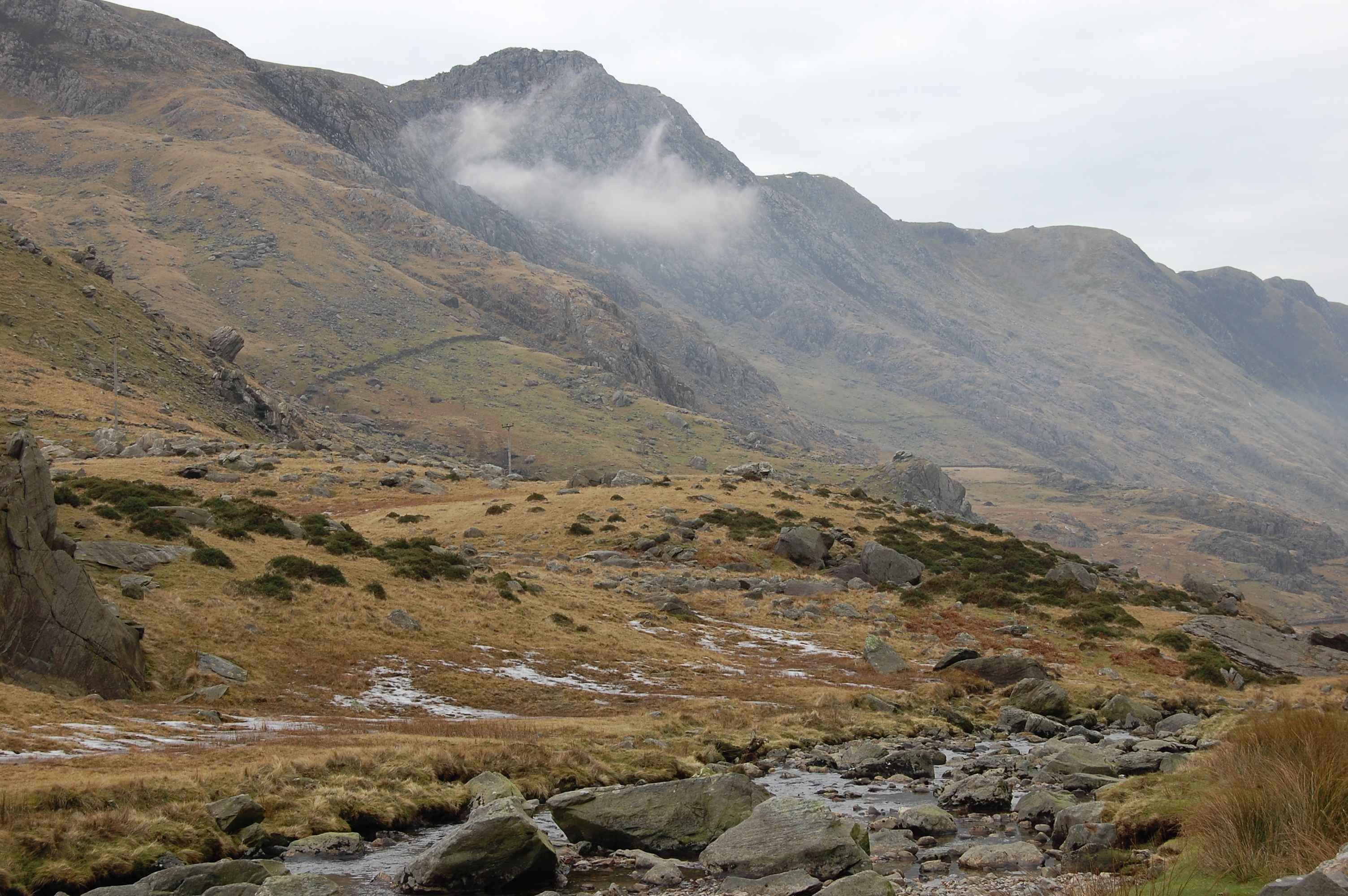
View northwestward from a spot on the A4086 Google Maps calls "Bwlch Llanberis". Yes, that is a bit of snow on the ground.
Snowdonia is interesting in that although it is a national park it is made up of public and private lands (as other national parks in the UK are, unlike in other countries). Over 26,000 people actually live in towns within the park itself.
Onward to Caernarfon and the ruins of the Roman fort Segontium. We found the fort with little difficulty, but as expected, the small museum was closed. We walked around the site for a few minutes, and even had an interesting chat with a local woman with a thick Welsh accent who had been out walking her dog.
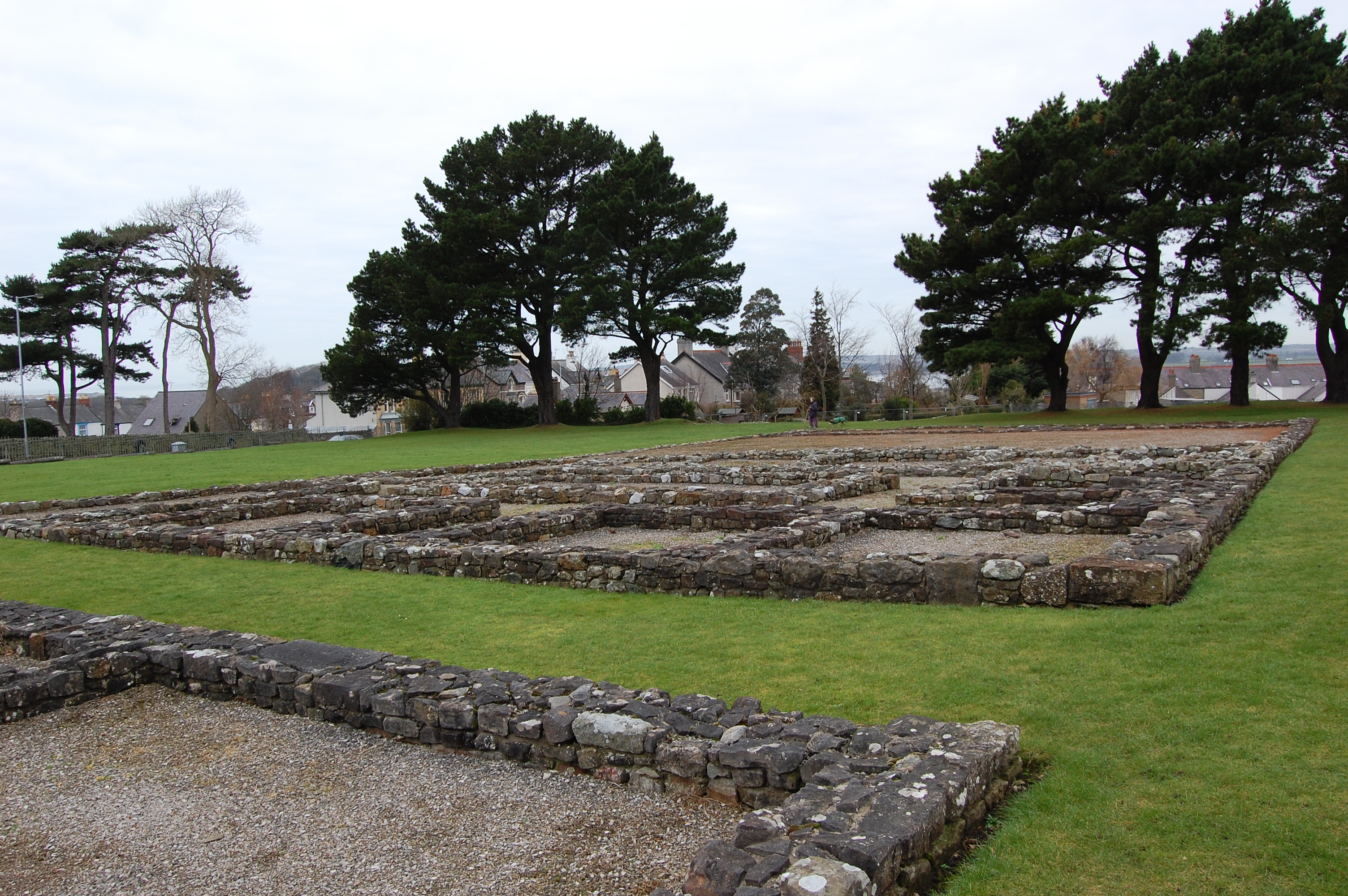
View of part of the remains of the Roman fort Segontium at Caernarfon, Wales.
From there, we made our way down to the Caernarfon Castle. Begun in 1283, the castle was never fully completed. It has a rich history through numerous wars and periods of neglect. In the late 19th Century, efforts were begun by the government to restore the castle because of the historical significance of the site. In 1986, the castle was listed as a World Heritage Site by UNESCO under the listing “Castles and Town Walls of King Edward in Gwynedd“. Because it was late in the day, the visit to the castle was very short but interesting, despite restrooms that seemed to have been fashioned from dungeons!
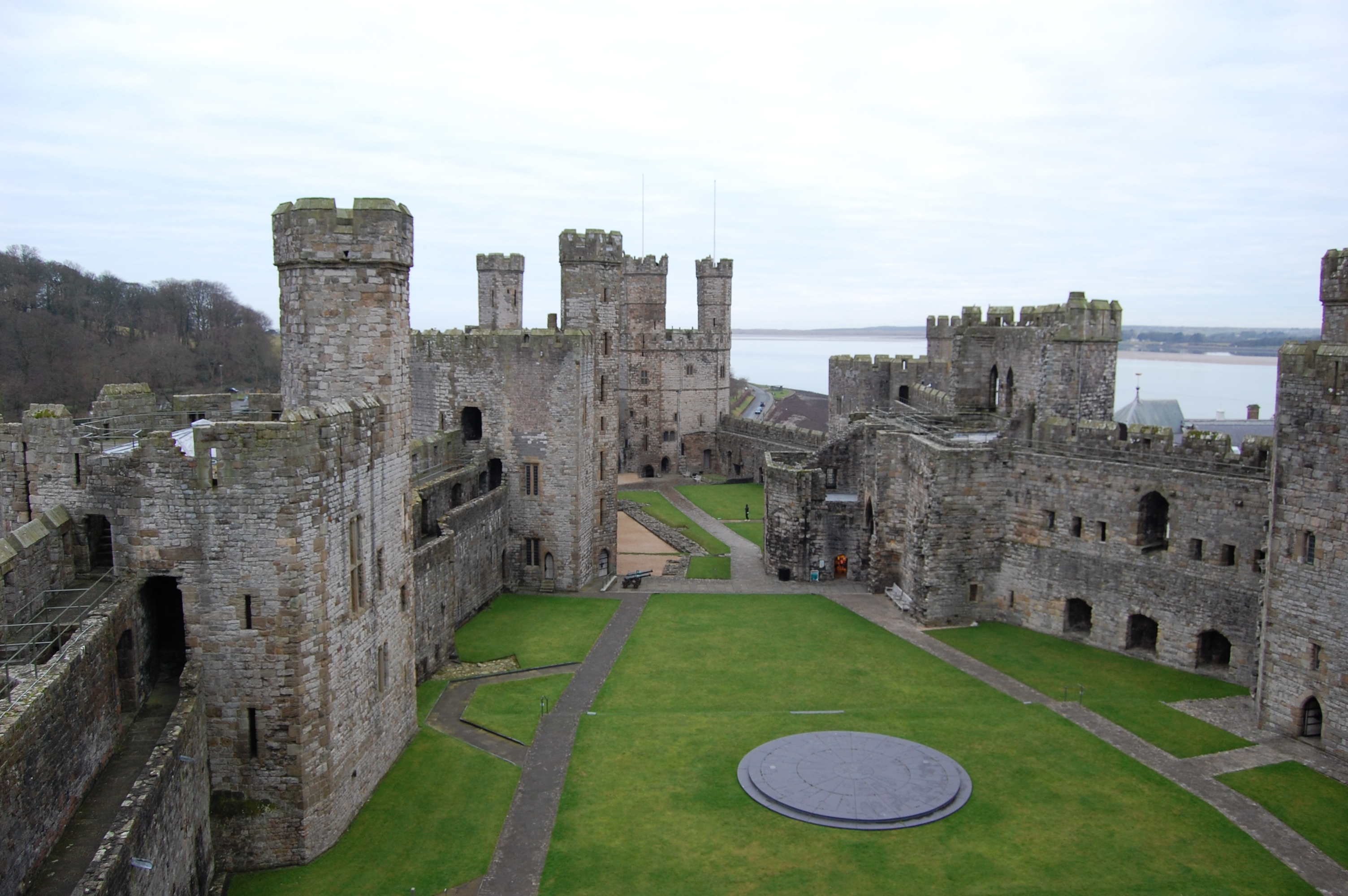
Interior view of Caernarfon Castle. The round dais made of Welsh slate was used for the investiture of Charles as Prince of Wales in 1969.
From Caernarfon, we headed back towards England, doing a kind of “drive-by” in the walled town of Conwy. We were actually looking for some place to eat, but parking in the UK is a bit of a challenge, especially for a slightly larger car than what most Brits seem to drive. After driving through the town – twice, I think – and not finding a place to eat that we could park near, we got back on the main highway and headed for Chester.
Coming into the town of Chester, I ended up driving us past our hotel, then nearly managed to get us into an accident with a police car (with lights and siren on) before finding a roundabout to get us back in the direction of the Holiday Inn Express.
This was our first “cookie-cutter” chain hotel of the trip, but it was a welcome change from a string of bed and breakfasts. We certainly have been EXTREMELY fortunate up to this point with our lodging choices – even if we had a tiny shower at the hotel in St Ives and a fairly cold room at Tintern – we have had generally good experiences at all our overnight stays.
A wonderful desk clerk by the name of Georgina hooked us up with a delivered Chinese dinner that we were unable to finish. We gave her the order from a binder that they keep of some local restaurants that deliver, and 45 minutes later, we were eating our sweet and sour chicken.
After a fairly “cool” night at the Tintern Abbey Hotel (I am beginning to believe that many places turn the heat off at 11:00 PM), we awoke to a fairly chilly room, and what you might charitably call a “warm” shower after letting the water run for about 10 minutes. There were only three couples in the hotel, judging from what we saw at breakfast, and we were all put in a far wing of the hotel. We DID have a fantastic view of the abbey ruins from our room, so we did have that going for us. This hotel didn’t seem to have point-of-use type water heaters for the bathroom, so the hot water may very well have been on the other side of the hotel. Since the room heat (radiator) and hot towel rack (in the bathroom – also a radiator-type appliance) use water through their systems, we never really got warmed up until we went down for breakfast.
On the subject of breakfast, it would help to understand that a “full English breakfast” consists of a couple of courses:
The main course generally has included:
I think we have both avoided the tomatoes and beans, but they have been available at nearly every breakfast we have been offered. I guess this might explain the fascination The Who seemed to have with baked beans (The Who Sell Out album cover featured it, as did the rock opera Tommy – at about the 4:05 mark, Ann Margaret is covered with baked beans.) There have been some other items offered at times. Hog pudding, black pudding, and fried bread have been available at one time or another.
The breakfast at the Tintern Abbey Hotel was especially yummy, for some reason. Perhaps it was the hog pudding (kind of like sausage, but not quite – I also had regular sausage, which was bland compared to the hog pudding).
After eating breakfast, loading up the car and chatting with the front desk manager for a bit, we walked over to the abbey which was covered in morning frost.
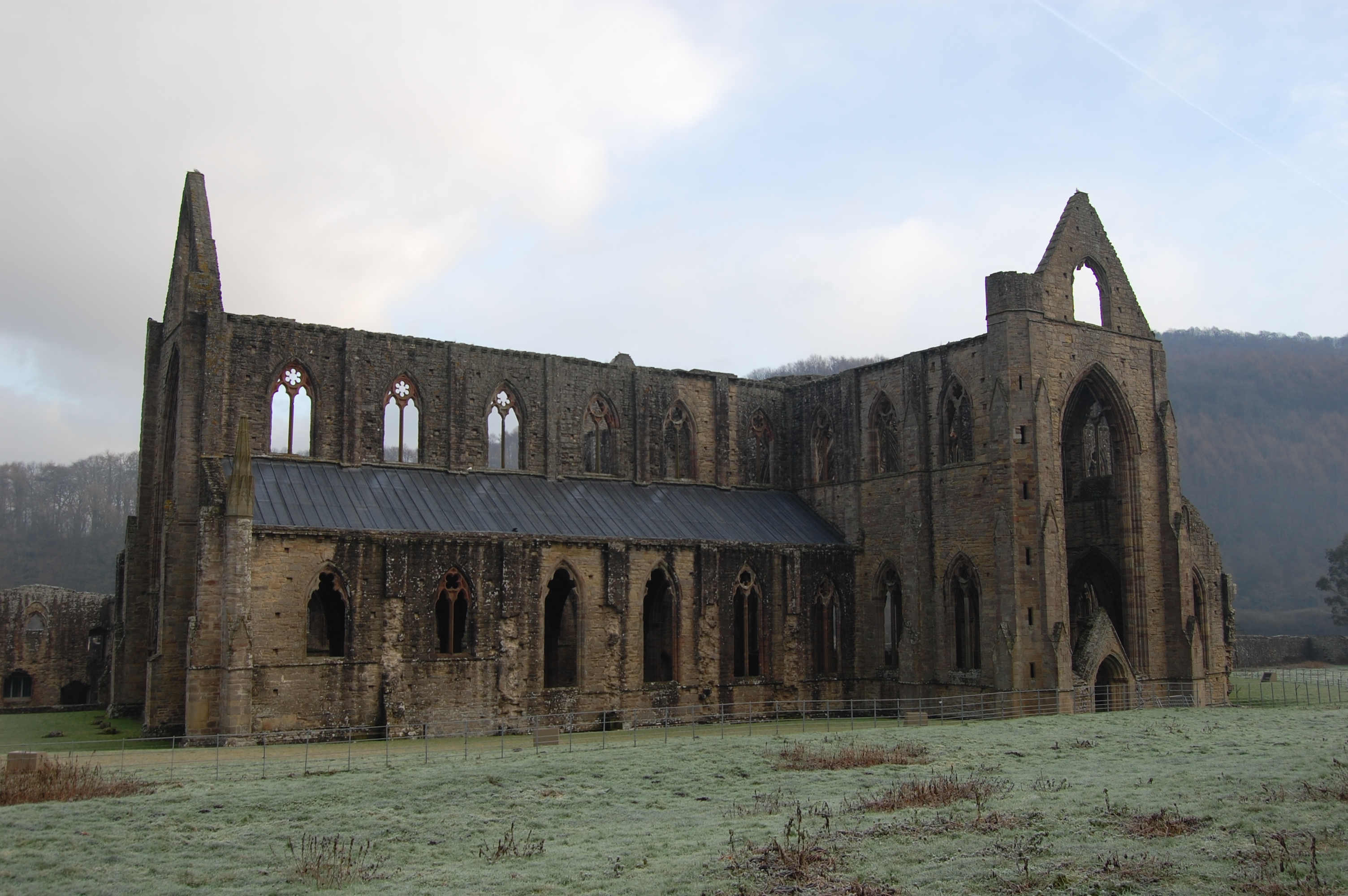
View of Tintern Abbey in the morning frost. Note the heavy frost on the grass in the foreground. There was even something coming out of the sky - we weren't sure if it was snow, sleet or rain.
The abbey was founded in the year AD 1131. Portions of this fabulous building that remain were begun in the year AD 1136. Read that again – the building of the abbey began in the year of our Lord One Thousand One Hundred Thirty Six! It was the first Cistercian abbey in Wales, and only the second in all of Britain. The monastery lasted for 400 years, until the Dissolution of the Monasteries was enacted by King Henry VIII.
The internal ruins have a stark beauty, made even more memorable by the cold, misty morning that we got to visit.
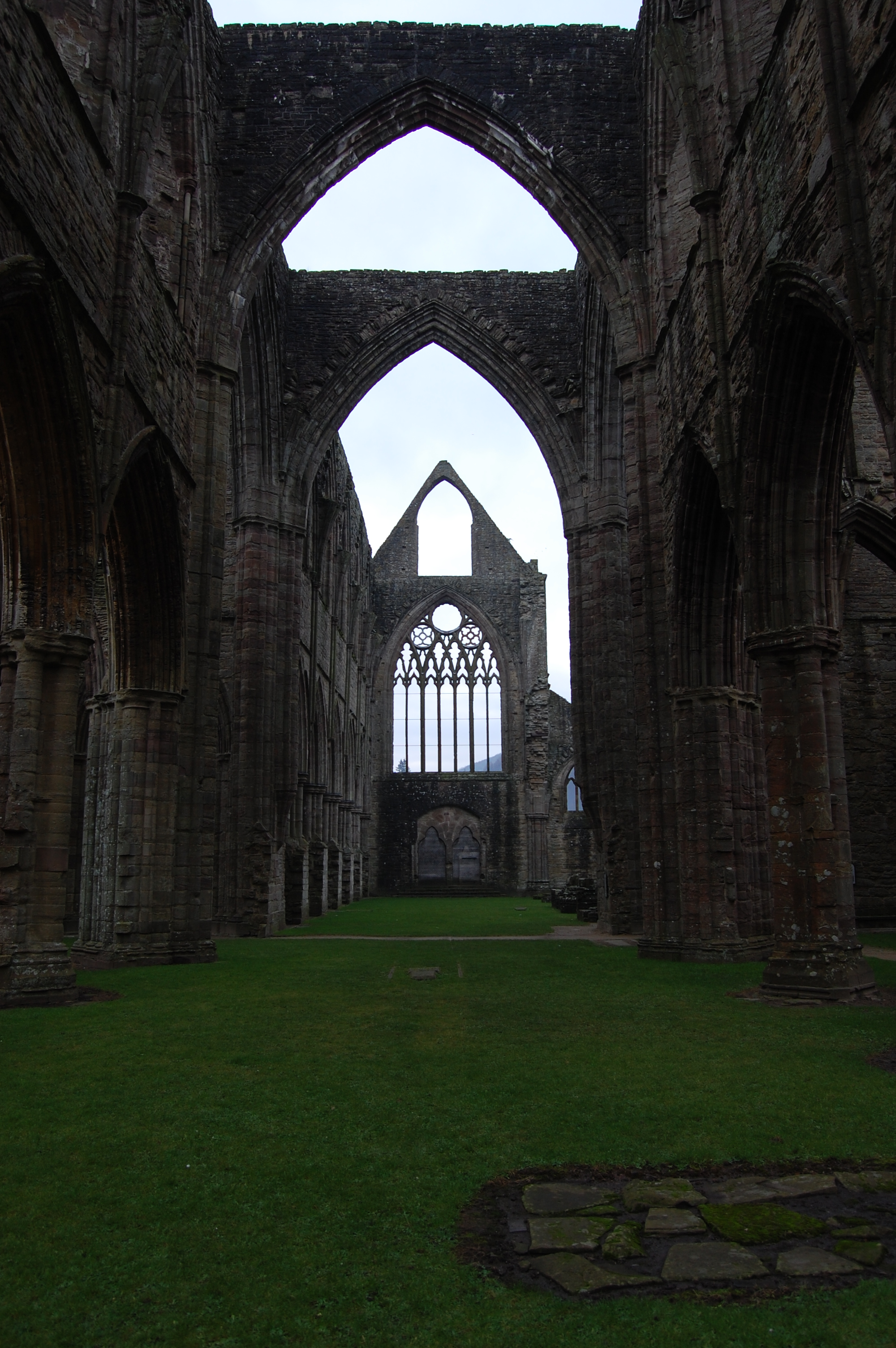
The view from the Presbytery toward the West Front of Tintern Abbey.
After about an hour of visiting the abbey and a stop in the gift shop, we made for the motorway to go back over the River Severn and into England. Cirencester would be our next stop.
The town of Cirencester was known as Corinium Dobunnorum during Roman times. We visited the Corinium Museum there, which has some fantastic Roman-era mosaics on display, along with a time-line of the history of the Cotswolds. The displays were well done, and the museum an absolute delight to visit. The amount of Roman artifacts on display is truly phenomenal.
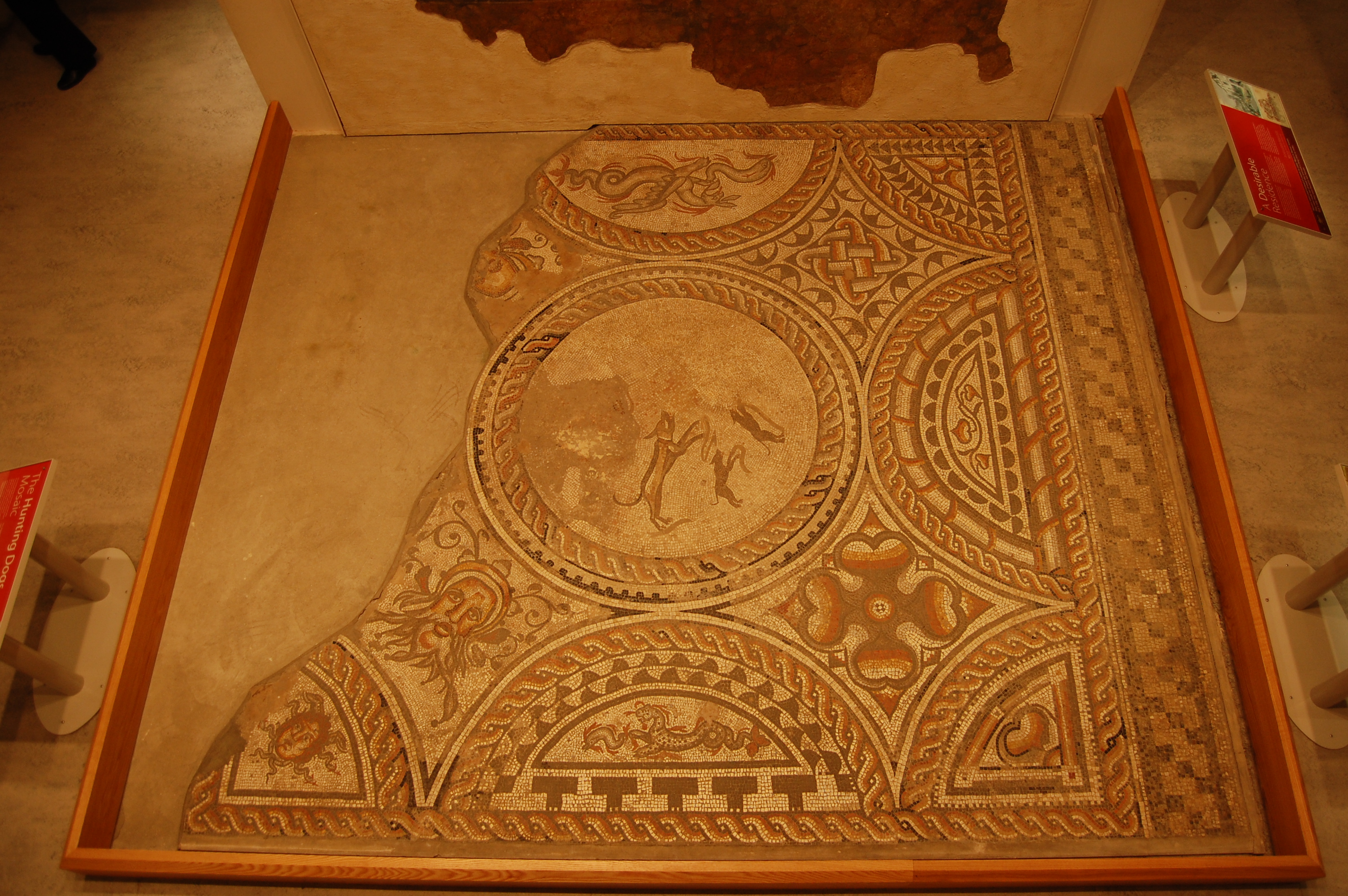
The Hunting Dogs Mosaic at the Corinium Museum in Cirencester. This mosaic appears to be a mix of 2nd Century designs (the sea-gods, medusa head and sea panther) and at least a century later, unrelated designs were introduced, possibly due to repairs needed because of a partially collapsed hypocaust. The unrelated designs include the dogs in the central roundel.
From Cirencester, we intended to make a “drive-by” of Stratford-upon-Avon, but we lost the light of day and decided to make directly for Worcester, our destination for a room for the evening at Welland House.
The next leg of our tour of England and Wales took us from Bath to Caerleon, northeast of Cardiff, Wales; Cardiff, then up the Wye River valley to Tintern to see the 12th century abbey ruins there.
After another sumptuous breakfast at Apsley House, we headed out on the highways and motorways towards Wales. After crossing the Severn River via the Second Severn Crossing we left the motorway to visit the town of Caerleon, which was a Roman Fortress (known to the Roman’s as ISCA) to visit the museum and the ruins of the Roman Amphitheater there. As we drove into the town, we saw a sign for the Roman Fortress Baths, something we had not heard of before. Since we had seen the baths at Bath the day before, we decided to take in the baths in Caerleon. The baths in Caerleon are actually parts of the original baths, part of a huge complex just for the baths. The displays there are very interesting and informative.
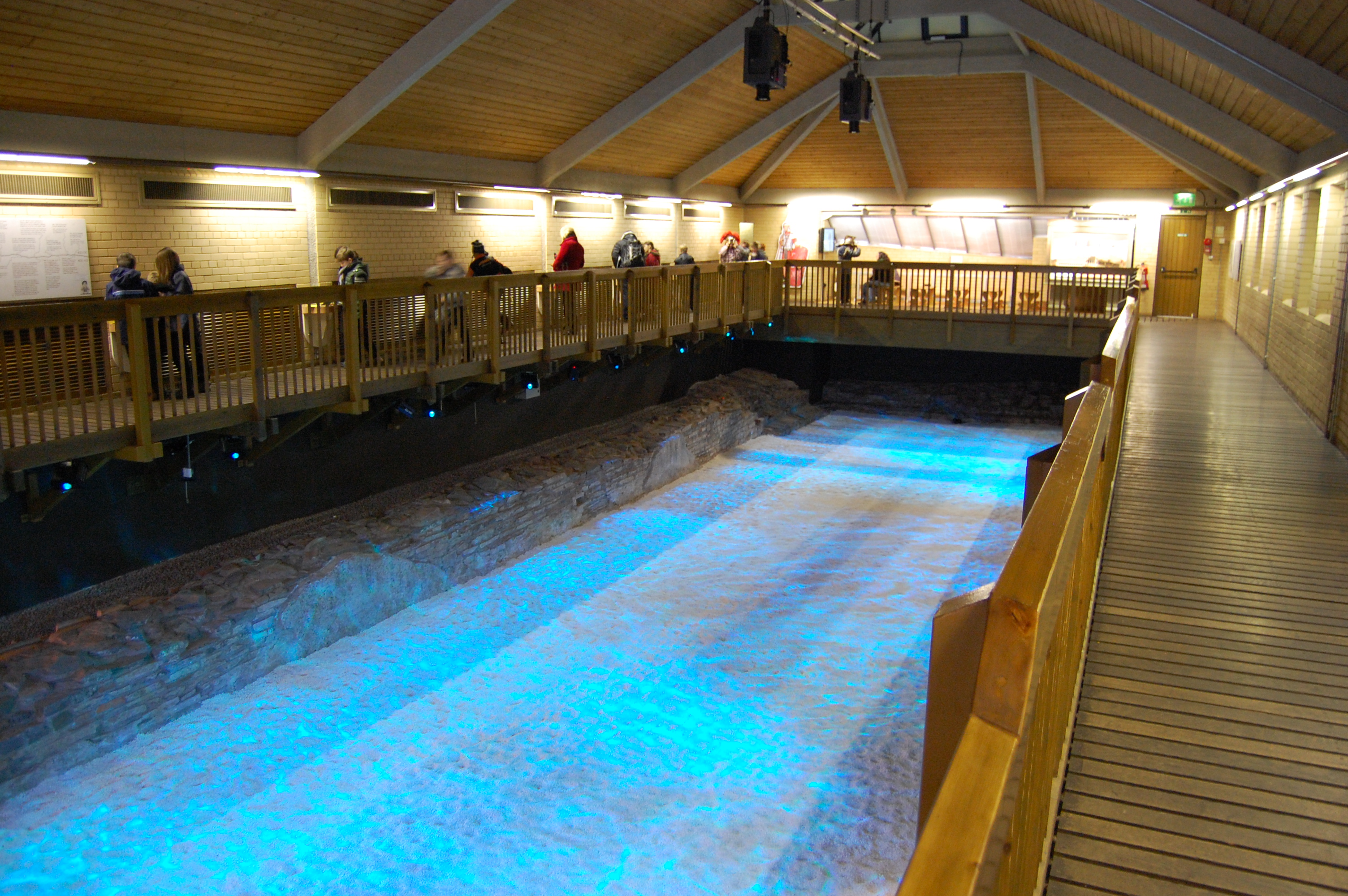
The Roman Fortress Baths at Caerleon use light to imitate water. The displays are extremely informative about how the Romans used the baths.
Once we were done at the baths, we walked up the street to visit the National Roman Legion Museum. They had a very nice amount and variety of items from the time of the Roman’s on display, along with a lot of information about the legion at ISCA (Legio II Augusta) and the take over of Wales by the Romans.
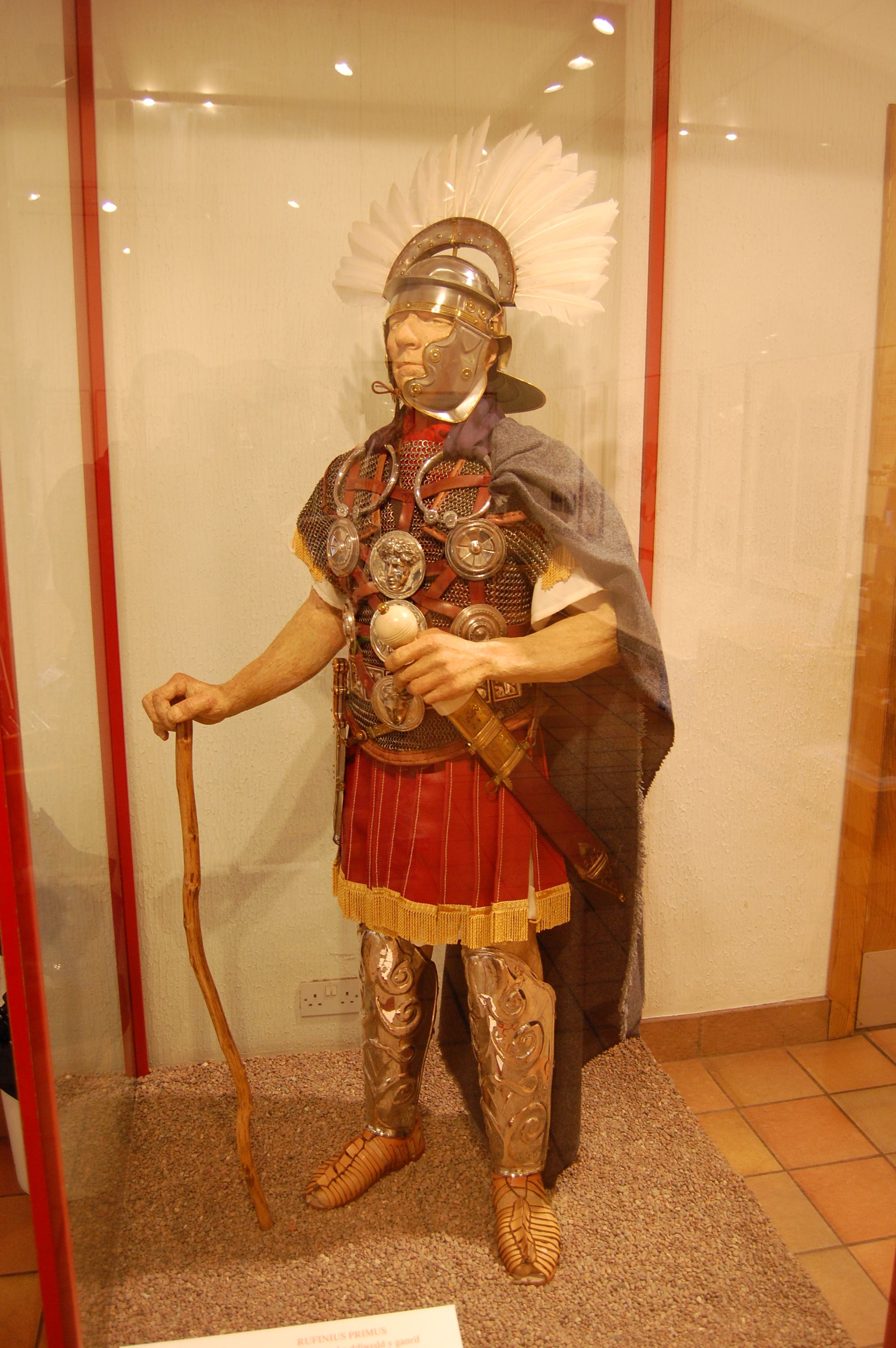
A model of a centurion of the 1st Century, AD, on display at the Wales National Roman Legion Museum, Caerleon.
After the museum, we visited the Roman Amphitheater and Barracks, just a bit down the road. The Amphitheater was actually located outside the fortress walls of ISCA, while the barracks that have been excavated are just one small part of the fortress.
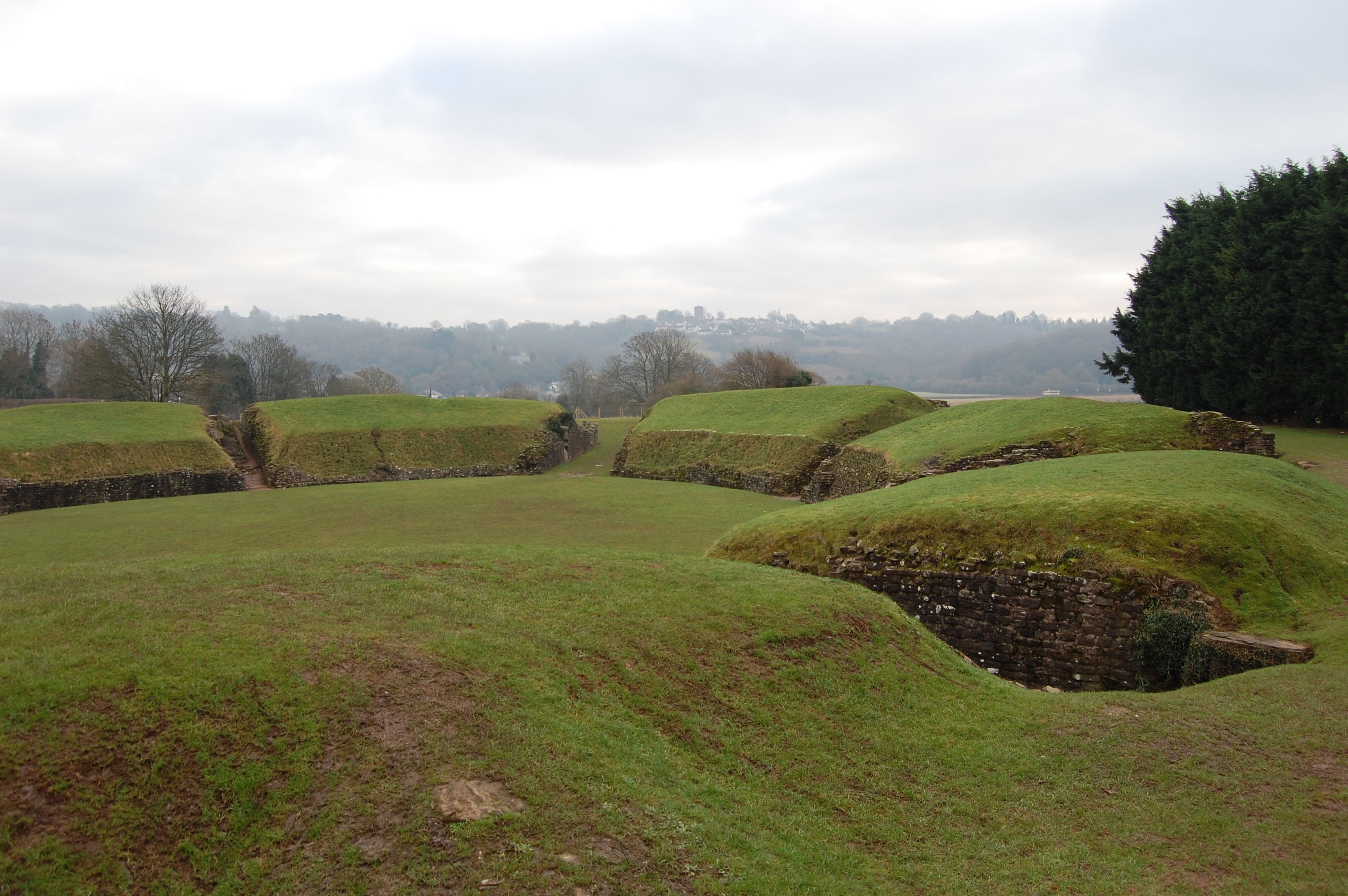
It is estimated that the Roman Amphitheater at Caerleon could seat up to 6,000 people.
The barracks that have been excavated are just a very small corner of the fortress. The legion should have had about 5,500 men assigned when it was fully manned at ISCA.
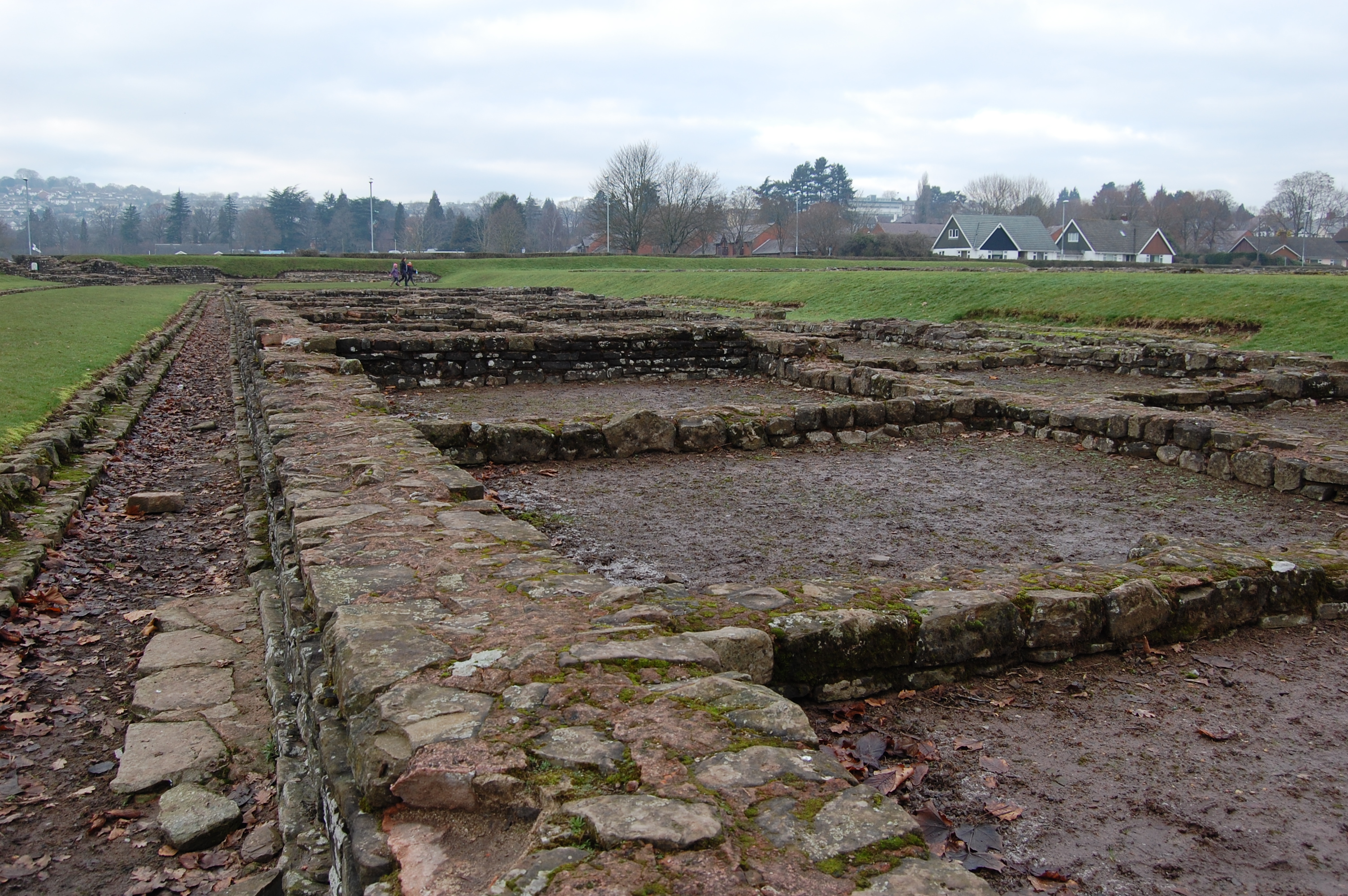
This row of barracks rooms was excavated at Caerleon. It was estimated that each room would have housed 8 legionaries.
From Caerleon, we headed back to the motorway towards Cardiff. Eventually, we found the Red Dragon Centre, where there is a permanent Dr. Who exhibit. Many displays from Series 5 (the most recent series; a “series” is a season to ‘mericans), but the term “schlocky” probably applies. I’m not really sure what I expected, and I wouldn’t say I was disappointed – I guess I just wanted more, or maybe to have David Tenant or Matt Smith walk by! The venue is kind of a mall-like structure, but with only food establishments, a multi-plex movie theater, a bowling alley, the Dr Who exhibit, and a 24-hour casino.
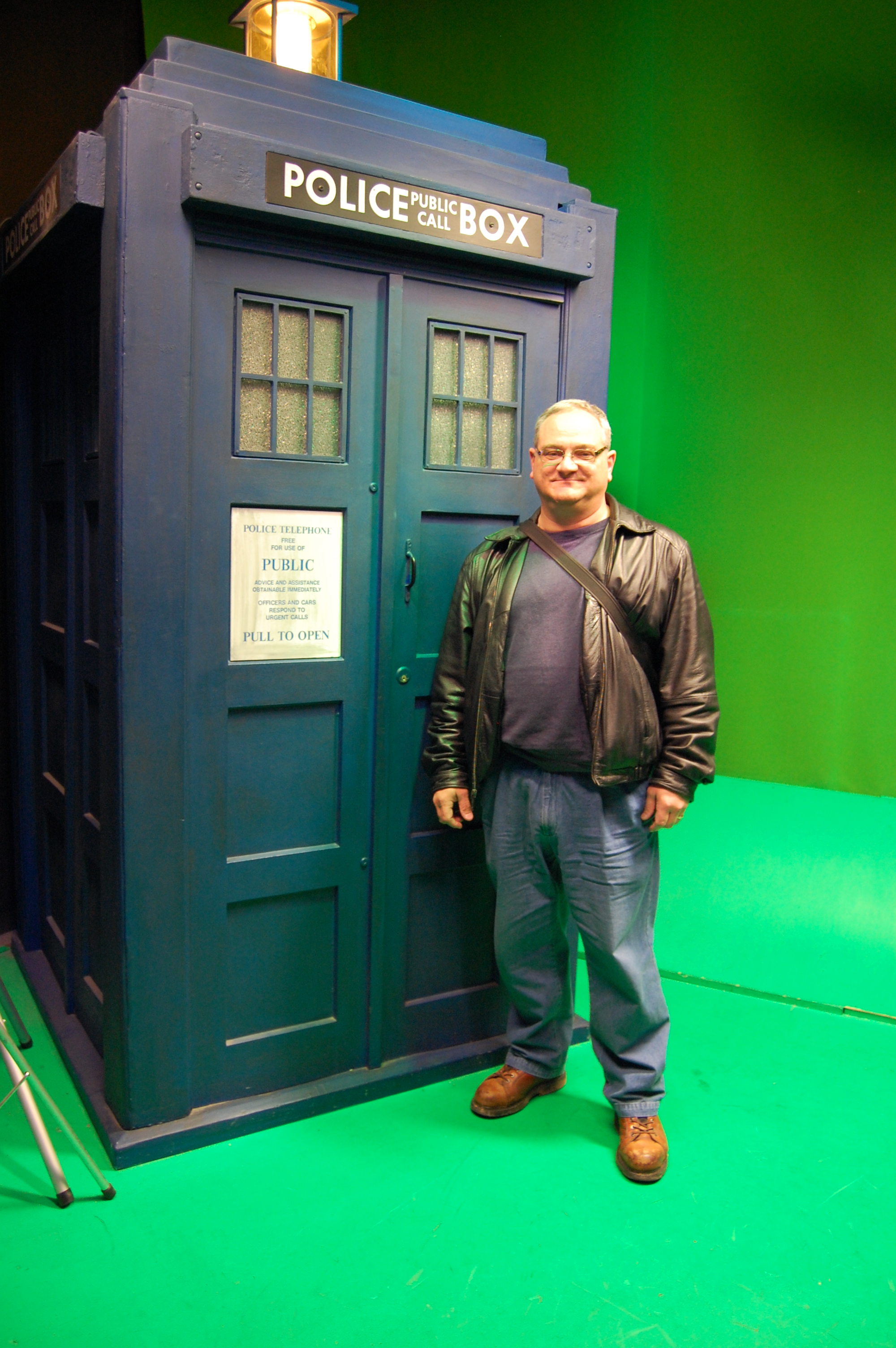
In front of the TARDIS with a "green screen" at the Red Dragon Centre, Cardiff, Wales. The exhibition looks much bigger on the inside 😉
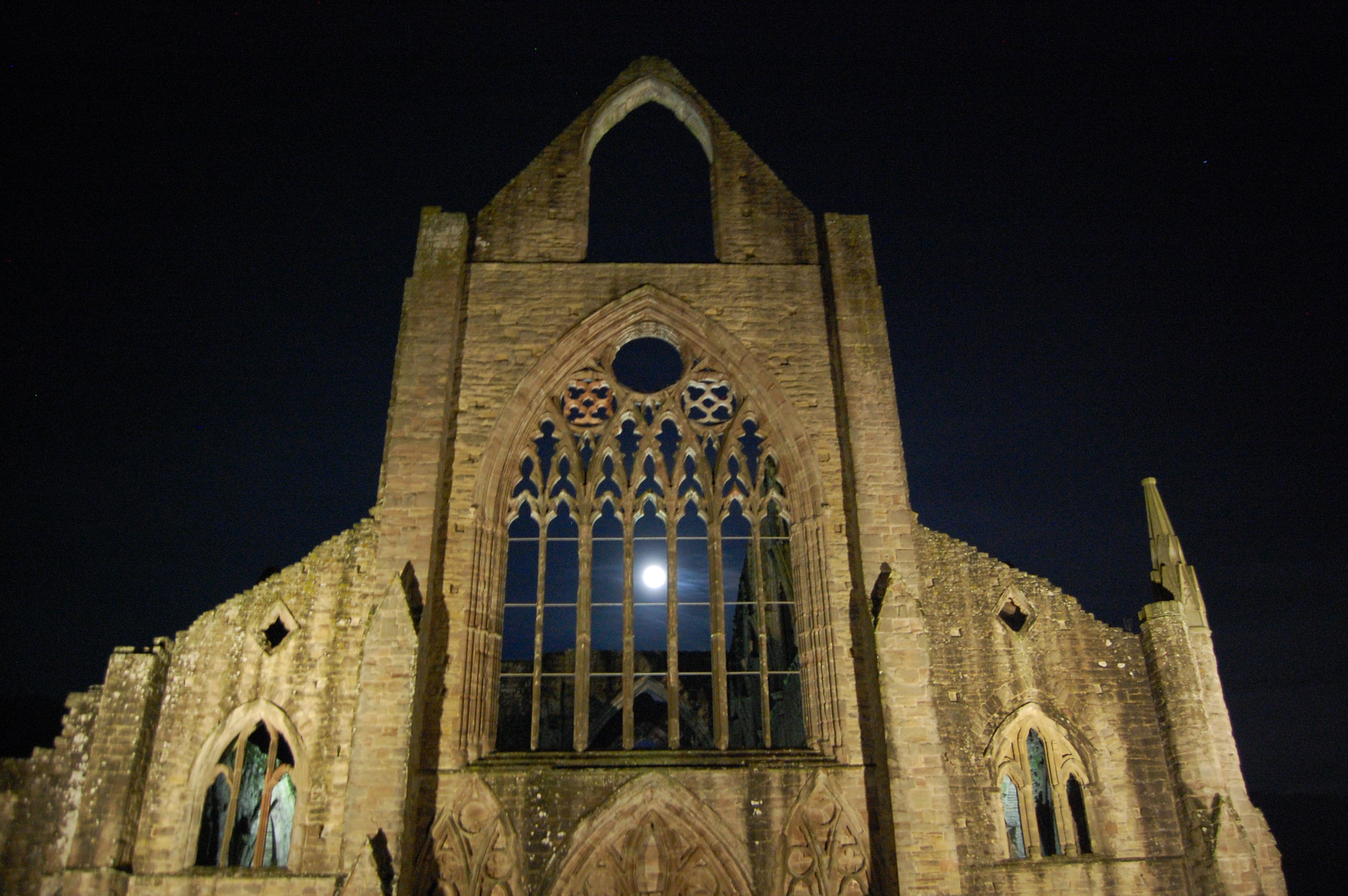
From Cardiff, we drove north to our final destination of the day, Tintern Abbey. We had booked a hotel room directly across the road from the abbey, a 12th century Cistercian abbey, considered to be one of the greatest monastic ruins in Wales. The view from our room was wonderful, but before retiring for the evening, I went outside in the very frosty air to get a few pictures.
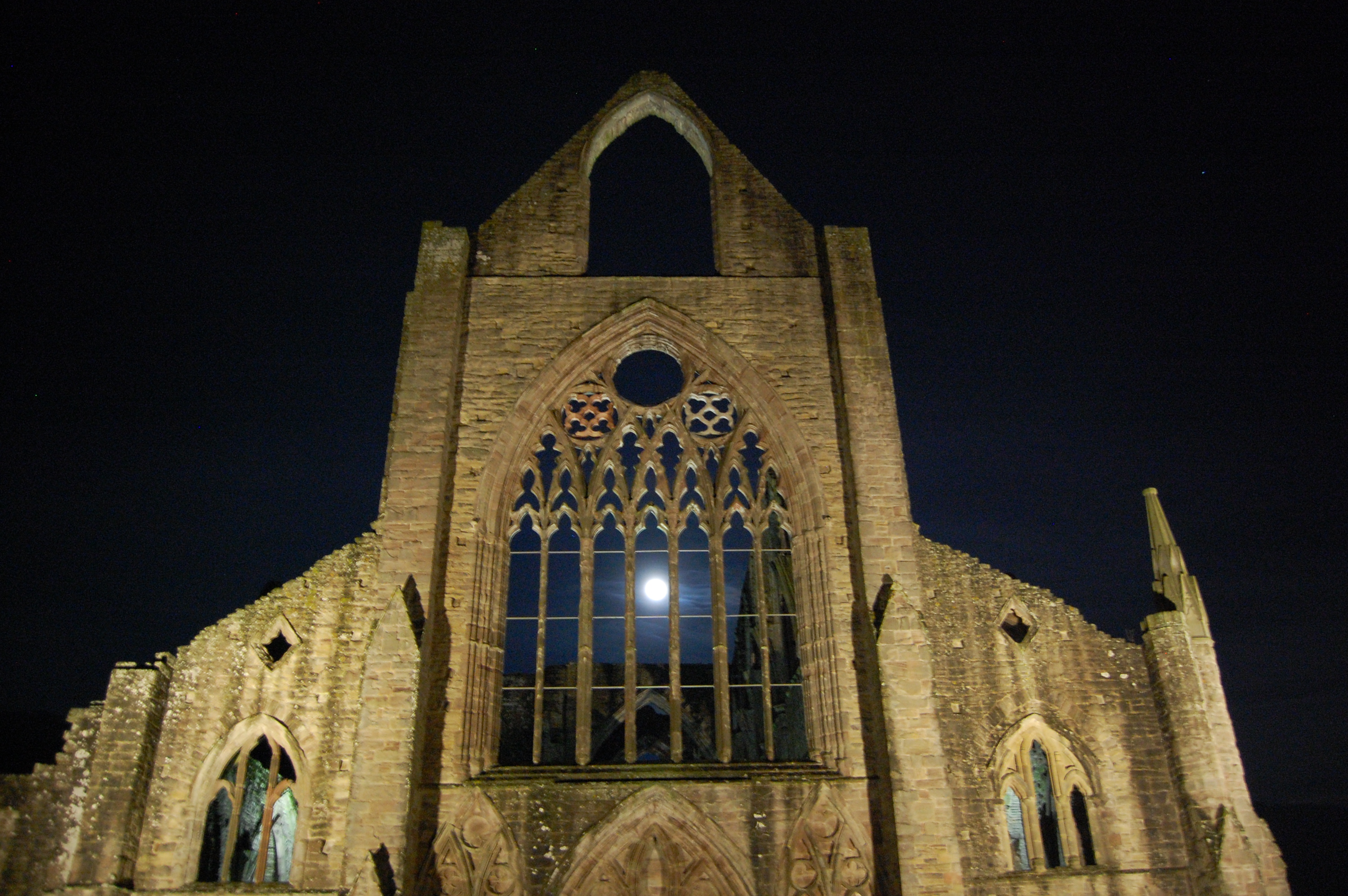
A nearly full moon shines through the front window opening of the ruins at Tintern Abbey.
On Thursday the 20th, we had breakfast at our hotel, Apsley House, a wonderful bed & breakfast a bit west of the Bath City Centre. Our original plan for the day was to visit Stonehenge, Salisbury, Avebury – all different henges and stone rings – then work our way back to Bath. Instead, to start the day, we took a local bus to the City Centre in Bath to visit the Roman Baths. This was a great decision, as we would have never made it back to Bath in time to visit the baths.
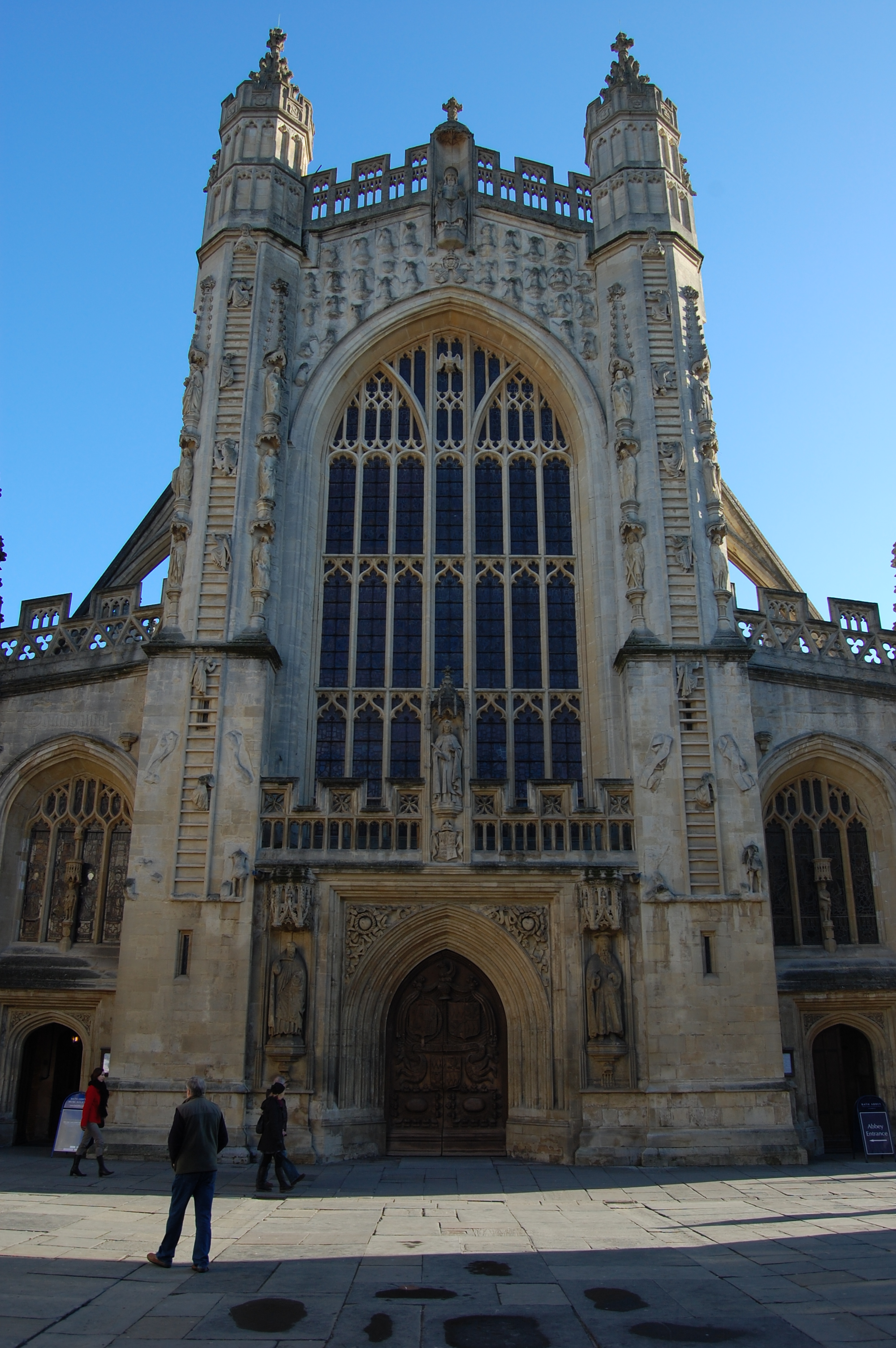
Bath Abbey at the Bath City Centre
All I can say about the Baths is that they were incredible. While some parts were reconstructed in the 19th Century, the main layout of the Baths is still intact. The Grand Pool you see below is about 20 feet below the current street level in the town.
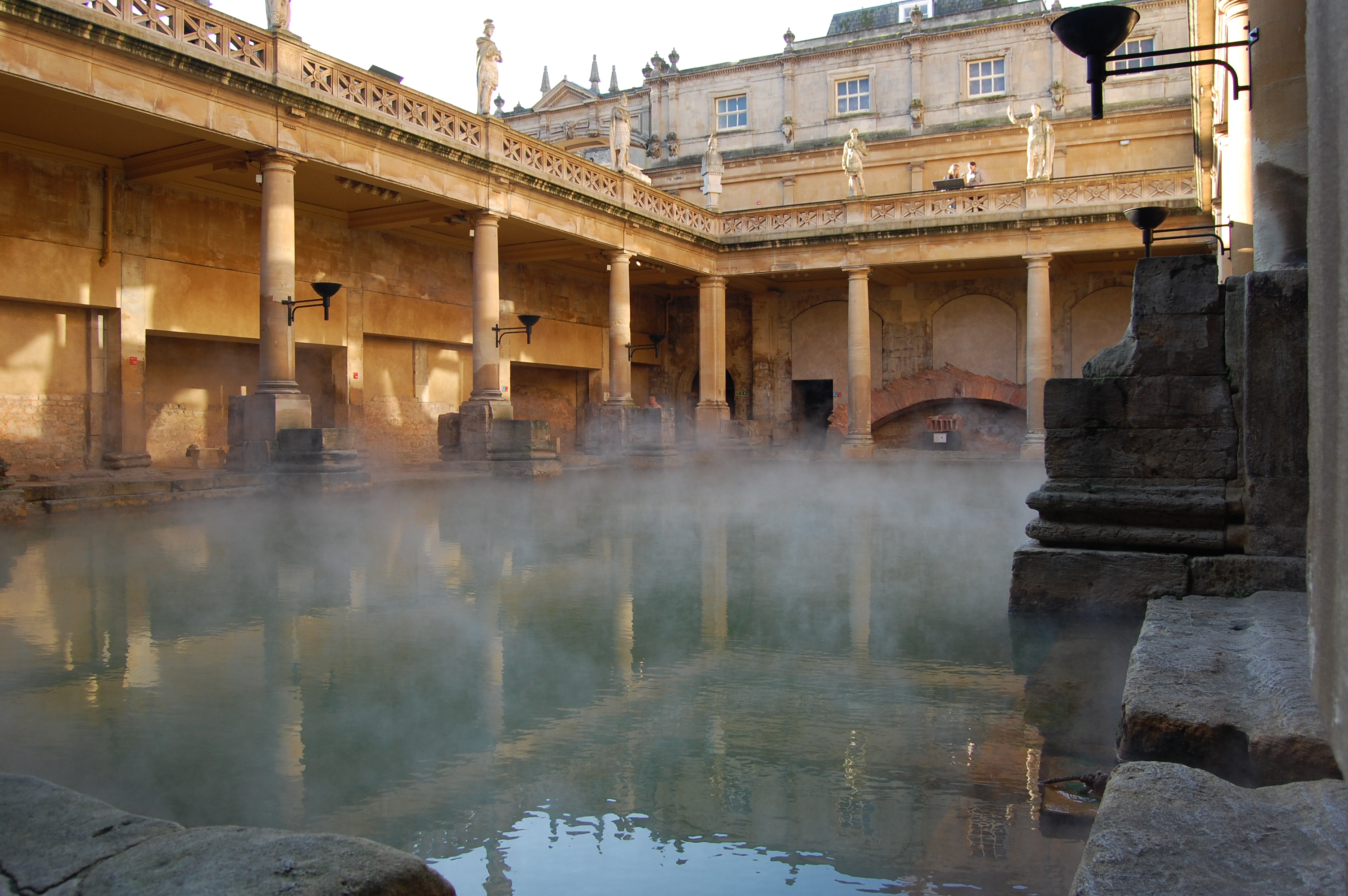
View of The Grand Pool at The Roman Baths of Bath.
The day was fairly chilly – enough so that the 46C (about 114F) water had a layer of steam on it at all times and frost was still on some of the outside display panels at 11:30 in the morning.
We probably spent about two hours touring the Baths. They truly were phenomenal.
We took the bus back to Apsley House, where we dropped off the souvenirs we had picked up while in Bath City Centre, then got in the car and headed (or at least tried to!) out towards Avebury. If we would only have an opportunity to see one of the stone circles, the choice was Avebury since you can actually walk amongst the stones.
We got there with about an hour left before the car park was closed. The day never did warm – there was still frost on the grass and berm that faced away from the sun.
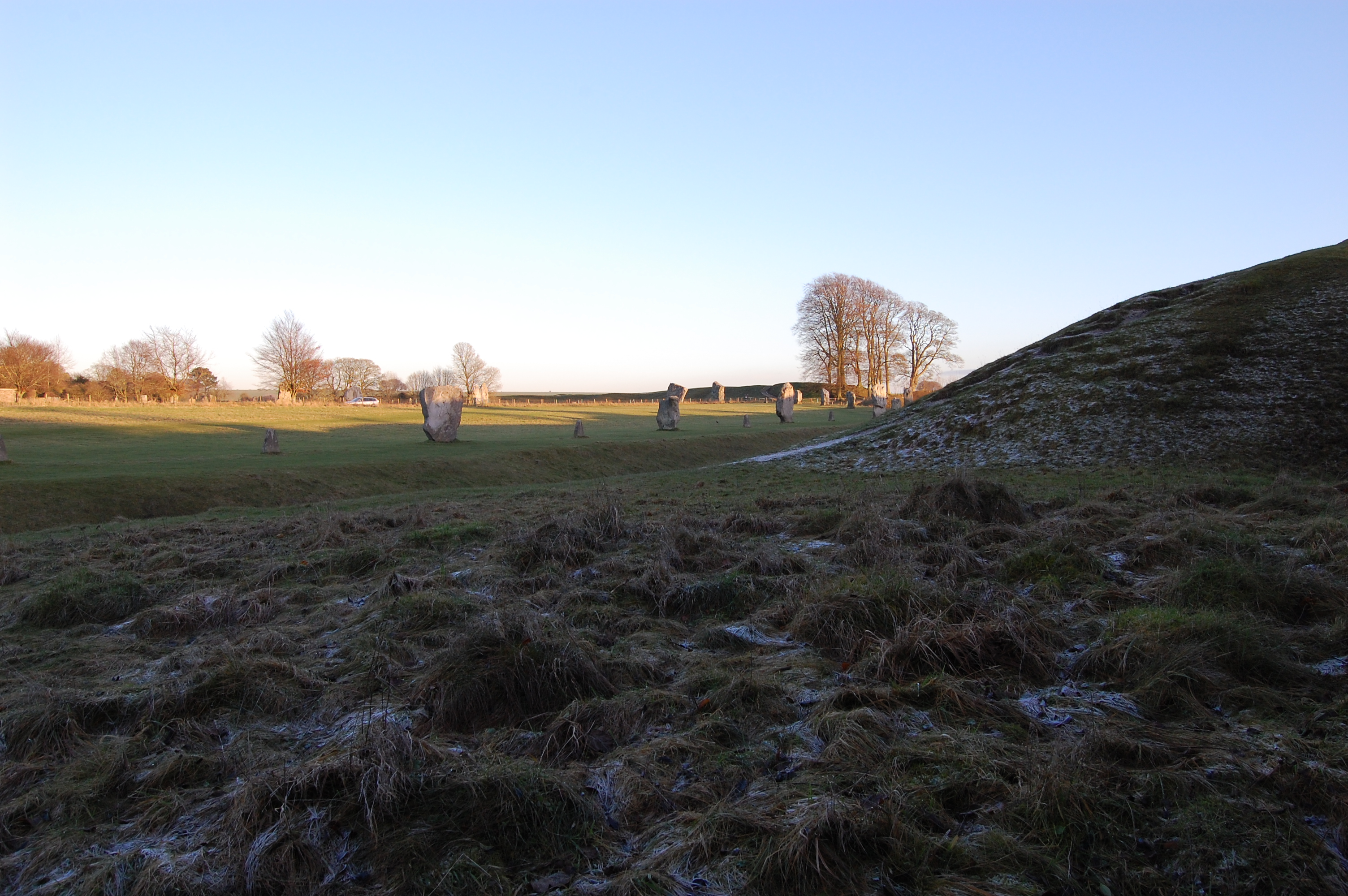
A portion of the southwest quadrant of Avebury Henge showing the grass still with frost at the end of the day.
We visited what is considered the southern hemisphere of the ring. You are actually able to walk right up to the stones.
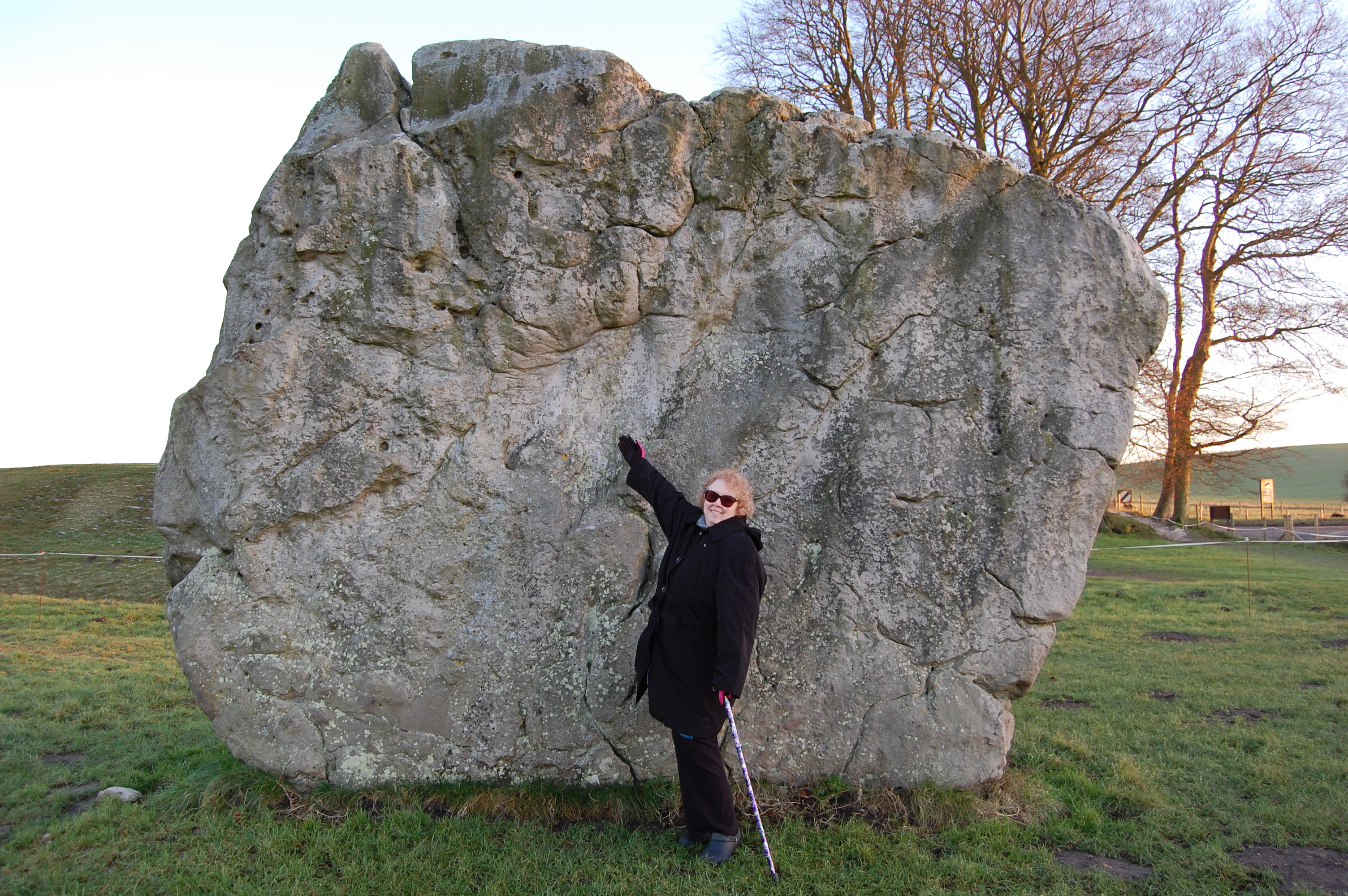
At Avebury, you are able to walk right up to the stones.
We were there right around sunset, then headed south to try to do a drive by of Stonehenge, even though it was dark. As we came down the “A” road that approached Stonehenge, there was a turn off to a “B” road that should have gone right by the henge – but it was closed! (The road, that is – we already expected the visitor center to be closed by that time of day.) We caught a glimpse of Stonehenge with lighting behind it, but there wasn’t any way to stop on the highway, so we headed back to Bath to prepare for the next day of travel.
Still a day behind in adding posts, but that’s about how it goes when you can barely keep your eyes open.
Wednesday morning we were greeted by another gloriously sunny if chilly day when we awoke in St Ives, Cornwall.
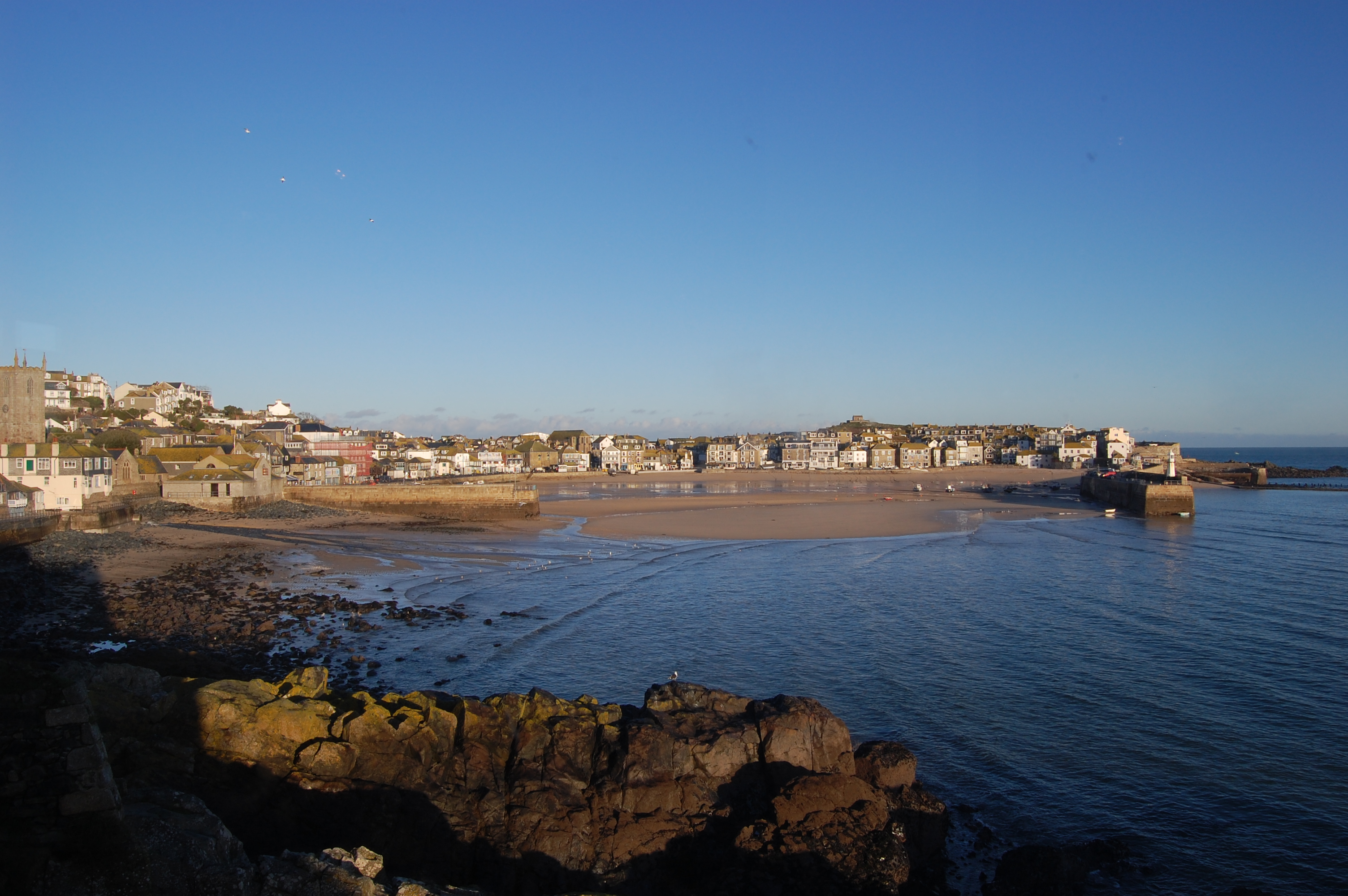
St Ives harbor on a clear, crisp Cornwall day.
After breakfast at the hotel (included in the tariff), we set out for Tintagel Castle, northeast up the coast from St Ives.
Yesterday we drove from Weymouth, Dorchester, to St Ives, Cornwall, via what was planned to be Dorchester (Roman Town House), St. Michael’s Mount, Penzance, Land’s End, then up to St Ives. The land of the high-speed interstate, this is not.
We left Weymouth after a wonderful “proper English breakfast” -I was even able to get an egg done over easy, which is apparently no small feat in the UK. The day dawned beautifully considering the rain of the day before.
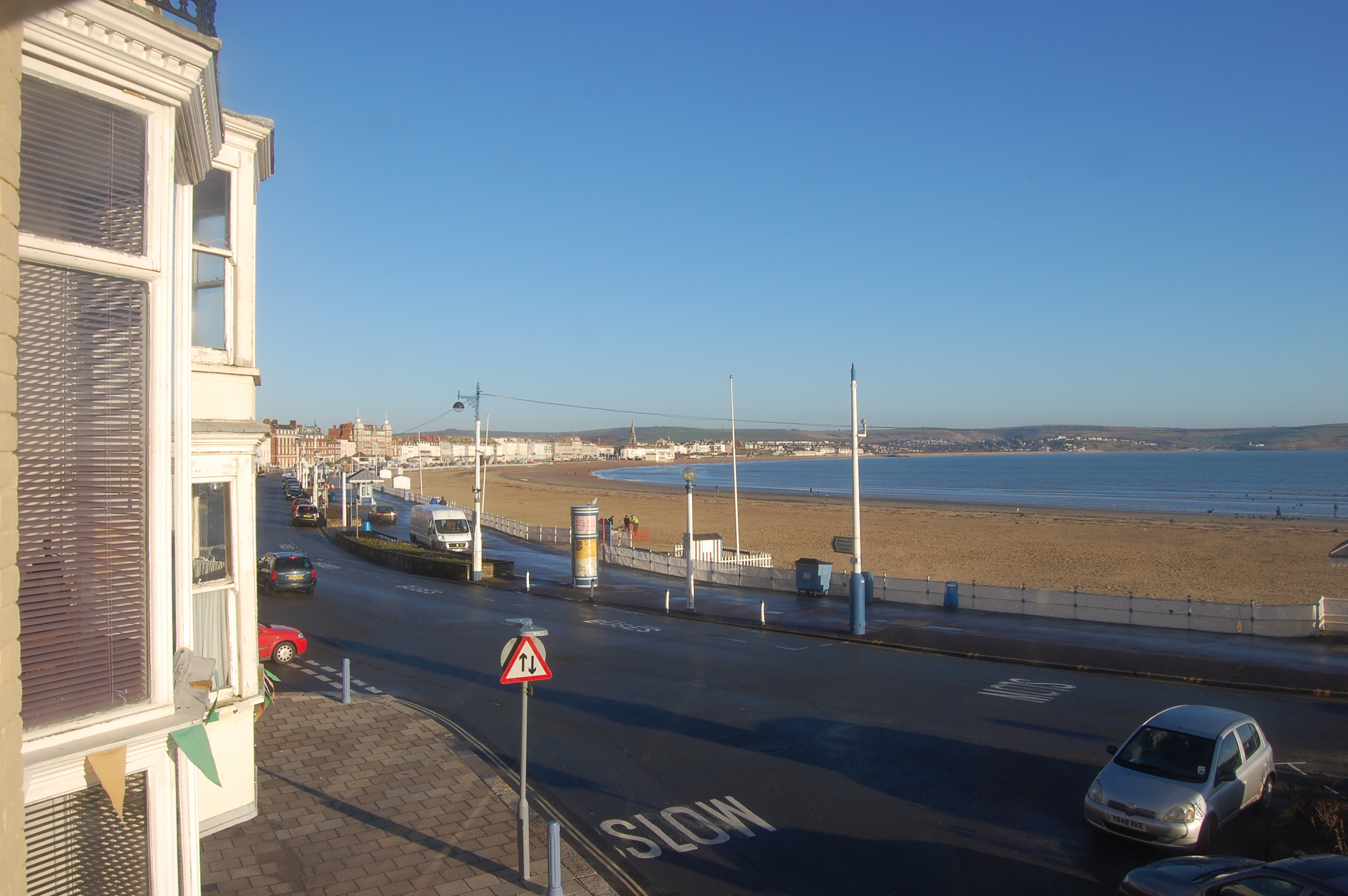
View from our hotel room of the Weymouth waterfront and city-view.
From there, we headed to Dorchester, about 20 miles north of Weymouth. We tried to find the Roman Town House, but quickly came to realize that the guidebooks we brought don’t really provide that detailed level of information about the sights to see (Directions? Call the number in the guide…) , and the maps I had printed from MapPoint aren’t very helpful when they say “Take local road 65 yards, then turn right on local road”! Not that it has been easy to figure out how or where a road is marked if it is anything other than a designated route. We never found the Roman Town House, but also knew we had spent enough time looking for it, so we headed west.
We did have some splendid views along the way.
We arrived at Heathrow this morning at 0615 GMT – about 13 hours after we left our house in Saint Louis. After a lengthy queue through the “UK Border”, we picked up our bags but happily did not get stopped at Customs (we went though the “Nothing to Declare” door, but saw other people seemingly stopped at random). Over to the Hertz rental center, and after a fairly expensive upgrade, we ended up with a Ford Mondeo diesel with automatic transmission.
We had a wonderful tour of Windsor Castle, once we found it and some “blue badge” parking close to the castle entrance. The rain stopped long enough so that we stayed relatively dry for our visit to Queen Mary’s Dolls’ House, The Drawings Gallery and St George’s Chapel. The various staff we interacted with were fabulous – all very accommodating to Kathy’s mobility concerns.
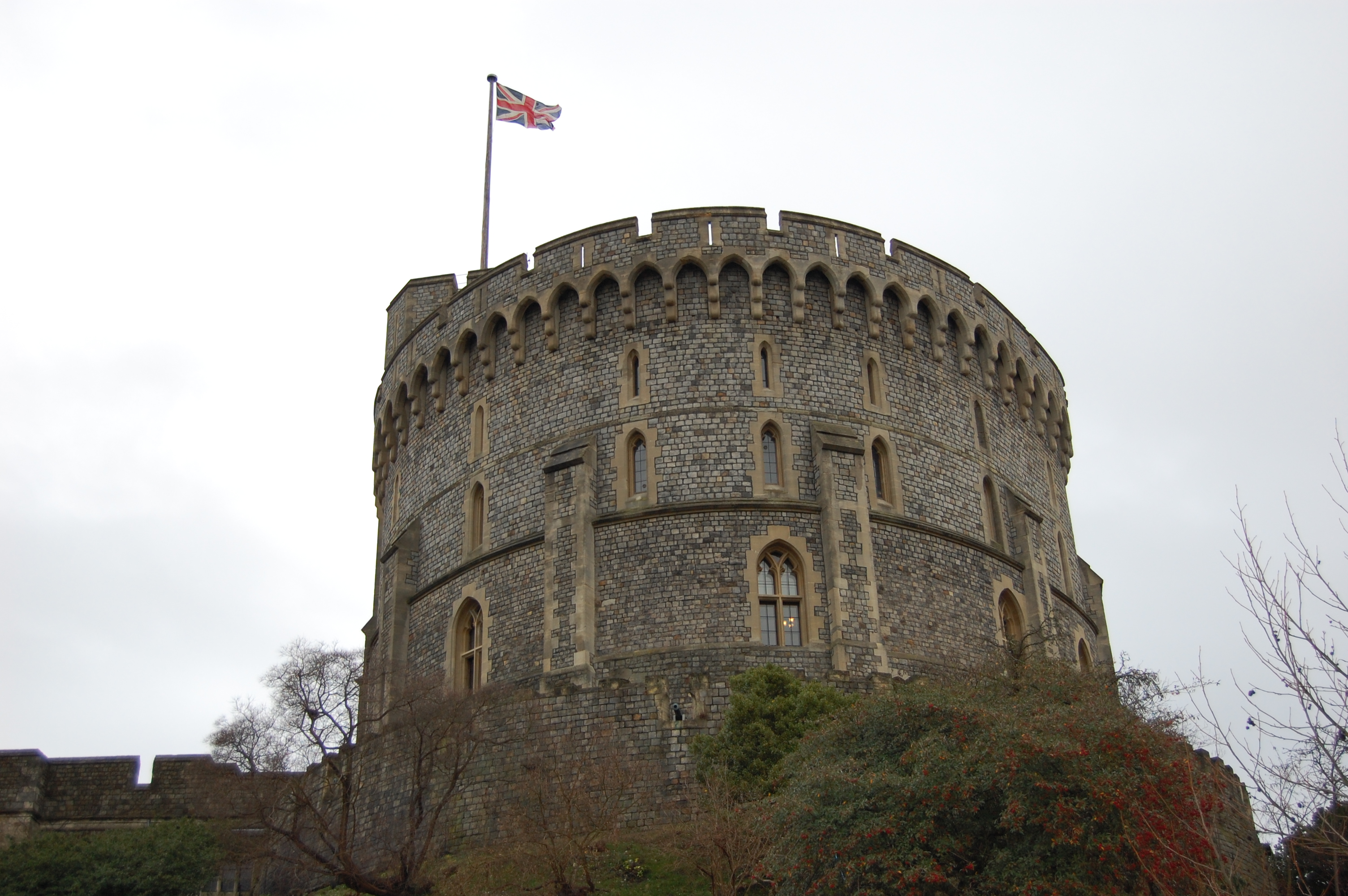
The Round Tower (The Keep) at Windsor Castle dates to the year 1080 and William the Conqueror who built a "motte and bailey" (raised earthwork with a protective fence) on the site.
The rest of the day was spent driving to our first nights’ lodging in the sea-side town of Weymouth, on the south coast of England. Our room overlooks Weymouth Bay – we are just across the street from the beach. Dinner out was at a fish and chip restaurant. Pleasant from a temperature standpoint – it was probably in the low 50s tonight. If it weren’t for the thunderstorm that passed through, perhaps the football (soccer) players who had been playing on the beach could have finished their game!
We are both so physically exhausted from the day, I’m not sure I’ll even get the pictures loaded to the Zenphoto gallery tonight.
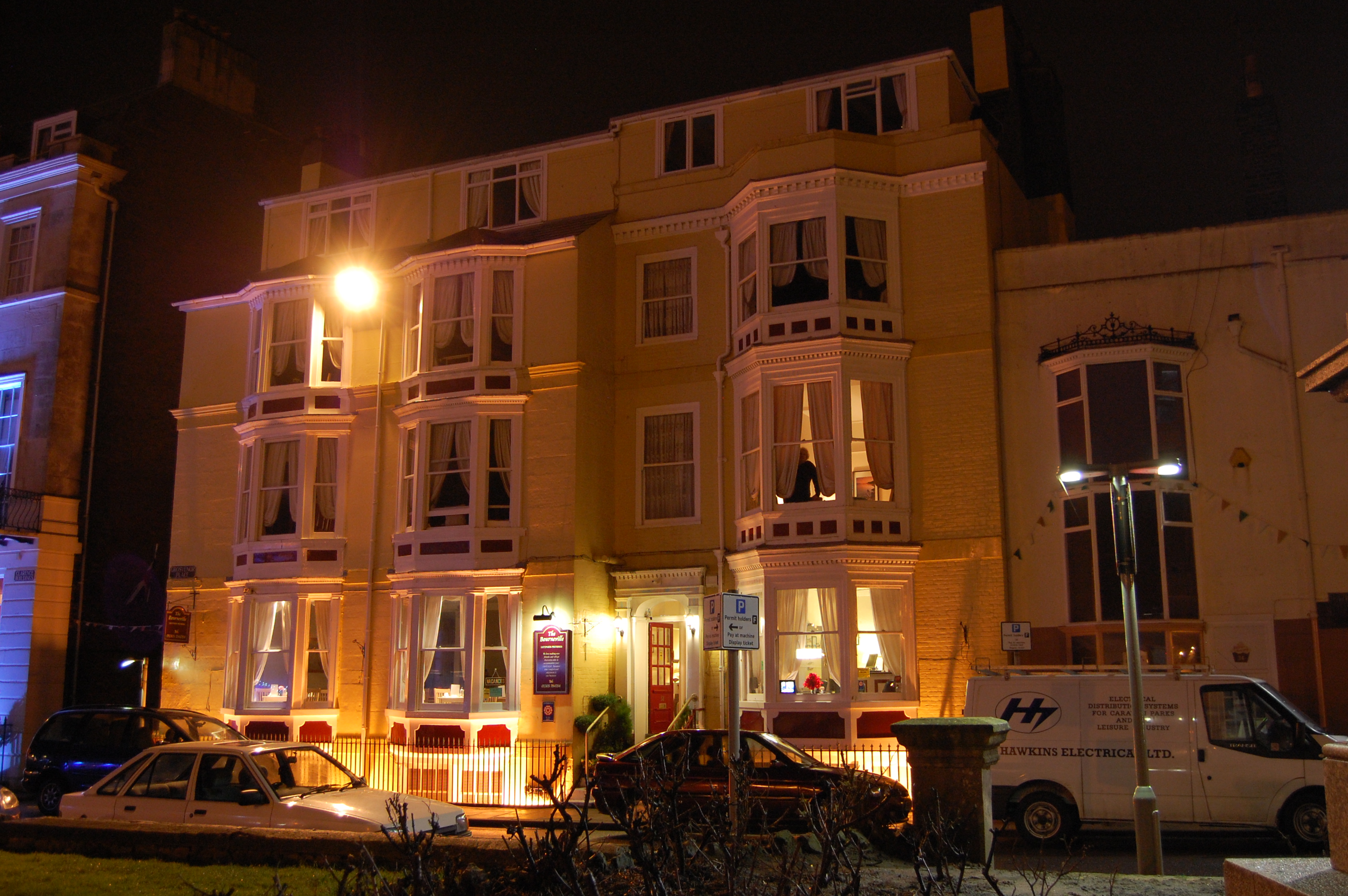
Picture of our hotel in Weymouth just a few minutes before a thuderstorm came through the area.
Start discussion »